
Pearl Colors – Your Guide to Choosing Perfect Pearls
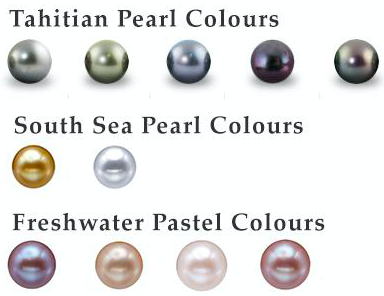
Pearls offer an astonishing array of colors for everyone to love. From classic white Akoya pearls to jet black Tahitian pearls, silver and gold South Sea pearls and even deep shades of lavender to yes, even blue!
Perhaps the best-loved gems of all time, pearls—both natural and modern cultured pearls—occur in a wide variety of colors. The most familiar colors are white and cream (a light yellowish brown). Black, gray, and silver are also fairly common, but the palette of pearl colors extends to every hue. The main color, or body color, is often modified by additional colors called overtones, which are typically pink (sometimes called rosé), green, purple, or blue. Some pearls also show the iridescent phenomenon known as orient.
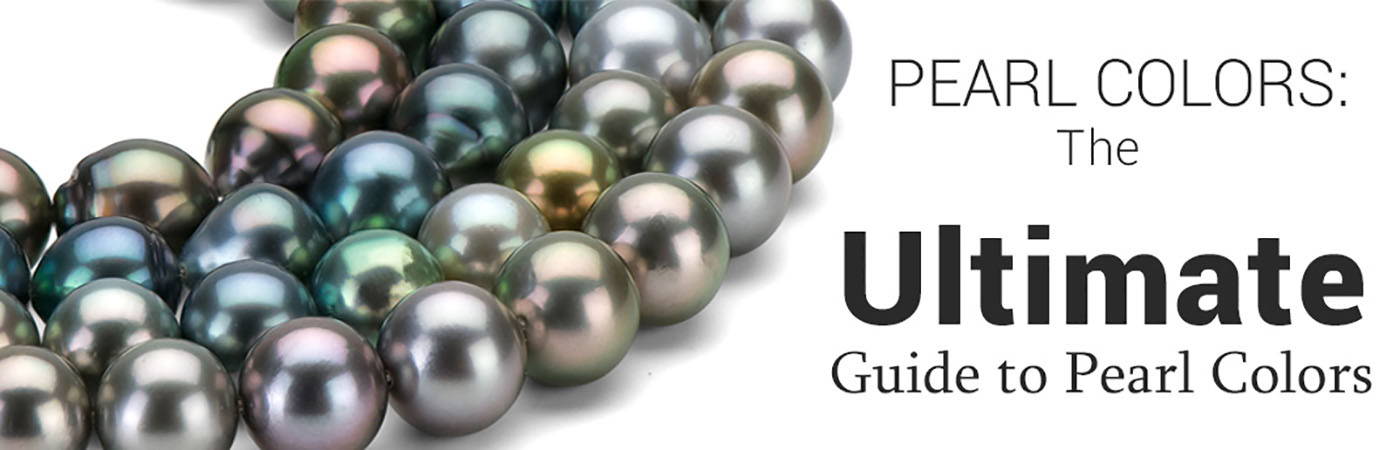
White and black pearls are the most popular, but there are also silver, gold & pink. Pearls also have tints or undertones that can make it have a glow. For example, a pearl can look white but when studied and light is reflected off of it, it can give off a hue of pink, green or blue. Black pearls are rarely black, they can be shades of green, purple, blue, grey, silver or peacock. The very best pearls have a metallic mirror-like luster.
Below to navigate this article to view pictures and descriptions of the most common pearl colors.
White Pearls
Whether it’s the iconic Akoya pearl, or glamorous South Sea pearls, white pearls have been the “It Pearl” for literally centuries. Women and men have worn and loved white pearls because of their subtle elegance and versatility.
| White Pearl Fast Facts
White Pearl Types: White Akoya, White South Sea and White Freshwater pearls. |
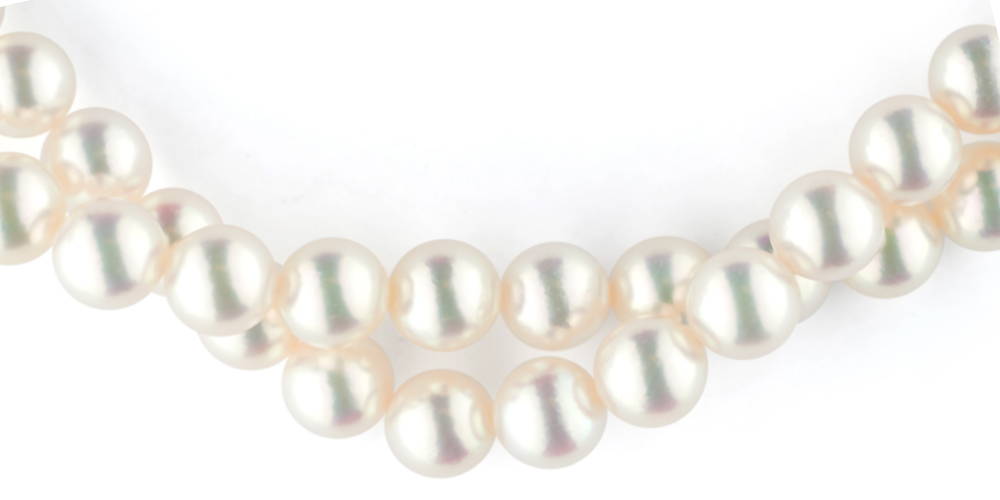
White South Sea pearls are the third most popular pearl type - and the most expensive.
Cultured in Australia using the silver-lipped Pinctada maxima saltwater oyster, these are considered the "queen of gems". These luxurious pearls range in size from 8.0mm 16.0mm and larger.
Popular overtones are: Rose - warm to cool hint of pink (and the most rare),Silver - bright, cool white (most prevalent) andCream / Ivory - warm hint of French Vanilla
Black Pearls
Dark and exotic, black pearls have captured the imagination of men and women around the world for centuries. A hundred times more rare than white pearls, black pearls have been imbued with all kinds of mythical properties and lore.
| Black Pearl Fast Facts
Black Pearl Types: The only naturally-colored cultured black pearls are black Tahitian pearls from French Polynesia and Sea of Cortez pearls from Guyamas, Mexico. Black Akoya and Black Freshwater pearls are also available, but are color-treated (usually dyed) to reach their darker hues. |
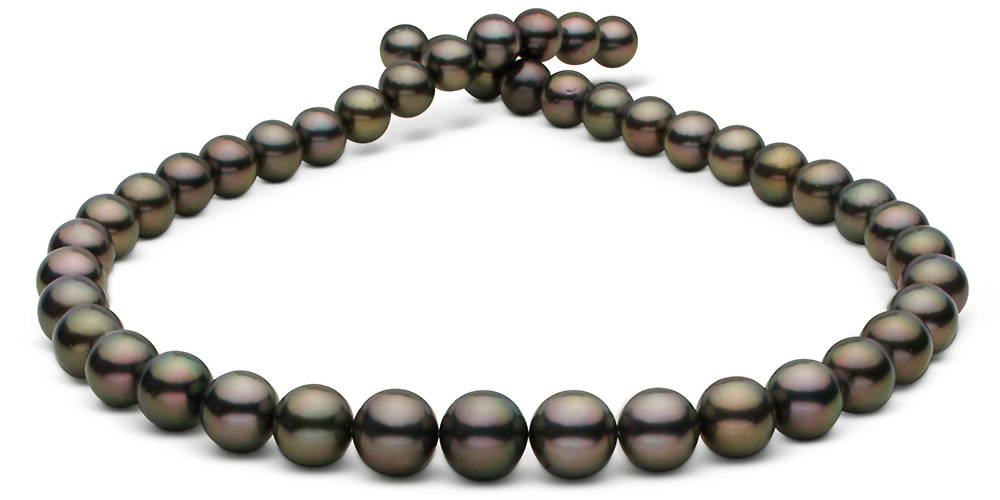
Tahitian pearls are one of only two naturally-colored black pearls in the world.
Tahitian pearls are cultured in the Pinctada margaritifera saltwater pearl oyster in French Polynesia, and range in size from 8.0-9.0mm through 14.0-15.0mm and larger. The pearls feature primary body colors ranging from pale dove grey to dark charcoal grey to near jet black hues.
Popular overtones are: Peacock, Cherry, Blue-Green, Neutral Silver/Steel and more..
Golden Pearls
Opulent, luxurious and best of all, naturally colored, Golden South Sea pearls are some of the largest and most valuable cultured pearls in the world. Ranging in color from pale Champagne to intense 24K golden hues, these cultured pearls hail from the tropical lagoons and atolls of the Philippine Islands and Australia.
| Golden Pearl Fast Facts
Common Overtones: You’ll encounter Neutral (Yellow) Gold, Silver, Rose, Green/Bronze and Champagne overtones. |
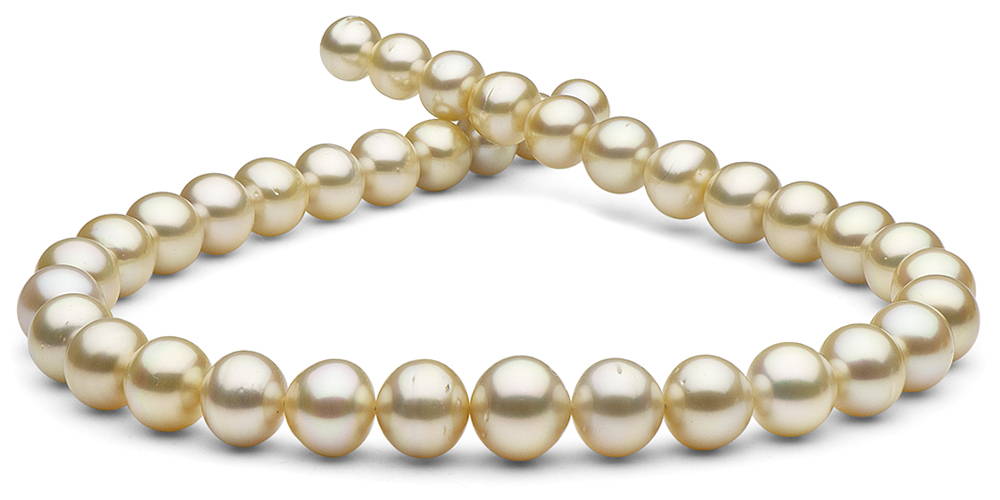
Pearls featuring the 14K Medium-Deep Golden hue are among the most common body colors available today. Shimmering with Neutral Gold or Rose overtones, these Golden pearls look great on the largest array of complexions.
Pink and Peach Pearls
Naturally colored pink pearls are cultured in the Freshwater pearl mussel, Hyriopsis cumingii (along with various hybrid mussels bred to produce unique colors and sizes) in freshwater aquaculture ponds on China. Each Freshwater pearl mussel can be nucleated up to 25 times on each side of the shell, making for a stunningly colorful harvest.
| Pink to Peach Pearl Fast Sheet
Common Overtones: The most common overtones you’ll see on pink to peach pearls are Aquamarine, Green, Gold and Rose hues. Recommended Pairings: Yellow gold is the most popular and traditional to use with pink to peach Freshwater pearls. It “warms” up the pink and golden hues already present in the pearl’s surface, and enhances their sparkle. White gold is less often used, but is an interesting and unique pairing with pastel baby to deeper pink colors, and can boost any Aquamarine to Green overtones present on the pearls. |
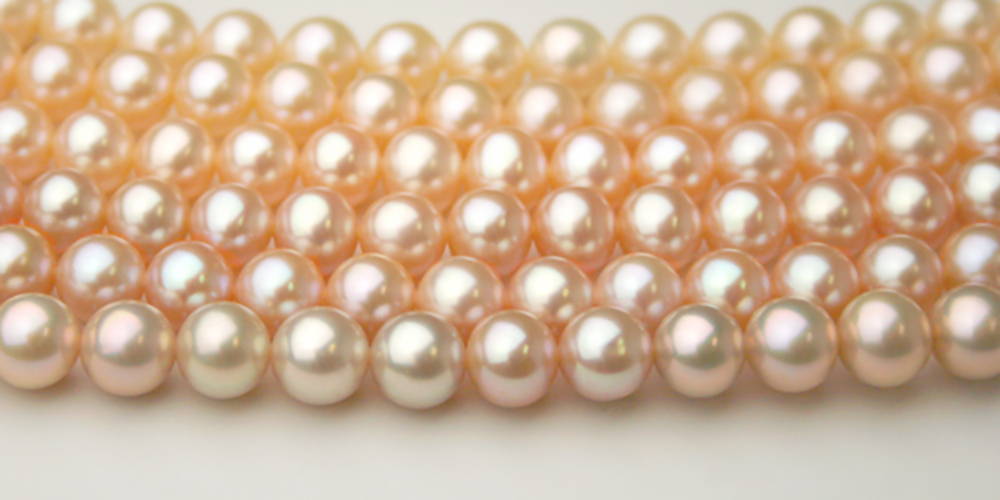
Peach Freshwater pearls range from pale peaches to deeper orangey and apricot colors.
Lavender Pearls
Naturally colored Lavender Freshwater pearls are cultured in the Freshwater pearl mussel, Hyriopsis cumingii. These large pearl mussels are bred and cared for in freshwater aquaculture ponds and lakes in China. Nucleated up to 25 times per each side of its shell, a Freshwater pearl harvest is a very colorful affair, yielding shades of Lavender, Pink, Peach and White pearl colors.
| Lavender Pearl Fast Sheet
Common Overtones: The most common overtones you’ll notice on Lavender Freshwater pearls will be cooler shades of Aquamarine and Green. Warmer shades of Gold and Rose can also be observed. |
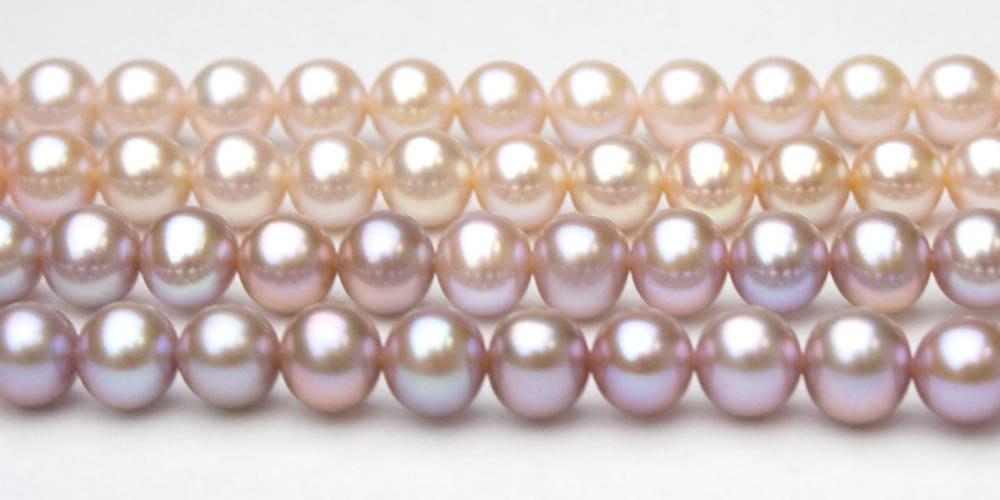
The paler shades of Lavender range from a dirty-rose mauve color to pastel lilac.
Typical overtones will be pastel Green, Gold, Aquamarine or Rose.
Blue Pearls
Perhaps the rarest pearl color of them all, true blue pearls are one of the wonders of the world. Naturally blue-colored pearls come in astonishing array of hues from pastel Sky Blue to dark Midnight Blue colors, with an even wider array of dazzling overtones.
| Blue Pearl Fast Sheet
Blue Pearl Types: Naturally colored blue pearls are a special rarity, available only in blue Akoya, Silver-Blue White South Sea, Tahitian or Sea of Cortez pearl types. |
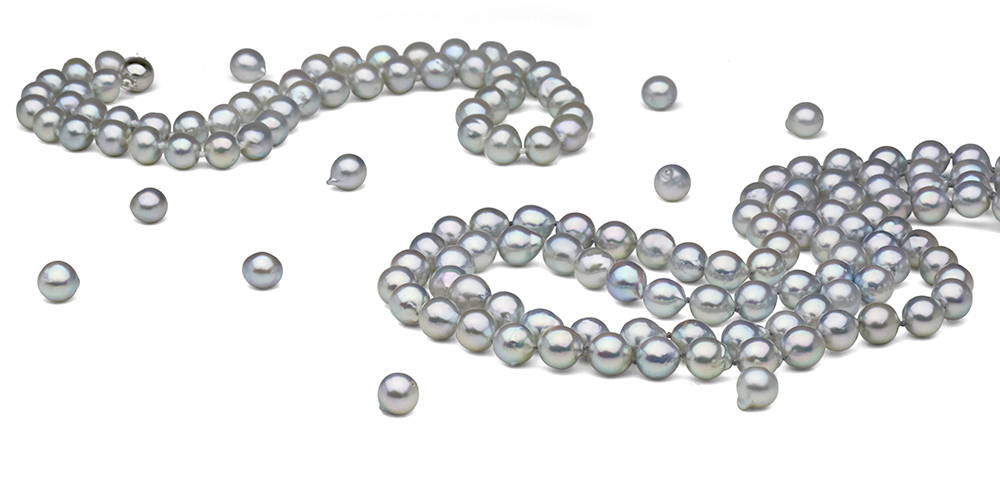
White South Sea pearls have an outstanding Silver-Blue color that’s very distinctive.
They are the largest of all blue colored pearl types, and feature the trademark "satin" luster of South Sea pearls.
Chocolate Pearls
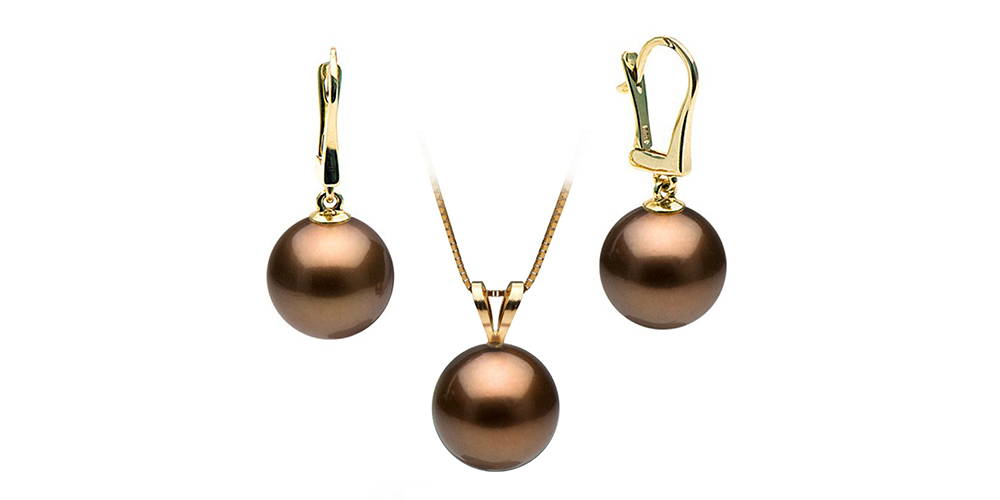
Chocolate pearls became incredibly popular quite recently – designers such as Erica Courtney helped solidify their status as red carpet worthy gemstones. Chocolate Tahitian pearls can be naturally colored or dyed their trademark colors … Guess which ones we prefer.
| Quick Facts About Chocolate Pearls
Chocolate Pearl Types: Color-treated Chocolate Tahitians, naturally-colored Chocolate Tahitians and dyed Chocolate Freshwater pearls. Recommended Pairings: Yellow gold is probably the prettiest pairing for clasps and mountings as it enhances the warmer shades of gold present in the pearls. White gold can be used to create an interesting visual contrast, but care should be taken to pair use pearls with Dark Chocolate body colors and Greenish overtones. |
Multi-Colored Pearls
The term ‘Multi-color’ refers to a layout design rather than a pearl color, and can be composed of Freshwater, Tahitian or South Sea pearl types.
| Multi-Colored Pearls Fast Facts
Multi-Color Pearl Types: Multi-colored Tahitians, Multi-colored South Sea pearls and Multi-colored Freshwater pearls are all available in both round and baroque shapes. |
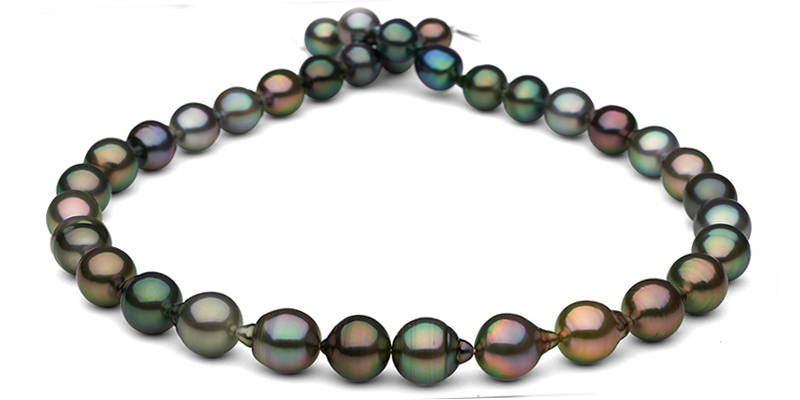
These layouts are arranged in various combinations. No two necklaces or bracelets are ever exactly the same!
How Do Pearls Get Their Color?
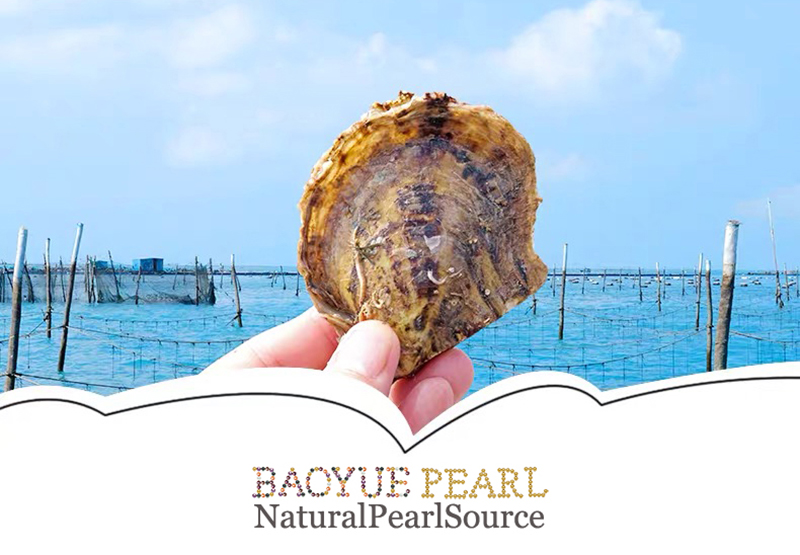
Oysters make colored pearls in a variety of ways, starting with the color of the outer edge of the shell — called the mollusk’s “lip.” For instance, Tahitian pearls get their light to dark charcoal grey colors from the black-lipped saltwater Tahitian pearl oyster, Pinctada margaritifera. Notice the grey to silvery hues present on the edge of the shell.
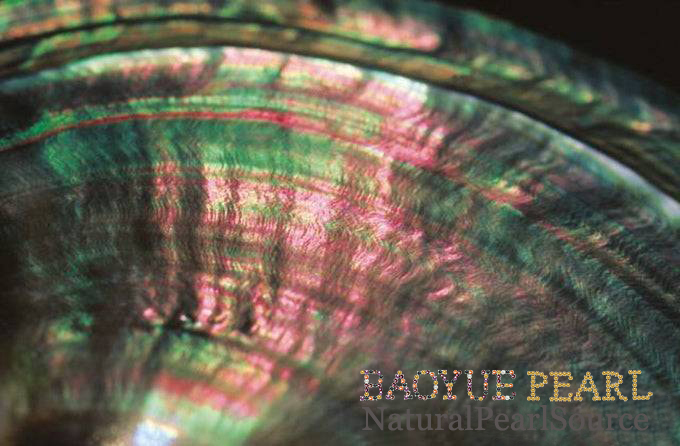
Another way pearls get their color is from microscopic pigments inside the conchiolin layer. Conchiolin is the organic “glue” that holds the crystalline aragonite layers together. Conchiolin cements these platelets together (think of the structure of a pearl as something like a brick wall, and the conchiolin is the cement).
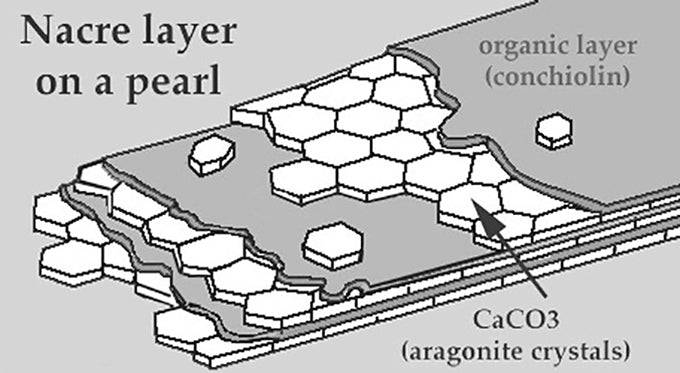
When the conchiolin is pigmented with grey, brown, reddish-brown, black or other colors, this pigment shows through the thin crystalline layers to give the appearance of blue, grey, yellow, green, bronze, black pink and orange hues in the surface of the pearl.
Lastly, aragonite platelets are the semi-transparent, hexagonal-shaped, microns-thin crystals that make up the prismatic layers of the pearl. When white light strikes and penetrates the surface of the pearl and its layers, the light beam is refracted back at the viewer in its entire spectrum, allowing the viewer to see the colors red, orange, yellow, green, blue and violet. This phenomenon also heavily influences the pearl’s overtone, or faint iridescent colors that are visible over the body color of the pearl.
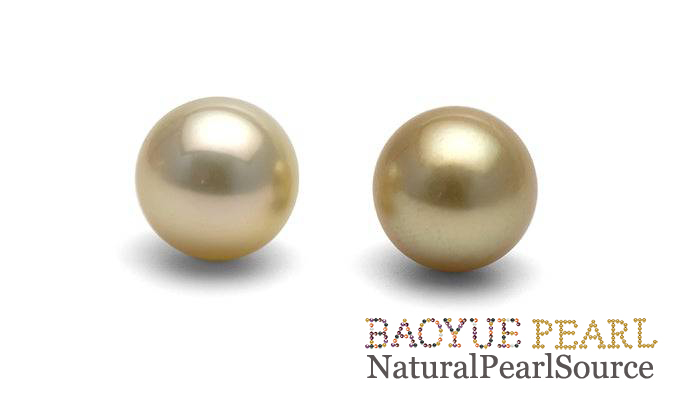
Golden South Sea Pearls.
Left: Medium Golden Tone with Light Rose Overtones Right: Deep Golden South Sea pearl with Bronze and Green Overtones.
As you can see, each of the Golden South Sea pearls above displays varying shades of Golden body color intensity, however the overtone or faint iridescent color lying over the main body color influence the pearl’s overall color to the viewer. The pearl on the left shows a faintly blushing “warm” tone due to its Rose overtones, while the pearl on the right appears much “cooler” due to its Green and Bronze overtones.
While the science of pearls is still evolving, we now have a fairly good idea of how a pearl’s color is influenced both by its environment and by the host mollusk. These factors are what gives pearls natural colors ranging from white to chocolate as shown above in this article.
Visit Our Pearl Grading Guides:
Click the links below to Get Our Pearl Grading Guides:
 |
 |
 |
 |