Author Archives: pearlstrand

What's an Akoya Pearl ?

What Is An Akoya Pearl ? and Why Are Akoya Pearls So Special?

What is an Akoya Pearl and what makes Akoyas special? With the fashion world embracing pearls like never before, there is quite a buzz about pearls these days, prompting Vogue to ask earlier this year, “Are Pearls the New Diamonds?” With the pristine white wonders of mother nature showing up on runways, red carpets and IG feeds, everyone is talking pearls. And we do mean everyone – not just the ladies. This gender fluid gem has captured the limelight with both male and female celebrities, as fashion houses turn to pearls as a powerful symbol of status and sophistication.

Often this exciting pearl fashion revolution features the beautiful and classic Akoya Pearl. What is it? And what are the elements to look for when buying Akoya Cultured Pearls?

THE SCIENCE – Akoya Pearl Facts

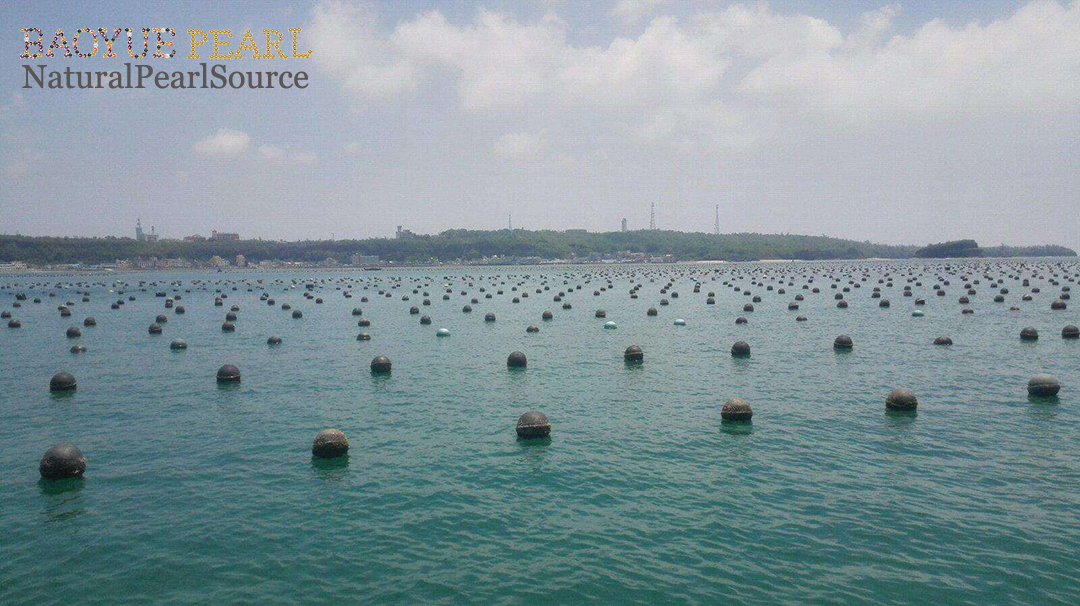
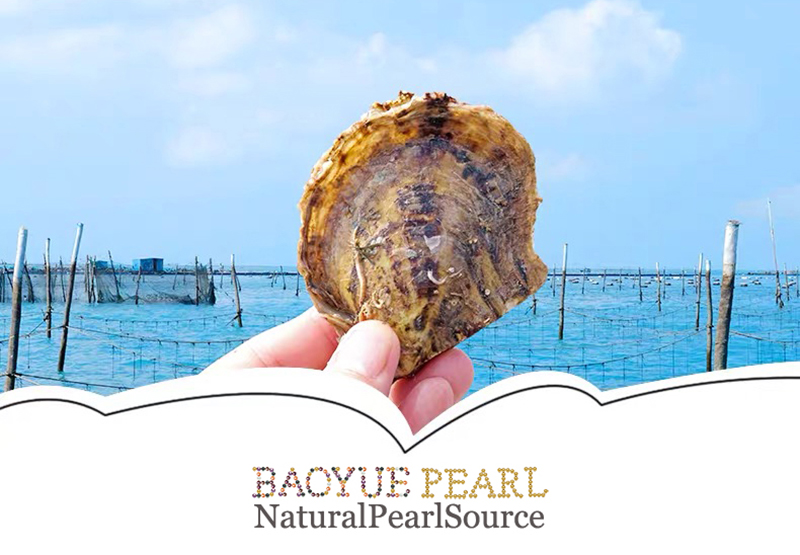
Akoya Oyster, Japanese Pearl Farm, Hand Sorting Akoya Pearls, Loose Akoya Pearls with High Luster

Akoya cultured pearls form in the Pinctada Fucata oyster. These oysters are thriving in the hidden bays off the coast of Japan in the cold saltwater of the Pacific Ocean. All Assael Akoya pearls come from Japan. These pearls are harvested in the colder months from December to March and produce pearls with the highest thickness of nacre. (For more information about nacre, click here.) The highest quality Akoya Pearls grow in the ocean up to about two years to allow sufficient time for the pearl to form with thick nacre and wonderful luster.

The term “cultured pearl” really just means that a human being started the natural process of pearl formation. It is somewhat similar to artificial insemination. A nucleus gets inserted into the soft mantle tissue of an oyster by a highly trained pearl technician, and then Mother Nature takes over. The pearl forms around the nucleus in its natural process inside the oyster as it lives in the ocean. For more information on how pearls are formed, click here.

The Pinctada Fucata oyster is the smallest of the pearl-producing oysters, measuring about 3 to 5 inches in diameter. It, therefore, produces smaller pearls than the oysters that produce South Seas and Tahitian Pearls. Akoya Pearls generally range in size between 3 to 9mm, with the occasional rare 10 – 10.5mm sizes. The Akoya pearl is known for its superb luster and its perfectly round shape. Akoyas also have a beautiful color consistency, making them often the pearl of choice for a woman’s first strand of pearls.

HISTORY & NOMENCLATURE – Why Is It Called an Akoya Pearl?

Timeline of Pearls in Fashion History – Pearls have never been out of style. L to R – Coco Chanel, Lucille Ball, Jacqueline Kennedy Onassis, Princess Diana, Oprah Winfrey, Kendall Jenner in Versace scarf with pearls in Vogue (March 2020)

The Pinctada Fucata oyster mentioned above is more commonly referred to as the Akoya oyster. Because these pearls are formed in the Akoya oyster, the pearls are called Akoya pearls.

Akoyas were the first pearls ever to be cultivated. In 1893, a Japanese man developed a scientific process for cultivating pearls inside the Akoya oyster. At first, very few of these pearls made their way to Europe and even less to the United States. By the mid 20th Century, Assael had started distributing Akoya Pearls in America.

Cultured pearls revolutionized the world of fine jewelry, making pearls more readily available to women of all types. Before cultured pearls, only natural pearls had been available, so the supply was severely limited and often reserved for royalty. With cultured pearls becoming available to the general public, the fashion worlds in New York, Paris and Milan took note.
In the 1920s, Coco Chanel made Akoya pearl strands a must-have accessory for debutantes and socialites throughout Europe, affirming that “a woman needs ropes and ropes of pearls.” In the 1940s, U.S. soldiers returning home from World War II brought back strands of Akoya pearls for their wives and girlfriends, creating a craze for Akoyas in America, too. These perfectly round pearls with incomparable luster became a staple accessory to almost every outfit.

In the 1960s, “Jackie O” (Jacqueline Kennedy Onassis) made pearls synonymous with sophistication and class. In the ‘80s, Princess Diana’s fairytale love affair with pearls turned them into a beloved jewel in every woman’s wardrobe. More recently, formidable women of all ages from Oprah and Kamala Harris to Gigi Hadid and Kendall Jenner have used Akoyas and/or South Seas as ‘power pearls’ to convey a uniquely feminine aspect of power – that women can be soft and beautiful while also maintaining incredible strength.

MAGNIFICENCE – What To Look For When Buying Akoya Pearls?

Akoya Pearl Size Chart, Strands and Loose Akoya Pearls

According to the Gemological Association of America (GIA), “Akoya cultured pearls are the most familiar type of saltwater cultured pearls to most people in the U.S. and other western markets.” Akoya pearls are typically the first pearl strand a woman receives or the first pair of pearl earrings with which she starts her pearl collection. When buying Akoya pearls, be sure to examine the following hallmarks of value.

LUSTER
The Akoya is a truly classic pearl. It is known for its incredibly high luster. The higher the luster, the more valuable the pearl. So, when shopping for Akoya pearls, be sure to try the pearls on. See how they look on your skin. The beautiful glow of Akoya pearls will reflect that shine onto your skin and bring a beautiful radiance to your face.

SURFACE COMPLEXION
Akoya pearls also have very clean, smooth complexions. Look for pearls that are blemish free, allowing the full reflection of light.

COLOR
Akoya cultured pearls come in various shades of white to white-pink. Select the color that looks best with your skin. Again, remember to try the pearls on. Color is a purely personal preference. The pinkish white hues can be very flattering. Also, think about your wardrobe – if you wear a lot of black or black and white combinations, you might prefer a whiter Akoya pearl strand. Pure white strands are rarer and can be difficult to find.

SIZE
Choose a size of Akoya pearl in proportion to your facial features. If you have a petite face with small eyes and nose, you might look best in a smaller millimeter size of Akoya pearls like a graduated strand between 5 to 8mm. If you have an oval face shape and wear longer hair, you may need a larger pearl to command attention – like an 7 or 9mm.

SHAPE
Akoya Pearls are also prized for their perfectly round to near-round shapes. Compare various strands side by side to see how perfectly round the pearls are and how much luster they have. Perfectly round pearls have higher value.

STRINGING & CLASPS
When shopping for Akoya Pearls, the silk string should always match the color of the pearls and not distract the eye. You can also examine the knots in between the pearls to note how sturdy they are. Lastly, be sure to study the clasp. You will want to ensure that the clasp is secure and comfortable, as well as beautiful. Necklaces tend to move on the neck, so you will not want to keep turning the clasp to the back. Also, make sure you can open and close the clasp yourself.

Akoya pearls will certainly become a treasured part of your fine jewelry wardrobe, together with your favorite strand of even more distinctive South Sea Pearls. The luster of Akoya Pearls is remarkable and will make even your darkest days a little brighter. Assael is proud to offer a selection of the finest Akoya pearls available in the world, to ensure that every woman who wears them will shine in their gorgeous glow. Discover some beautiful Akoya pearl designs here.

If you have any question about pearl knowledges, Please come in BAOYUE Pearl Education page to read relevant articles, maybe you can get some answers, or leave a message to us, we will reply you within 24 hours.

Continue reading

What's the difference between natural pearl, cultured pearl, freshwater pearl, shell pearl and edison pearl ?

What's the difference between natural pearl, cultured pearl, freshwater pearl, shell pearl and Edison pearl ?

Today, pearls are regarded as both classic and contemporary, coming in many more fashionable styles than your grandmother’s traditional strand of pearls, Learning about types of pearls is important when adding items to your jewelry collection, let's check this article about what's the difference between them.

Natural Pearls
A natural pearl is formed when a small irritant or parasite penetrates and lodges in the mantle tissue of a mollusk. In response, the “invaded” tissue secretes a protective substance called nacre, a combination of crystalline and organic substances that builds and eventually after a few years develops into a pearl. Natural pearls are rare and require serious persistence to find.

Natural Tahitian Pearls Peacock green color

Cultured Pearls
A cultured pearl results from the process by which a pearl farmer induces pearl formation by inserting an irritant into the mollusk and then “cultivating” the pearl. Cultured pearls are real pearls that were not formed by accident of nature. Most pearls sold today are cultured.

Note: Edible oysters do not produce nacre and thus do not produce pearls, so there’s no need to put them through an MRI before eating.

Cultured Freshwater Pearls in the oysters

Freshwater Pearls

Freshwater pearls come from oysters that mature in non-saline water (from lakes or ponds, as opposed to saltwater from the sea). Freshwater pearls usually are not as round as saltwater pearls and therefore less expensive. However, the past two decades have seen a huge increase in their quality for a number of reasons, but mostly because in the mid-1990’s the pearl-farming industry changed the type of mussels they used and lowered the number of grafts inserted in the mussel, and thereby the number of pearls produced.

Freshwater pearls today are a favorite of jewelry designers because of their lower cost and improved quality and availability.

Freshwater pearls with many shapes

Shell Pearls

Shell Pearls are made from the inner lining of oyster shells, also known as Mother of Pearl. The substance is ground to a fine powder, shaped, dyed and coated with natural pearl nacre and then a protective coating to give it lustre. Shell pearls, like most everything, vary in quality but may be quite beautiful and much less expensive than saltwater pearls. In addition, the industry’s strict quality control ensures shell pearls will keep their color and shine and will not be affected by sweat and perfume. Indeed, they are more durable than cultured and freshwater pearls.

Different colors shell pearls
Edison Pearls
 
The pearls are named after the great inventor, Thomas Edison, who for all his intelligence and innovation, said “There are two things which couldn’t be made at my laboratory – diamonds and pearls.
The jewelry world has since gone on to do both these things and with great results. Edison pearls are one of the latest in a long line of pearl innovations and the name Edison is a reminder that what can be seemingly impossible, can be done.
 
Edison pearls were created by the Zhan siblings who come from a family with over 40 years’ experience in the pearl industry. The research for Edison pearls took many years and an enormous budget but the outcome has been highly lauded. Edison pearls were first sold in 2010 and has since carved a name for itself as a high-end pearl variety.
 
Edison pearls are actually very simple, freshwater pearls with cores. Traditional freshwater pearls are seedless and uncontrollable in shape, with few being large and round. And seawater pearls are all nuclear, big and round (Akoya is small, mabe is big and flat), and the high-end atmosphere is high-end. In order to change the fate of freshwater pearls, aquaculture companies have learned from the cultivation technology of seawater pearls and cultivated a new type of freshwater pearls with nucleus. This is a huge innovation to traditional freshwater pearls, so it is named "Edison pearls".
 
Sparkling Edison pearls comparable to Tahitian pearls

Edison pearls, usually single cultured (one mussel cultured for one pearl), are cultured in the same way as South Sea seawater pearls (South Sea gold pearls, Australian white pearls, Tahitian black pearls). Because it has a nucleus, it can be round and large. The roundness and size are also similar to those of South Sea seawater pearls. The difference between the two is that Edison pearls are cultured in freshwater, and their mothers are mussels; South Sea pearls are cultured in seawater, and their mothers are seashells. Due to the different species of mother oysters and the water in which they are cultured, the colors of the pearls are also different. South Sea pearls are mainly white, black and gold, and Edison pearls are white, pink and purple, which are the same as ordinary non-nuclear freshwater pearls.

Edison's Demon Purple Pearl, a color complement to high-end seawater pearls
Edison Pearl Large Modern Farm

For a long time, fresh water has really been traditional seedless culture. Pearls are naturally grown and formed, so the shape is uncontrollable. Most of them are crooked melons and jujubes. Many have no decorative value and can only be used for medicinal purposes. The second is a large number of flat round and rice-shaped, very few round, and even fewer high-quality balls.

Due to historical reasons, China's pearl culture focuses on scale and production, and does not pay enough attention to the pursuit of quality. The rivers, lakes and reservoirs suitable for cultivating freshwater pearls in China have vast waters, abundant labor resources, and inexhaustible biological resources for mother-of-pearl mussels. Rare is more valuable, this is the eternal truth. There are so many freshwater pearls, and most of them are of poor quality, so it is difficult for this variety to be related to the high-end. China's pearl production accounts for 90% of the world's production, but only 10% of the output value. In fact, it is not only pearls, but many industries are like this. In the early stage of development, the emphasis is on quantity and less on quality. This is a process from scratch to excellence.

The "nucleation" of freshwater pearls is actually in line with international standards. Because in addition to the traditional non-nucleated freshwater pearls, all cultured pearls are nucleated. In this age where we don't mind breast augmentation, butt augmentation, and cosmetic surgery, it's not a big deal that a pearl has a nucleus in it. As long as it is big enough, round enough, and bright enough, it is high quality. Therefore, in the future, seedless freshwater pearls will become less and less, and may even disappear.

Edison PEARL and Freshwater pearls Loose pearl from BAOYUE PEARL

So how do you tell them apart?

Well, the EASIEST way is the price, because even wholesalers can't get Tahitian or South Sea Pearls for the ultra-reasonable amounts these man-made Sea Shell Pearls are being sold for. However, smarter sellers are charging higher prices, figuring to fool the buyer into thinking they are getting some $10,000 pearls for only $100.

Real Tahitian Black Pearls are expensive... price tag for a nice strand is a cool $14,900.

Gem Tahitian Pearl Peacock green Color.

Another way to tell if the pearls are real or man-made is the color. Natural pearls don't come in electric blue, vivid pink, or apple green. Pearls can be dyed, of course, but no one in their right mind would think of dying a string of pearls worth thousands of bucks! Real pearls come in the color of the nacre that the oyster or mussel produces...usually white, dark silver, teal/peacock, light silver, gold, grey, or white with overtones of blue, pink, or silver.

A little extra technical information:

Tahitian Black pearls come from the black-lipped oyster, ( Pinctada margaritifera) in the islands of French Polynesia. The oyster itself is quite large -- sometimes over 12 inches across and weighing as much as 10 pounds -- which often results in much larger-than-average pearls. The pearls are unique because of their natural dark colors.

South Sea pearls come from the oyster called Pinctada Maxima. There are two varieties of Pinctada maxima: the silver-lipped and the gold-lipped. The two are distinguished by the coloration of the outer edge of the interior. Hence, the lovely silver and gold coloring of the pearls. These oysters grow up to 12 inches in diameter, and can be nucleated with a much larger bead than other saltwater oysters such as the Akoya. Hence, the huge size of South Sea Pearls !

Edison pearls were created to rival the prestigious South Sea pearls from Australia, much like freshwater pearls have become a more affordable alternative to Akoya pearls. They were first introduced in 2014, with the initial pearls priced very high but today they’re known as affordable alternatives to South Sea pearls.

Features of Edison Pearls
1. Big and round. Because it is cultured with nuclei, the individual Edison pearls are larger than those of non-nucleated freshwater pearls, especially the roundness is good, and the proportion of round pearls is significantly increased.
2. Breeding technology requires high requirements and high cost, which forces breeding companies to concentrate resources and energy and implement refined management. As a result, the quality of pearls has been greatly improved. Edison pearls are not only large and round, but also have good luster and beautiful color. Of course, there is still room for improvement in this regard. After all, the cultivation of nuclear freshwater pearls started late, and the accumulation of technology and experience is still relatively weak.
3. The advantage of breeding scale ensures the price advantage of Edison pearls. High-quality Edison pearls have caused a great impact on South Sea seawater pearls in the international market, and this impact will continue to expand.

If you need to get more information about Natural Pearls, Cultured Pearls, Freshwater Pearls, Shell Pearls and Edison Pearls information. feel free to contact us. BAOYUE PEARL supply big quantity natural freshwater pearls, South sea Pearls, Edison Pearls, Akoya pearls and Tahitian Pearls with farm direct prices.

Continue reading

Natural Pearls Cultured Process

Want to know the Cultured Pearl Process ?

After you read this article, maybe you will have a rough ideas about the natural pearls cultural process, in fact, cultivating pearls is a long process, each step requires the careful care of experienced farmers, and the beautiful pearls can be harvested after many years.

1. Choose High Quality Mother oysters.
Choose pearl oysters with a complete shell, no damage, full soft body in the shell, and no disease as the mother-of-pearl oyster.

2. Implantation of bead nucleus & cell pellets
Using a minimally invasive method to implant bead nuclei and cell fragments into the oyster.

1. The pearl oysters waiting for implant pearl nucleus
2. Implant pearl nucleus and cell fragments into the oyster
3. Implant pearl nucleus and cell fragments into the oyster
4. Implant pearl nucleus and cell fragments into the oyster

3. Cultivation
The pearl oysters willbe placed in a net cage and then hung in the water with ropes for culture, after 3 years, maybe more time the oysters will grow up big and big, the pearls will grow up also with the oysters.

Akoya Pearls and South Sea Pearls Cultured Environment

4. Harvest season

This process is complex, mainly includes sorting, punching, puffing, dehydration, lighting and other links. The pearls that have been cleaned after being taken out are screened according to the size of the pearls and the conventional grades, and the pre-grading is carried out. High-grade pearls are processed by high-grade methods, medium-grade pearls are processed by medium-grade processing, and poor are processed by simple processing. For each grade, there are corresponding measures, which are pre-classified and organized in advance.

China Zhuji Freshwater pearls and Edison Pearls Culture Bases and Culture Environment
South Sea Pearls and Saltwater Pearls Culture Environment and Culture Bases

5. Brightening
Brightening is one of the important processes in pearl processing. Through washing, soaking with special substances, baking or lighting, etc., the original color of pearls - white is revealed. Every pearl farmer or every processing factory has a different method of processing pearls.

Natural Pearls Brightening Process

6. Polishing

Polishing is the last process in the pearl optimization process, it reflects the level of optimization, and the result directly affects the smoothness and luster of the pearl. Polishing can also coat the pearl surface with a thin layer of wax, which can protect the pearl surface from damage caused by mutual friction between pearls. The choice of polishing speed and polishing material ratio is the key to determining the quality of polishing.

The good quality pearls can be decorated after cleaning, bleaching, polishing and factory processing.

1. Freshly harvested pearls should be washed with water first, and then soaked in saturated brine for 5 to 10 minutes. Or it can be washed with detergent, then punched and added with accessories, which can be directly used as earrings, necklaces, bracelets, etc.

2. Pearl polishing is a process of grinding and replenishing. The polishing carrier can grind the unevenness of the pearl surface, remove the body fluid, dirt and unpurified calcium carbonate on the pearl surface, and make the pearl surface smoother.

3. Before pearl polishing, the pearl should be waxed, and then stirred to make the polishing wax adhere to the surface of the pearl, and then put into the polishing machine for high-speed polishing. In the early stage of waxing, the stirring is mostly manual. Manual stirring is not only time-consuming and laborious, but also stirring. Non-uniform, inefficient, waxing and polishing steps tend to be incoherent.

4. Avoid contacting pearl jewelry with acids, alkalis and chemicals, and do not swim or bathe with pearl jewelry. Acids, alkalis and chemicals will affect the luster and color of pearls.

Got a question about a product? Need someone to help guide you through our website?
Got feedback? Go to the BAOYUE Pearl Education page to get some relevant articles about pearl knowledge, we make it easy for you to get in touch with us !

Continue reading

Shipping cost and Sales Tax

Freight Cost of Purchasing and Sales Taxes

Thanks for all of our customer cooperate with our company, we also quote the price is EXW price or FOB price, The prices is not Including freight cost and sales Taxes. please check the Sales Tax when you make order:

Sales Tax:
Payment through PayPal is preferred for the Order amount less than USD500.
And a 4.4% sales tax (fees) will be charged with the Payment Through PayPal.

Payment Through Telegraphic Transfer (T.T). To Our Bank. or Western Union: 100% Free of Sales Tax, Your Bank will charge Around USD 20-30 (or 2% of the amount) for the international Transfer.

Shipment Option:
We can make the shipment by DHL, UPS, FedEx, EMS, Aramex, TNT Express and Registered Mail (China Post service), and all kinds of couriers.

NaturalPearlStrand Normal Packing Details for Customers Around the World
 
When Ordering: Your Delivery Address details are required:
Consignee:
Address:
Post code:

Tel/Mobile No.:

Import Custom Duty

Customs & Sales Tax:
The International shipping rate does not include customs duties. You will be responsible for paying customs duties upon receiving your purchase, if any, to your country's customs tariff system. If you are interested in knowing what the charges are, please visit the official website of express companies.
Usually, we'll mark a 'fake' & Low value of the pearls for the shipment, in order to save you the import duties. and Our Sales Rep. will send you the information of the commercial invoice we attach for the package when the shipment was made.

Freight Cost by Express for your reference: (Currency: USA Dollar):

Please Note: BAOYUE PEARL is based in China.
All orders are processed and Shipped from our Factory or Office Address.

Freight Cost by Express for reference(6-2024)

DHL or FedEx sending delivery time: Around 5 days If there's no delays.
Tracking Facility: Available Online Tracking
Tracking Website: www.17track.net/

If you're not in hurry, you can choose to ship by Registered Mail China Post (Regular International Mail Service.):
If you're not in a hurry, and the weight is less than 400 grams, By Registered Mail(China Post) is preferred, Otherwise, it's better to ship by Express.
Registered Mail China Post Delivery time: 15-20 days
Tracking Facility: Only Proof of post Available Online
Tracking Website: www.17track.net/

Note: Please allow up to 24 hours before shipping for order processing.
Prices Above are the Quoted By our Courier Account.
(For Your Reference Only,And Please confirm the Exactly Price with us When Ordering)

Shipping Rules and Regulations:
While most orders begin the shipping process immediately, please expect 24 hour period to process your order. Shipping occurs once payment is approved, the address is verified, and the Item/Packing is verified in a good condition.

International Shipping Taxes, Tariffs, & Duties The listed shipping fees do not include charges imposed by your country's Customs Agency.The package recipient is fully responsible for any additional fees imposed by customs, including any tariffs and duties. Sometimes customs will charge a fee, and other times they will not. If you have any questions regarding tariffs and duties please call the Customs Agency for your respective country.

Tracking An Order:
Packages may be tracked online only Global Express mail packages are trackable. Global Express mail packages can be tracked online. If you cannot locate your tracking information, please call us or e-mail us info@naturalpearlstrand.com Or leave message below, then Our customer service representative will be happy to help you.

The packing options for the loose Pearls and pearl strands as your requirements.

Continue reading

The Cultured Freshwater Pearls from China

The Cultured Freshwater Pearls from China

A great irony of pearl history is that the least expensive cultured pearl product in the market today rivals the quality of the most expensive natural pearls ever found. The price-value anomaly is obvious to consumers as they hasten to buy Chinese freshwater bargains. Indeed, pearls from freshwater mussels lie at the center of the liveliest activity in pearling today.

How freshwater pearls are formed ?
Natural freshwater pearls occur in mussels for the same reason that saltwater pearls occur in oysters. Foreign material, usually a sharp object or parasite, enters a mussel and cannot be expelled. To reduce irritation, the mollusk coats the intruder with the same secretion it uses for shell-building, nacre. To culture freshwater mussels, workers slightly open their shells, cut small slits into the mantle tissue inside both shells, and insert small pieces of live mantle tissue from another mussel into those slits. In freshwater mussels that insertion alone is sufficient to start nacre production. Most cultured freshwater pearls are composed entirely of nacre, just like their natural freshwater and natural saltwater counterparts.

China Cultured Freshwater Pearls Farm

The Chinese were the first to culture a product from freshwater mussels, though their centuries-old Buddhas are not true pearls but shell mabes. The first cultured freshwater pearls originated in Japan. Quite soon after their initial success with cultured saltwater pearls, Japanese pearl farmers experimented with freshwater mussels in Lake Biwa, a large lake near Kyoto. Initial commercial freshwater pearl crops appeared in the 1930s. The all-nacre Biwa pearls formed in colors unseen in saltwater pearls. Almost instantly appealing, their lustre and luminescent depth rivaled naturals because they, too, were pearls throughout.

The development period of freshwater pearls in China

Even though World War II interrupted the flow of Lake Biwa pearls, by the 1950s strands sold in Japan as less expensive, colorful alternatives to the mainstay material, cultured saltwater pearls. Biwas' success and publicity were so effective that until a few years ago, all freshwater pearls were routinely referred to as "Biwas," no matter their origin or that such references are illegal in the U.S. unless the pearls are actually from Biwa. When I first visited Lake Biwa in 1973, freshwater pearl production still thrived. But, although the lake supplied most of the world's freshwater pearls, there were warning signs as development pressed toward its shores. On a return trip in 1984, I observed that Biwa's pearl farms were barely surviving, because of pollutants washing in from farms, resorts, and industries around the lake.

As Biwa production diminished, China filled the vacuum. China has all the resources that Japan lacks: a huge land mass; countless available lakes, rivers, and irrigation ditches; a limitless and pliable work force that earns less than a dollar a day; and an almost desperate need for hard currency. In 1968, with no recent history in pearling, China startled the gem world with prodigious amounts of ridiculously inexpensive pearls.

Edison Pearls Wholesale from BAOYUE PEARL

Unfortunately for China's reputation as a producer and for the impression left with the public, the initial Chinese offering, what I call the First Chinese Pearl Wave, in the 1970s and 1980s, appeared trivial.

Immediately dubbed "Rice Krispies," the oddly shaped material with a crinkly surface dyed any number of "pop" colors could in no way compete with the best from Lake Biwa. The Second Wave barely rippled the market but was an important evolutionary step. Between 1984 and 1991, China learned fast and well, mastering techniques and producing better shapes and colors. Buying expertise from Japan and the U.S., the Chinese continued experimenting.

China's Cultured Pearl Revolution

Now China is in what I call its Third Pearl Wave. Starting in the 1990s, China surprised the market with products that are revolutionizing pearling. The shapes, luster, and colors of the new Chinese production often match original Biwa quality and sometime even surpass it; certainly the new orange and peach-colored pearls are unique. As testimony to China's achievement, their freshwater pearls are round enough and good enough to pass as Japanese akoya. China already sells round white pearls up to 7mm for perhaps a tenth the price of Japanese cultured saltwater pearls.

Bleaching, dying, and polishing do occur. Except for the old Arabic practice of sun-bleaching in the Persian Gulf, naturals were practically never processed. Chinese pearls that are nearly white or mottled are usually bleached to make them whiter and more uniform. With the same methods perfected by the Japanese, the Chinese use a mild bleach, bright fluorescent lights, and heat. They polish surfaces by tumbling pearls in pumice or similar substances. The idea, as always, is to facilitate matching pearls for strands. Many Chinese pearls used to be dyed in the 1980s to bright red, blue, lavender, yellow or even black. In response to contemporary preferences, they now offer a selection of subtle natural colors.

The Chinese have also begun to nucleate some of their freshwater mussels with shell nuclei implants in both the creatures' bodies as well as in their mantles. Such practices, once perceived as "saltwater culturing techniques," are a new cultural revolution. How will buyers react who had been told that cultured freshwater pearls were all-nacre products? Will they buy Chinese pearls if the roundest examples are nacre-coated shell beads instead? How will such new products be positioned in the market? Will anyone, including gem testing labs, be able to tell the difference between tissue-nucleated and bead-nucleated freshwater pearls?
Those are serious new considerations. Even more disquieting is the second innovation. The Chinese are nucleating mussels with their own tissue-cultured freshwater pearls, which result in all-nacre round or almost round pearls. Aiming for an even higher percentage of rounds, the Chinese are even reshaping reject freshwater pearls into spheres, then nucleating mussels with them.

The Modern Freshwater Pearls Market

Today, nearly 99% of all pearls available are cultured pearls.
Whether Akoya, Tahitian, Freshwater or South Sea varieties, pearl farms have spread all over the world. Modern culturing techniques are so advanced that there has never been so many high quality pearls available to anyone who wants to buy them, with new and astonishingly beautiful pearl varieties and hybrids appearing every few years. At Naturalpearlstrand.com you’ll find a curated selection of only the finest cultured pearls.

Purple Edison Pearl Strand Chinese freshwater Cultured pearl Strand

Got a question about a product ? Need someone to help guide you through our website ? 

Go to BAOYUE Pearl Education page to read some relevant articles about pearls.
For Normal Questions, please check FAQ , and for other question, feel free to Contact Us, we make it easy for you to get in touch with us ! enjoy browse .

BAOYUE PEARL
Office Address: Room 203, Building 107, Jiangnan District 4, Yiwu, Zhejiang, China

Mobile: +86 18158796699
WeChat & WhatsApp: +8618158796699
(WeChat is preferred, as sometimes there's network problem with WhatsApp in China)
Email: info@naturalpearlstrand.com
Website: www.naturalpearlstrand.com

Check WhatsApp to Contact Us Now !

Ready to Learn More about Pearl Grading?
View the rest of our Pearl Grading Guides:

How to know if pearls are real ?

How to know if pearls are real ?

Pearls are beautiful and valuable. But since the discovery of these rare gems in ancient times, people have been using machines to produce fake ones. So before we move on to the practical tips you can use anywhere to tell if a pearl is real or not, it’s important to understand the fundamental difference between the two.

What are real pearls?
A real pearl is produced by pearl-bearing oysters either in fresh or salt water. Depending on whether human assistance is involved or not, this organic gem can either be cultured or natural. It’s worth noting that almost all pearls on the market today are cultured. Natural pearls formed without human intervention are extremely rare and are not commercially viable. Therefore, they are usually only found in museums. So the next time you hear someone mention the word “natural pearls” in a store, you know what they really mean is that these are real and not fake.

Peacock Green Color Gem Quality Tahitian Pearls

What are fake pearls?
Fake or imitation pearls are man-made beads. They’re often made from glass, plastic, alabaster or shells that have a pearly coating to give a similar appearance to real pearls. Some fake ones can easily be spotted but some can look very close to the real ones. The most well-known one, Majorica pearl, which is made out of glass, can often fool your eyes.

Now you understand the distinction between the real pearls and the fake ones, let’s go through some of the easy-to-use methods that can help you determine if your pearls are the real deal.

Touch and feel the temperature
The first step you can take is to touch them and feel the temperature. Real pearls are cold to touch for the first couple of seconds before warming up against your skin. Fake plastic pearls have the same temperature as the room temperature and you don’t feel the coolness when you touch them. However, fake ones that are made of glass beads can be cool to touch to start with. But it tends to take them longer to warm up against your skin than real pearls.

Look for tiny irregularities
When you examine real pearls closely or under magnification, you’ll notice tiny irregularities and ridges on each pearl’s surface.

In a strand of cultured pearls, you can always see very tiny differences between them, even when they are top quality and well matched. If the pearls are completely perfect and identical in terms of shape, size, colour and surface characteristics, they are probably fake.

In addition, cultured and natural pearls reflect light differently from the fake ones. The lustre of fake pearls has a glassy look and is unnatural.

Examine the color
Both natural and cultured pearls often have an overtone, a translucent colour that appears on the outer surface of a pearl. It is especially noticeable among fine quality pearls. You’ll see a hint of pink, green over the main pearl colour.
If you notice the pearls have only one uniform colour and are lack of depth, they are likely to be fake. But it’s worth noting that some real pearls have no overtone either. So this method alone cannot tell the authenticity of a pearl.

Observe the shape

Most real pearls are rarely round. They come in all shapes including oval, button, near-round, circled, coin, drop and totally irregular baroque. In general, round pearls command a higher price than pearls of other shapes. But even with a strand of real pearl necklace that is perfectly round, you can still see some slight differences in their pearl shapes.

So whatever the pearl shape, if you find them completely identical, it’s probably a sign that they’re made by machines.

Rub the pearls to check surface feel
Both natural and cultured pearls have textured surface due to their layered nacre structure. So when you rub the pearls lightly against each other or on your front teeth, they feel a little gritty. Fake or imitation pearls, however, usually feel smooth or glassy.

Feel the weight

Real pearls are normally heavier than the fake ones. Toss them gently up and down in your hand and feel the weight difference. You can use this method to test those made from coated glass or plastic beads.

The only exception with this weight test is in the case of solid glass beads. They weigh much heavier than natural or cultured pearls. So you’ll want to use other methods mentioned here for your judgement.

Check drill holes
The drill holes in real pearls are usually very small whereas those in imitation pearls are often larger. Under magnification, the coating around the drill holes of fake pearls is normally thin and looks like a shiny paint. You can often see flakes or chipped coating around the drill holes that will eventually peel off.

It’s important to remember that all the methods above cannot be used alone to reach a conclusive judgment on whether or not a pearl is real. It’s always useful to combine several of these methods together to detect fake pearls.

You can also perform advanced tests by having them tested in a gemological laboratory for a more conclusive result. As a rule of thumb, you’ll want to buy pearl jewellery from reputable jewellers and pearl specialists. Your retailers should tell you whether the pearls you’re buying are real or fake.

At NaturalPearlStrand , we DO NOT sell imitation or fake pearls. All of our pearls are either freshwater or saltwater cultured pearls from environmentally sustainable farms around the world, and come with a certificate of authenticity.

A Smart Investment In Pearl Jewellery

Pearls are a smart investment. In fact, they’re having a massive come-back not only in high-end auctions but also among the eco-conscious luxury jewellery consumers.

Pearls are an organic, sustainable and virtually renewable gem. Pearl oysters are filter feeders that require pristine water conditions in order to produce high-quality pearls. They filter the water naturally, while removing heavy metals and nitrogen from the waters surrounding them. They are also recognised as an indicator species, meaning that any decline in water quality has a direct impact on oyster health, pearl quality, and thus our environment.

Because of their unique beauty and their inseparable bond between nature and human, pearls have held their value very well throughout centuries.

Finding The Sweet Spots Of Value

While those impressive million-dollar pearls may be out of reach, finding the sweet spots of value is actually not that difficult. When buying a piece of pearl jewellery, try using the information discussed in this guide. Remember to balance the rarity of the gems with your preferred styles and desirability. Make sure you buy from reputable or established stores and dealers who are specialised in pearls and pearl grading. If you’re in the market to get a valuation for how much your pearls are worth, always get a few quotes from expert appraisers.

Got a question about a product ? Need someone to help guide you through our website ? 

Go to BAOYUE Pearl Education page to read some relevant articles about pearls.
For Normal Questions, please check FAQ , and for other question, feel free to Contact Us, we make it easy for you to get in touch with us ! enjoy browse .

BAOYUE PEARL
Office Address: Room 203, Building 107, Jiangnan District 4, Yiwu, Zhejiang, China

Mobile: +86 18158796699
WeChat & WhatsApp: +8618158796699
(WeChat is preferred, as sometimes there's network problem with WhatsApp in China)
Email: info@naturalpearlstrand.com
Website: www.naturalpearlstrand.com

Check WhatsApp to Contact Us Now !

Ready to Learn More about Pearl Grading?
View the rest of our Pearl Grading Guides:

How to Care For Freshwater Pearls ?

How to Care For Freshwater Pearls ?

Real freshwater pearls are organic gemstones. They are a very soft gemstone only rating 2.5 on the Mohs Scale of Hardness, meaning pearls require special care to maintain their radiance and lustre over time. When not wearing your pearls, preserve their beauty by following these simple care and maintenance steps.

1. When the pearl is not worn, put the freshwater pearl jewelry in your jewelry box, and don't forget to wipe off the dust, sweat or grease remaining on the pearl skin with a flannel. If it is dirty or dry, you can wipe the surface with a flannel dipped in a little distilled water (purified water), and store it after air-drying.

2. Maintenance of pearls:

Do not expose to the sun, and place them in a place protected from the sun and moisture. When the weather is dry, you should put a glass of pure water next to it to let the pearls absorb the water vapor. You should take it out and wear it every once in a while, and don't keep it in the box for a long time.

3. Avoid touch with chemicals such as perfume, camphor, grease and strong acid and alkali. Prevent pearls from fading and fading. Therefore, before cooking, you should take off the pearls, because the surface of the pearls has a slight roar, which will absorb grease and oil fumes, which will cause the pearls to turn yellow. When wearing, wipe with a clean soft cloth.

4. Pearl storage: Pearls need to be stored separately in a suede jewelry box. Try to avoid collision with hard objects. If you put pearl necklaces on clothes, try to avoid wearing too hard fabrics, which will scratch the epidermis of the pearls.

5. Avoid wearing pearls in water: Avoid wearing hand-strung freshwater pearls strands in water (salt or fresh water) as the moisture will perish the silk threading. Exposure to water can also affect the adhesive used for most pearl earrings. Additionally, the chemicals used in chlorinated water will permanently damage the finish of the pearl, resulting in a dull pearl with no lustre. It is recommended to remove any jewellery before showering, swimming or sweating to reduce exposure to moisture.

6.Check the stringing of your pearls: Continually check the stringing of freshwater pearls and restring when necessary. The best indication of pearls in need of being restrung is by assessing the knots between each pearl. If the knots appear to be stretched or frayed, it is a signal to restring the strand. On average, pearls should be restrung every 24 months depending on the frequency of wear.

Real freshwater pearls are a true investment. With the recent pearl trend here to stay, it is important to follow these simple care tips to preserve the quality and colour of this jewellery box essential.

Got a question about a product ? Need someone to help guide you through our website ? 

Go to BAOYUE Pearl Education page to read some relevant articles about pearls.
For Normal Questions, please check FAQ , and for other question, feel free to Contact Us, we make it easy for you to get in touch with us ! enjoy browse .

BAOYUE PEARL
Office Address: Room 203, Building 107, Jiangnan District 4, Yiwu, Zhejiang, China

Mobile: +86 18158796699
WeChat & WhatsApp: +8618158796699
(WhatsApp is preferred, as sometimes there's network problem to contact with foreigner by Wechat in China)
Email: info@naturalpearlstrand.com
Website: www.naturalpearlstrand.com

Check WhatsApp to Contact Us Now !

Ready to Learn More about Pearl Grading?
View the rest of our Pearl Grading Guides:

How to buy Tahitian pearls ?

How to buy Tahitian Pearls ?

Lustrous black Tahiti pearls were once so rare that they were considered the 'Pearl of Queens'. Tahitian black pearls have been so highly sought after because they are larger, have a more brilliant luster, and round shapes occur in a higher percentage. Also, far less are produced per oyster than fresh water pearls.

Now that this 'Queen of pearls' is being cultured in the turquoise Polynesian lagoons, you too can have some to cherish. It's rewarding to learn about types of pearls, and their differences, before buying Tahitian pearl jewelry. You may also want to explore how pearls are made.

Pearls are beautiful and valuable. But since the discovery of these rare gems in ancient times, people have been using machines to produce fake ones. So before we move on to the practical tips you can use anywhere to tell if a pearl is real or not, it’s important to understand the fundamental difference between the two.

Tahitian black pearls are a specialty of the salt lakes in French Polynesia in the South Pacific.

Selecting Tahiti Pearls for size

Pearls are arranged according to size by passing them through sieves. They are measured at their narrowest diameter. Most have a diameter measuring between 8mm and 14mm. A few exceptional ones reach between 16mm and 18mm. The largest black pearl diameter recorded was a superb 21mm. The largest baroque (26.95mm) can be seen in the Musee de la Perle in Papeete. Pearls exceeding 18mm are rated as 'A' regardless of color.

Peacock Green Color Gem Quality Tahitian Pearls

Selecting Tahiti Pearls for color

Although they are called black pearls, Tahiti pearls form with a wide range of predominant body colors. And yes, they are natural. The depth of color is determined by the amount of black pigment an oyster secretes. You can choose from soft gray pearls to deep black ones. Or colors of brown, blue and green. Muddy colors are unpopular. Usually, the darker the color, the more valuable the pearl.

The varying shades are created by the refraction of light as it passes through the multitude of pearly layers which act as a prism. This is the same principle whereby raindrops passing through light form a rainbow.

The body color is usually enriched by at least one overtone. The Tahiti pearls considered most exquisite also have a peacock green overtone. You can expect to pay twice the price (of a solid black pearl) for those with this greenish luster. Other desirable overtone colors are blue, silver, gold, pink and aubergine.
In the industry, specific names have been given to these overtone colors:
peacock — greenish black
cherry/aubergine — purplish black
champagne — yellowish gray
pistachio — greenish gray
lavender — bluish black
Tahitian gold — golden black
pigeon gray — purplish gray
silver — gray
moon gray — pale gray
orient gray — surface iridescence

Selecting Tahiti Pearls for shape

Round pearls must be an almost perfect sphere with less than 2% variation in diameter measurements. Because pearls grow for 18 months to 2 years inside an oyster, it is unusual to have perfectly spherical nacre. Experienced sellers say that it is rare to have 10% of actual rounds from a crop, and they are usually only about 5% of harvesting. The percentage becomes even less when the heavily blemished ones, that are unsellable, are removed. This gives you an understanding of why cultured black Tahitian pearls are so valuable.

Semi-round pearls have variations in diameter of greater than 2%, but less than 5%, so are slightly imperfect. There are larger numbers of semi-rounds harvested and they can be purchased for much less. So they are popular for black pearl jewelry, such as a Tahitian pearl necklaces, as slight deviations from round can be concealed.

Semi-baroque pearls are grouped into 4 shapes: oval, pear, drop and button. They must have at least 1 axis of rotation to fit into this category. Drop pearls are a favorite for use in black pearl jewelry.
Baroque pearls have no axis of rotation. Due to their affordability, they are appreciated by some jewelers. These manufactures specialize in creative designs that integrate fancy baroque shaped pearls into fabulous pieces of Tahitian pearl jewelry.

Ringed or circle pearls have an axis of rotation and exhibit regular rings, streaks or grooves that are perpendicular to the axis. As a plus, they are imbued with multiple hues of color. 'Ringed pearls' make up 25% to 30% of a pearl farm harvest, so are common. Their prices are attractive to designers. So they use this feature by setting bands of precious metal into the grooves of circle pearls, and accent them with gem stones such as diamonds.

Selecting cultured Tahitian Pearls for quality

Nacre thickness
Black pearl jewelry that has a thick coating of nacre can be worn often and stay beautiful through time. But if pearls have a thin nacre coating it will gradually wear away and expose the nucleus shell.

Luster
This is the sheen that reflects light on the pearl's surface. When light reflections are bright and sharp, a pearl's luster is considered high or very high. If light reflections are weak, the pearl's luster is called dull. Tahiti cultured pearls can have a remarkable glossy finish which radiates warmth, along with a mirror-like sheen. This lustrous finish is prized by many.
Because pearls formed in the natural environment (rather than being grafted on farms) have a soft, satin surface, some jewelers prefer cultured pearls with less luster. When you look around the Tahiti pearl shops you will see both matte and shiny black pearl jewelery. Be assured that like their color, the luster of Tahiti pearls is natural.

Surface
Four ratings are given for surface quality:
Quality A pearls have a good luster and are completely smooth, or show one or two tiny ripples or indentations that are visible to the naked eye. These affect less than 10% of the surface. Top quality pearls are very rare and expensive.
Quality B pearls have a good to average luster and have light imperfections on less than a third of their surface. Their blemishes are easily masked when holes are drilled for creating a Tahitian pearl necklace or other black pearl jewelry.
Quality C pearls have an average luster and show light imperfections over less than two thirds of their surface. Pearls graded C are usually still attractive because Tahiti pearls are such a generous size and have beautiful 'color plays' and/or gorgeous dark tones.
Quality D pearls have a soft satin luster and deep dents and flaws over less than half of their surface. Pearls with a soft satin luster and light imperfections over more than two thirds of their surface are also rated as D. Many dealers and jewelers think that quality D pearls should be rejected and prohibited from being marketed.

A Smart Investment In Pearl Jewellery
Pearls are a smart investment. In fact, they’re having a massive come-back not only in high-end auctions but also among the eco-conscious luxury jewellery consumers.
Pearls are an organic, sustainable and virtually renewable gem. Pearl oysters are filter feeders that require pristine water conditions in order to produce high-quality pearls. They filter the water naturally, while removing heavy metals and nitrogen from the waters surrounding them. They are also recognised as an indicator species, meaning that any decline in water quality has a direct impact on oyster health, pearl quality, and thus our environment.
Because of their unique beauty and their inseparable bond between nature and human, pearls have held their value very well throughout centuries.

Finding The Sweet Spots Of Value
While those impressive million-dollar pearls may be out of reach, finding the sweet spots of value is actually not that difficult. When buying a piece of pearl jewellery, try using the information discussed in this guide. Remember to balance the rarity of the gems with your preferred styles and desirability. Make sure you buy from reputable or established stores and dealers who are specialised in pearls and pearl grading. If you’re in the market to get a valuation for how much your pearls are worth, always get a few quotes from expert appraisers.

Got a question about a product ? Need someone to help guide you through our website ?
Got feedback? Go to BAOYUE Pearl Education page to read some relevant articles about pearls.
For Normal Questions, please check FAQ , and for other question, feel free to Contact Us, we make it easy for you to get in touch with us ! enjoy browse .

Continue reading

How Much Are Pearls Worth?

How Much Are Pearls Worth?

There’s no doubt that pearls are one of the most popular and beloved gems in the world. They range in prices from a $100 or less all the way up to thousands and even millions of dollars. So you may ask, “What makes some pearls worth more than the others?” and “How much are my pearls worth?” In order to answer these questions, you’ll need to understand what determines the value of a pearl and how the price is correlated to different types of pearls.
In this article we’re going to show you everything you need to ascertain what your pearls are worth.

The Basic Rule To Buying Pearls
Before we dive right in, let’s take a quick look at the basic rule when it comes to buying pearls. Always, and always buy real pearls. Fake pearls made out of glass or plastic are worth literally nothing. Today, the imitation techniques are getting so sophisticated that some man-made beads can really fool your eyes. So make sure you check out these easy-to-use steps to ensure you’re buying the real deal.

The Value Of Natural Pearls vs. Cultured Pearls

If you’re an avid follower of luxury fashion and jewellery, you probably have noticed some of the spectacular record-breaking prices set by natural pearls in recent auctions.

In 2014, a strand of 53 natural saltwater pearls was sold for US$2.9million. In 2018, a large drop natural pearl pendant that belonged to the French Queen Marie Antoinette auctioned at Sotheby’s for a whopping US$32million, more than tripled the previous world auction record in 2011 for La Peregrina, a pearl that once belonged to Elizabeth Taylor.

Cultured pearls, on the other hand, are much less in price, ranging from just US$50 to over US$165,000.

Despite their huge price difference, both cultured and natural pearls are real pearls. They are grown from pearl-bearing oysters in either saltwater or freshwater. The pearl formation process is exactly the same for both natural and cultured pearls.

The only difference between the two lies in the external irritant that causes a pearl to form inside the oyster shell. In the case of natural pearls, this external intruder can be a grain of sand or a parasite, and the pearl is formed completely without any human assistance. Whereas for cultured pearls, the irritant is either a piece of tissue from another oyster or a bead that is placed by pearl farmers to encourage the growth of a pearl.

Now you can see why natural pearls are potentially more valuable than cultured pearls. This is because the occurrence of natural pearls is much rarer than cultured pearls. Almost all real pearls you see today are cultured.

But hold on – notice we use the word “potentially”. That’s right! Not all natural pearls are worth more than cultured pearls. Why?

Because the beauty and value of a pearl relies on many other factors, such as size, shape, colour, lustre and nacre quality.

Regardless of how pearls are formed, whether natural or cultured, most pearls harvested have an average to low quality. Fine quality pearls are very rare. This is largely due to the nature of pearl growth inside the oyster. The oyster secretes nacre slowly to coat the intruder layers after layers. It is the same substance that makes mother-of-pearl, the shiny surface on the inner side of the shell. As an organic gem, these layers of nacre are not always evenly distributed to form a tight structure. Hence the quality varies drastically. In other words, most natural pearls, if found, rarely have qualities that worth a fortune.
 
The most valuable natural pearls that have achieved phenomenal prices, apart from their historical significance, all possess extraordinary qualities that make them beautiful. Most of the time, you’ll only find them in museums or high-end auctions.
 
So how can you tell if the pearls you own are natural or cultured? Unfortunately, you won’t be able to spot the difference without proper gemological and laboratory tests. Testing methods such as X-rays, energy-dispersive X-ray fluorescence, laser light, and Raman spectrometry will help separate natural from cultured pearls.
 
What Affects The Value Of A Pearl?
 
You may wish to valuate a real pearl necklace you have or would like to know if you’re getting a fair price for a new one you’re looking to buy. So what exactly affects the value of a pearl assuming there’s no historical significance attached to it?
 
In General, there’re 7 factors that affect the pearl value: shape, size, colour, luster, surface quality, nacre quality and matching. Like the 4Cs of diamond valuation, the pearl’s 7 value factors are created by the Gemological Institute of America (GIA) to standardise pearl grading systems. They represent the main components of a pearl’s characteristics and beauty in a more balanced and comprehensive manner.
 
It’s worth noting that different pearl type has its own unique characteristics and benchmarks. Therefore, you cannot simply take each value factor and use it to assess two different types of pearls.
Now let’s delve deeper into the details below.
 
Price Comparison Guide On Different Types of Pearls
Depending on the waters they’re grown in, pearls can be divided into freshwater pearls and saltwater pearls (which are grown in sea water).
 
There’re generally 3 types of saltwater pearls: Akoya, South Sea and Tahitian. Each pearl type, including freshwater, grows in a specific pearl-bearing oyster species in a unique habitat that is indigenous to certain regions of the world.
 
Generally speaking, saltwater pearls cost more than freshwater pearls. This is because saltwater pearl-bearing oysters can only grow 1 pearl (or 2 at the most in the case of Akoya) while freshwater pearl oysters can yield up to 50 pearls in one growth cycle.


Below is a general pearl price guide that demonstrates what price ranges you can typically expect to find for each pearl type in 2021. Please note that we intentionally keep these ranges fairly broad to include pearls of different sizes, quality bands and jewellery types. As such, this should only be viewed as a general guideline. Each jeweller sets their own prices and they do vary.

Tahitian Pearls are considered the most exotic variety with the widest range of dark natural colours. Also known as the “black pearls” or “black South Sea pearl”, they are grown in the black-lipped oyster called Pinctada margaritifera cumingii, and are indigenous to French Polynesia, Fiji, the Sea of Cortez and the Cook Islands.

Typical Price Range:
Low: below US$200
Average: US$200 – US$600
Fine Quality: US$1000 – US$36,000 or more

Akoya Pearls are the classic, round white pearls that most people are familiar with. They’re mainly cultivated in Japan and China in a saltwater oyster species called Pinctada fucata martensii.
Natural Akoya pearls grown in this species are extremely rare.

Typical Price Range:
Low: below US$100
Average: US$150 – US$300
Fine Quality: US$400 – US$6,000 or more

Freshwater Pearls are the most widely available pearls seen in jewellery today. Hence, they’re the most affordable types of pearls in the market. Freshwater pearls are commonly grown inside the Hyriopsis cumingii mollusc in rivers, lakes and ponds in China, and their production has also started to grow in Southeast Asia in recent years.

Typical Price Range:
Low: below US$20
Average: US$30 – US$50
Fine Quality: US$65 – US$5,000 or more

South Sea Pearls are the most prized cultured pearls in the world. They’re farmed in the largest pearl oyster Pinctada maxima in Australia, Burma, Indonesia and the Philippines.

Typical Price Range:
Low: below US$200
Average: US$250 – US$450
Fine Quality: US$1,200 – US$135,000 or more

Natural Saltwater Pearls come from the Pinctada radiata and Pinctada margaritifera varieties and are native to the Arabian Gulf. These natural pearls are incredibly rare and their value can vary significantly from US$500 to over US$2,000 per pearl.

How Pearl Colour Impacts The Value Of Pearls?
Natural pearl colour is an important factor that affects the value of a pearl. It has three components: bodycolour, overtone, and orient.
Bodycolour is the overall dominant colour of a pearl. Overtone, the secondary colour, is the translucent colour that lies on top of the bodycolour. It’s usually present over the entire pearl surface or a large part of it. Orient appears when there’s more than one translucent colour or overtone over the bodycolour. It’s visible in a much smaller area on the pearl surface and can come in a form of iridescent rainbow colours.

All pearls have a main bodycolour, whether cultured or natural. But not all have overtone or orient. Pink overtone on white pearls are usually more valuable than those without. Pink to purple and blue overtones on dark green grey Tahitian black pearls are extremely rare.

What Are The Main Colours?

Tahitian pearls can come in a wide range of deep colours such as black, grey, green and more. The common colours for freshwater pearls are white, peach, pink and lavender. Akoya pearls come in the shades of white and silver. South Sea pearls are only available in white, silver, champagne and golden.

High Value Natural Pearl Colours By Pearl Type
Tahitian - peacock, aubergine, blue, purple and brown
Akoya – white and silver
Freshwater – white and lavender
South Sea – silver and golden

Try to look for the presence of overtone or orient the next time you look for fine quality pearls. And be very careful with those that are artificially coloured to mimic some of the high value colours mentioned above. Pearls with dye treatments are worth less than those with natural colours.

What Is The Most Valuable Pearl Shape?

Without a doubt, the most valuable shape for a pearl is perfectly round regardless of what kind of pearl it is. Now this is tricky. Because to be considered as a perfectly round pearl, the variance in diameter measured from several directions needs to be no more than 2%. This is the rarest shape in both cultured and natural pearls.

One thing you might not realise is that saltwater pearls like Akoya, South Sea and Tahitian are more likely to be round than freshwater pearls. Why? Because in saltwater pearls a round bead is inserted to encourage pearl to grow into a round shape whereas a piece of tissue is used in freshwater pearl cultivation. Now you can see - it is much rarer for a natural pearl to form a perfectly round shape than its cultured counterpart.

When other value factors are equal, the second most valuable shape is near-round, and then followed next in value by other symmetrical shapes like oval, button, drop and baroque.

How Pearl Size Impacts Its Value?

Are large pearls always more valuable? Not always. Pearl size cannot be valued on its own and must be judged by taking pearl type into account. In order to have a better understanding on how it affects the value of a pearl, let’s take a look at the typical range of sizes that each pearl type can grow into.

Akoya – 2.0 mm to 10mm
Freshwater – 4.0mm to 14mm
Tahitian – 9.0mm to 14mm
South Sea – 8.0mm to 20mm

Generally speaking, when you compare sizes within the same pearl type, the larger the pearl is, the more valuable it is when all other value factors are the same.

However, it is not true when valuating pearls of different varieties. As shown in the image below, you can easily see the difference in pearl sizes when you compare the size of the Tahitian oyster shell against that of the akoya pearl-bearing oyster.

It is much rarer, for instance, to have a 10mm akoya pearl than a 10mm South Sea pearl. If all the other quality factors are equal, this akoya pearl would command a higher price than the South Sea pearl of the same size.

For round pearls, the size is determined by measuring the diameter of a drilled pearl perpendicular to the drill hole. For pearls of any other shapes, the size is made up of measurements for lengths, widths or depths. Pearl sizes are usually expressed in millimetres and rounded to the nearest 0.5mm.

How Pearl Lustre And Nacre Quality Affect The Value Of Pearls?

Pearl lustre is the intensity and sharpness of the light reflected from a pearl’s surface. In other words, it shows how bright and shiny a pearl is. Pearl lustre is considered the most important quality attribute of all the 7 pearl value factors. Fine quality pearls will always display high lustre with bright and sharp reflections.

There’re Five categories of lustre prescribed by the Gemological Institute of America (GIA).

Excellent – bright, sharp reflections; mirror-like appearance
Very Good – bright and near sharp reflections
Good – reflections are bright but not sharp
Fair – reflections are weak and blurred
Poor – reflections are dim and diffused

When other value factors are the same, the higher the lustre, the more valuable the pearl is. The lustre of some fine quality pearls can be so intense that it is almost metallic.

The quality of pearl lustre is directly linked with its nacre quality. During the pearl formation process, layers upon layers of nacre are slowly deposited inside the shell. Thick nacre with tight and uniform construction usually leads to high pearl lustre.

Nacre quality is also a key indicator of durability. The thicker the nacre is, the more lustrous and durable the pearl is. Hence the value goes up. Cultured freshwater and natural pearls have no nuclei and they’re made of nearly all nacre.

In the case of saltwater cultured pearls, bead nuclei are used in the pearl cultivation process. Therefore, those with thin nacre usually diminish in value. They often have poor lustre and are not durable.

Nacre Quality Classification:
Acceptable – no chalky appearance; nucleus not noticeable
Nucleus visible – show evidence of bead nucleus through nacre; the pearls will blink when you roll a strand of necklace under a strong light
Chalky appearance – obviously dull looking

How Pearl Surface Affects A Pearl’s Worth?

As an organic gem, nearly all cultured and natural pearls have some degree of imperfections such as bumps, pits, scratches, spots, and wrinkles on their surface. Blemish-free pearls are extremely rare. So the fewer and less visible blemishes a pearl has, the higher its value when all the other value factors are equal.
Pearls that have no blemishes at all or contain very tiny surface characteristics that are not visible without using special equipment are said to have Clean Surface. Depending on the degree of their blemishes, pearls can be Lightly Spotted, Moderately Spotted and Heavily Spotted.

How Matching Impacts Price Of Pearls?

Finally, if you’re judging a piece made with more than 2 pearls, like in the example of pearl earrings, pearl necklace, or bracelet, you’ll want to check how well the pearls are matched in terms of shape, size, colour, lustre and surface quality. The more uniform the pearls are in a piece of jewellery based on these five value factors, the higher value the piece commands.

One thing to bear in mind – some jewellery intentionally mismatches pearls to achieve a specific look. What matters in this case is the visual harmony of the design rather than the uniformity mentioned above.

The Value of Conch Pearls and Melo Pearls

Unlike all the other pearls that are produced by bivalves, conch pearls and melo pearls are grown inside univalve molluscs that only have one shell and no hinge. They do not have the pearly lustre of true pearls and are often called calcareous concretions.

Indigenous to the Caribbean Sea and a small area of the Atlantic Ocean, natural conch pearls are extremely valuable. It is estimated that one pearl is found for every 10,000 conchs collected.

Conch pearls are usually small and rarely round. Most are oval or irregular shaped. The finest conch pearls are typically symmetrical in shades of pinks. They also come in colours like white, beige, and yellow. Chocolate-brown conch pearls are the rarest, but the ones that command the highest prices have salmon pink tones and saturated pink colours that create a flaming display of light. A strand of conch pearl necklace can fetch over US$400,000.

Melo pearls, or Melo melo pearls are found in the waters of Southern Asia. They’re produced by a marine snail whose shell is like a scroll. Melo pearls are often spherical and they can be very large. One of the biggest one ever discovered weighs over 397 carats (79.5g). In 2011, a large melo pearl was sold for US$30,500. The most sought-after colour for melo pearls is orange although it is known to fade over time. Melo pearls often show a flame-like structure. When it’s present and attractive, it can increase the pearl value.

A Smart Investment In Pearl Jewellery

Pearls are a smart investment. In fact, they’re having a massive come-back not only in high-end auctions but also among the eco-conscious luxury jewellery consumers.

Pearls are an organic, sustainable and virtually renewable gem. Pearl oysters are filter feeders that require pristine water conditions in order to produce high-quality pearls. They filter the water naturally, while removing heavy metals and nitrogen from the waters surrounding them. They are also recognised as an indicator species, meaning that any decline in water quality has a direct impact on oyster health, pearl quality, and thus our environment.
Because of their unique beauty and their inseparable bond between nature and human, pearls have held their value very well throughout centuries.

Finding The Sweet Spots Of Value

While those impressive million-dollar pearls may be out of reach, finding the sweet spots of value is actually not that difficult. When buying a piece of pearl jewellery, try using the information discussed in this guide. Remember to balance the rarity of the gems with your preferred styles and desirability. Make sure you buy from reputable or established stores and dealers who are specialised in pearls and pearl grading. If you’re in the market to get a valuation for how much your pearls are worth, always get a few quotes from expert appraisers.

Got a question about a product ? Need someone to help guide you through our website ?
Got feedback? Go to BAOYUE Pearl Education link: BAOYUE Pearl Education page to read some relevant articles about pearls.

For Normal Questions, please check FAQ , and for other question, feel free to Contact Us, we make it easy for you to get in touch with us ! enjoy browse .

Continue reading

Japan Akoya Series Pearls

Japan AKOYA Series Pearls

Many buyers purchase akoya pearls, but they are confused about the classification of pearls, and some people even think that pearls are only white or pink. This article is to try to let you know the classification of AKOYA round beads.

To this end, I have made a picture specially, you can browse it a little first, I will make a popularization in the form of explanation and question and answer in order from top to bottom, saying too professional is not helpful for purchasing, but it is easy to get confused, so, The following is a classification and explanation for the purpose of helping you have a direct understanding of each variety and locating your favorite pearl types.

1. White color with certificate: 彩凛珠(baby珠)、花珠、天女、特选

彩凛珠(baby珠): The real scientific research institute's exclusive term for high-quality small-sized AKOYA with a diameter of less than 6mm. If you want to compare horizontally, you can understand her as a small-sized flower bead.

花珠: The exclusive term of the True Research Institute for high-quality AKOYA with a diameter greater than 6mm.

天女: For the real research institute, for the diameter larger than 6mm, the surface has no or slight flaws, the shape is perfectly round, and the luster is the strongest. At the same time, the color needs to be observed under a specific instrument. The body is white but with more than three colors such as pink and cyan, and the cortex is 0.4 Appellation for high-quality flower beads above mm.

特选: It is the exclusive name used to describe the highest quality Akoya pearls on the Akoya Pearl Certificate issued by the Japan Pearl Export Processing Cooperative Association.

The Akoya Pearl Certificate issued by the Japan Pearl 

2. Silver blue series with certificate: 彩云珠、蓝玫瑰、真多麻

彩云珠: silver-blue pearls smaller than 6mm, which are equivalent to trumpets and really hemp. The output is much less than Cailin beads. Personally, I like them very much

蓝玫瑰 (blue rose): Natural silver-gray akoya, the skin light is comparable to that of the real hemp, the color is deeper than the real hemp, but the degree of blemishes is slightly more than the real hemp.

真多麻: The proper name for the Japan Pearl Institute to describe high-quality silver-grey Akoya pearls. The top Aurora Zhentama is also a rare panda in Akoya pearls.

3. Yellow with certificate: 羽丝皇、极光皇后

羽丝皇: AKOYA pearl with light yellow color, the output is not very large, especially suitable for white skin.

极光皇后: The skin light is very good. It is a creamy white background with a layer of yellow floating on it, and it also has some champagne color, which is a little darker than Yusihuang.

4. Mixed color with certificate: 混彩皇后

5. Akoya beading without certificate
 
There are some normal questions which customers asked.
 
1. Are akoya beads without a certificate bad ? Can't circulate in the market ?
No,The certificate is an identification of the quality of pearls, and it is necessary to pay a fee to take it to an identification agency for identification. I myself have an akoya pearl necklace without certificate, the skin and blemishes are better than the flower beads with real research certificate.
If you are an experienced user who can tell the difference between skin light and imperfections, then you can judge based on your own experience. Some of the beads without a certificate are completely above the level of flower beads, but the pearl dealer does not want to spend time and money to issue a certificate.
But there are indeed some points that do not meet the public aesthetic standards in the six major elements of judging the quality of pearls, such as Baroque, which is not round. This depends on the buyer's preference and acceptance. Some friends who understand pearls will also find special-shaped beads for matching.
If you are really unsure about paying attention, you can refer to the seller's opinion, which of course is the opinion of a reliable and knowledgeable seller.
 
2. When is it suitable to buy AKOYA without certificate ?
a: Know how to choose pearls
b: I plan to wear it casually, a friend who is not demanding
c: Friends who don't care much about the added value of certificates
d: Sellers can help identify
 

BAOYUE PEARL
Office Address: Room 203, Building 107, Jiangnan District 4, Yiwu, Zhejiang, China

Mobile: +86 18158796699
WeChat & WhatsApp: +8618158796699
(WeChat is preferred, as sometimes there's network problem with WhatsApp in China)
Email: info@naturalpearlstrand.com
Website: www.naturalpearlstrand.com

Check WhatsApp to Contact Us Now !

Ready to Learn More about Pearl Grading?
View the rest of our Pearl Grading Guides: