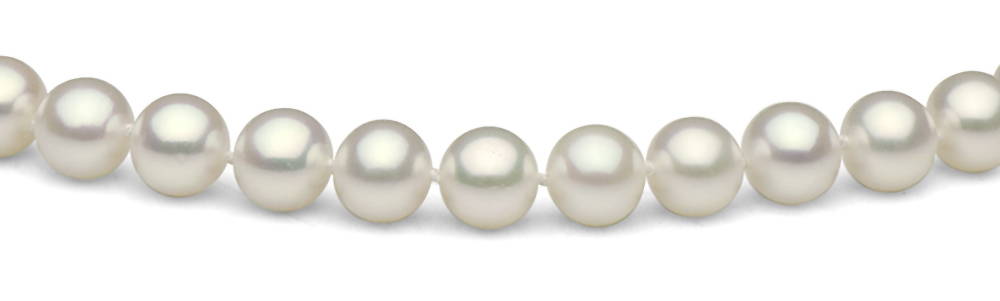
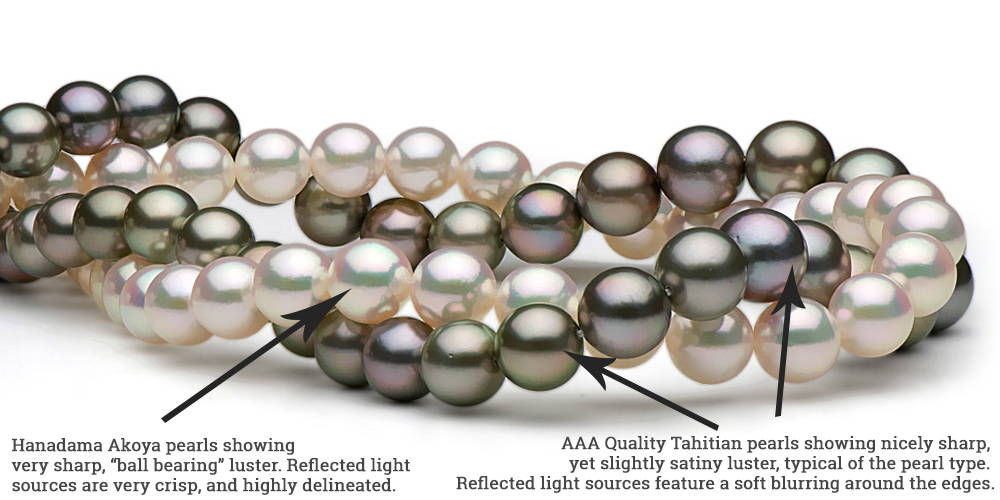
Freshwater Pearls vs. Saltwater Pearls: What Is the Difference?
There are many ways to classify pearls, but did you know that where a pearl is grown can make a big difference with respect to its quality and price? Let’s see how saltwater pearls differ from the ones grown in fresh water.
What Are Freshwater and Saltwater Pearls? Freshwater pearls are grown in mussels living in rivers and lakes. These days, most pearls formed in freshwater come from China. Saltwater pearls, on the other hand, are created by oysters in oceans and originate from places such as Thailand, Australia, Indonesia and Tahiti, among others.
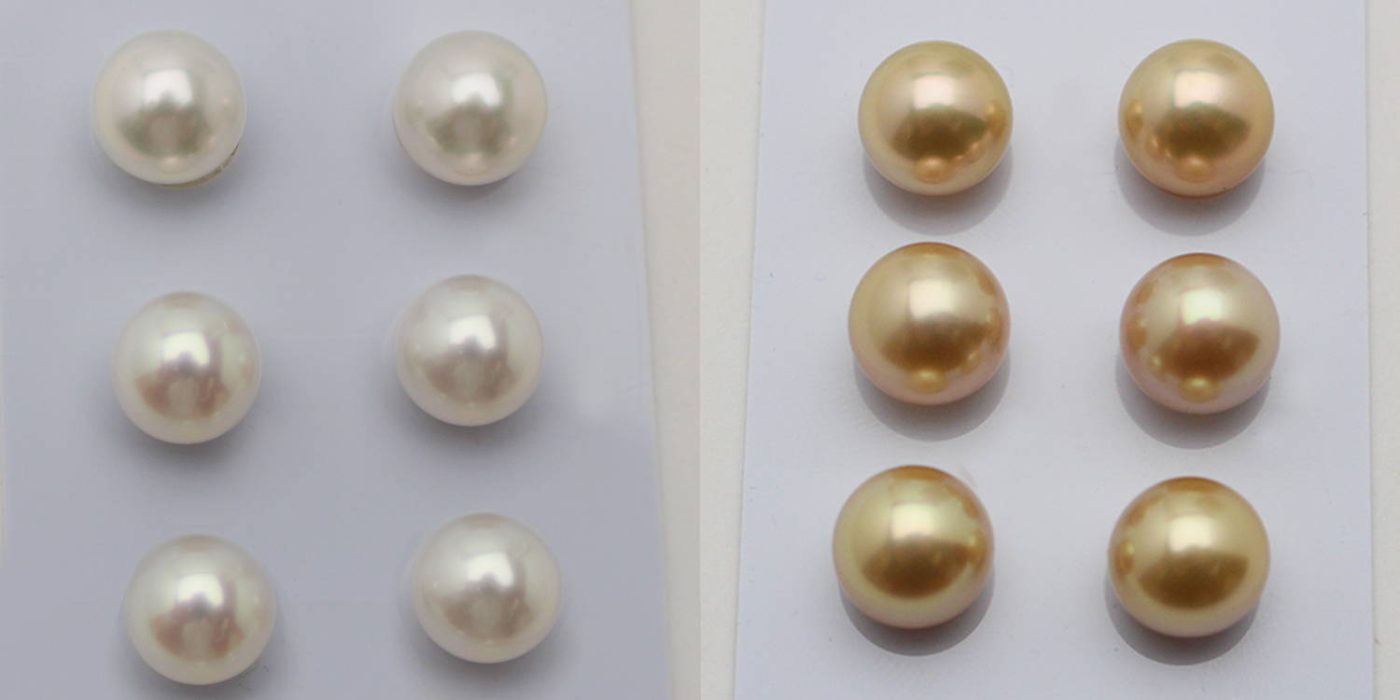
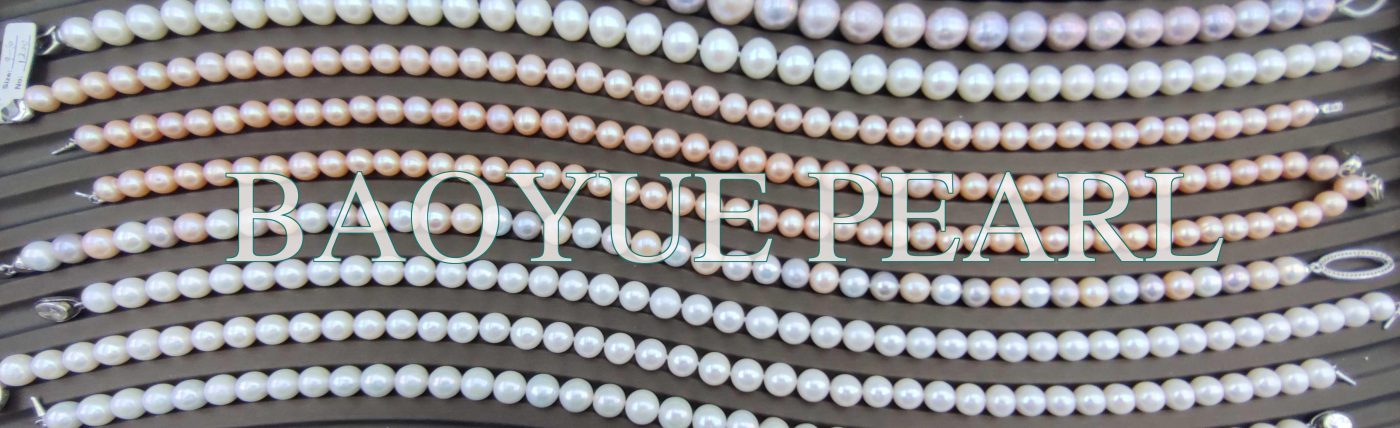
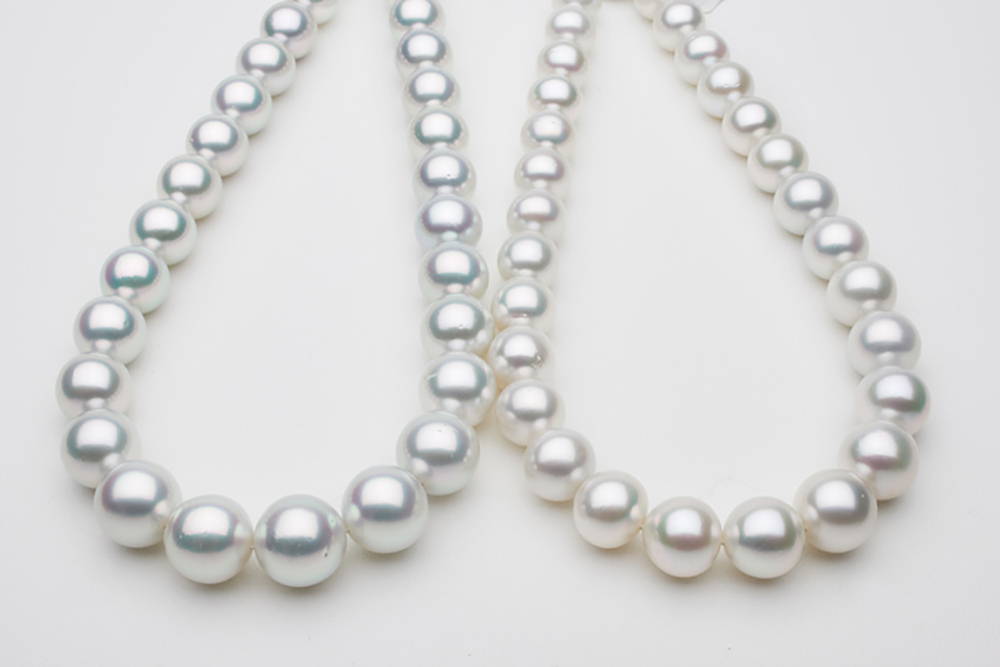
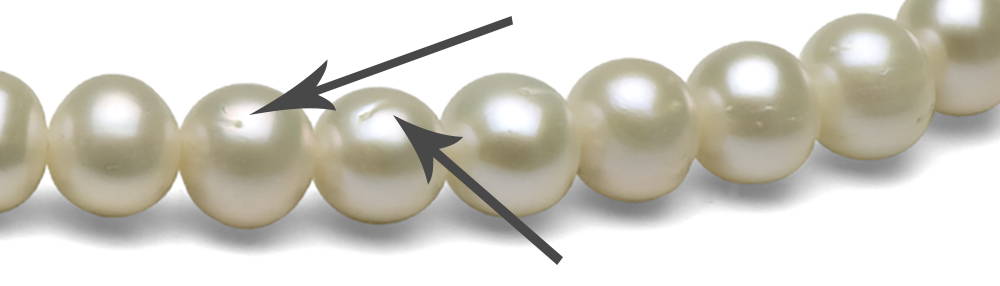
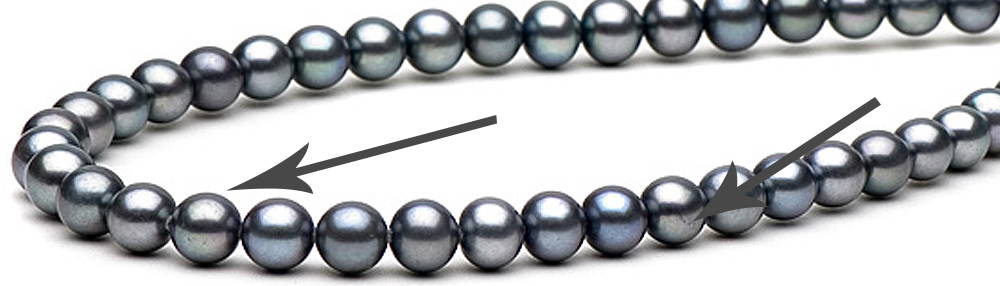
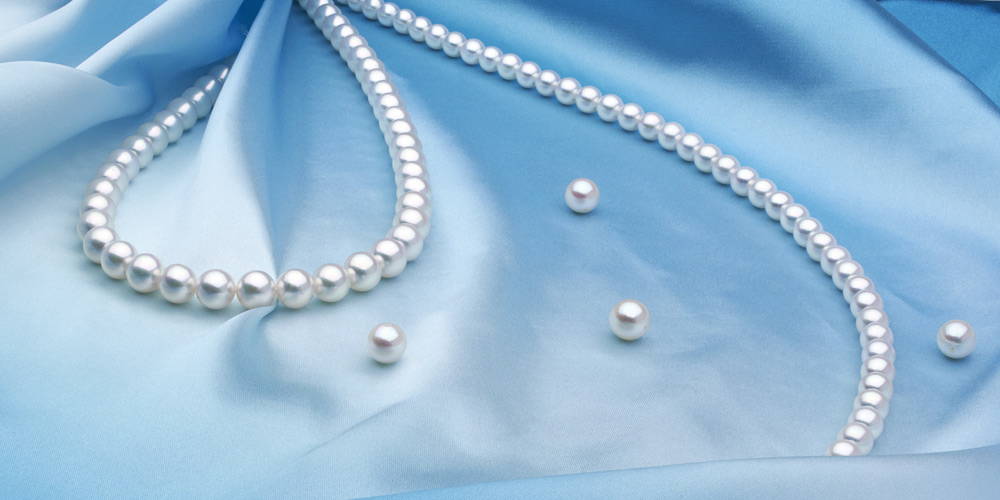
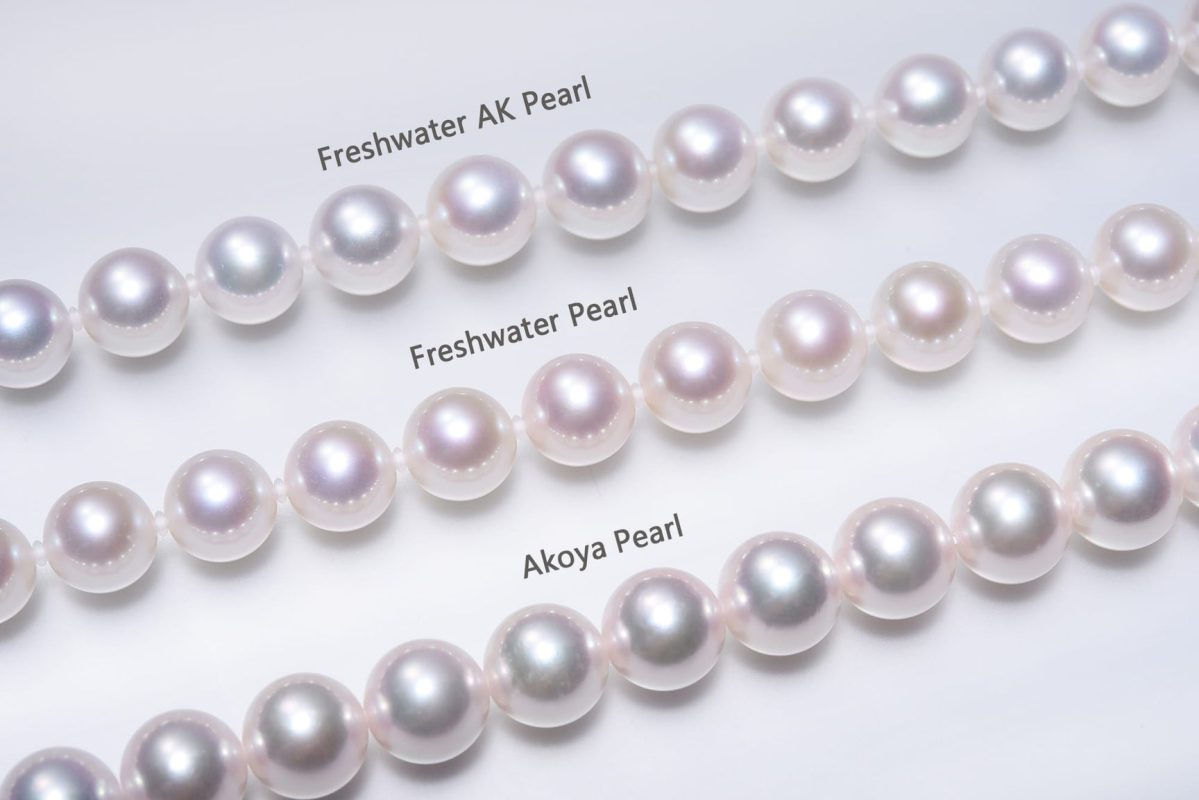
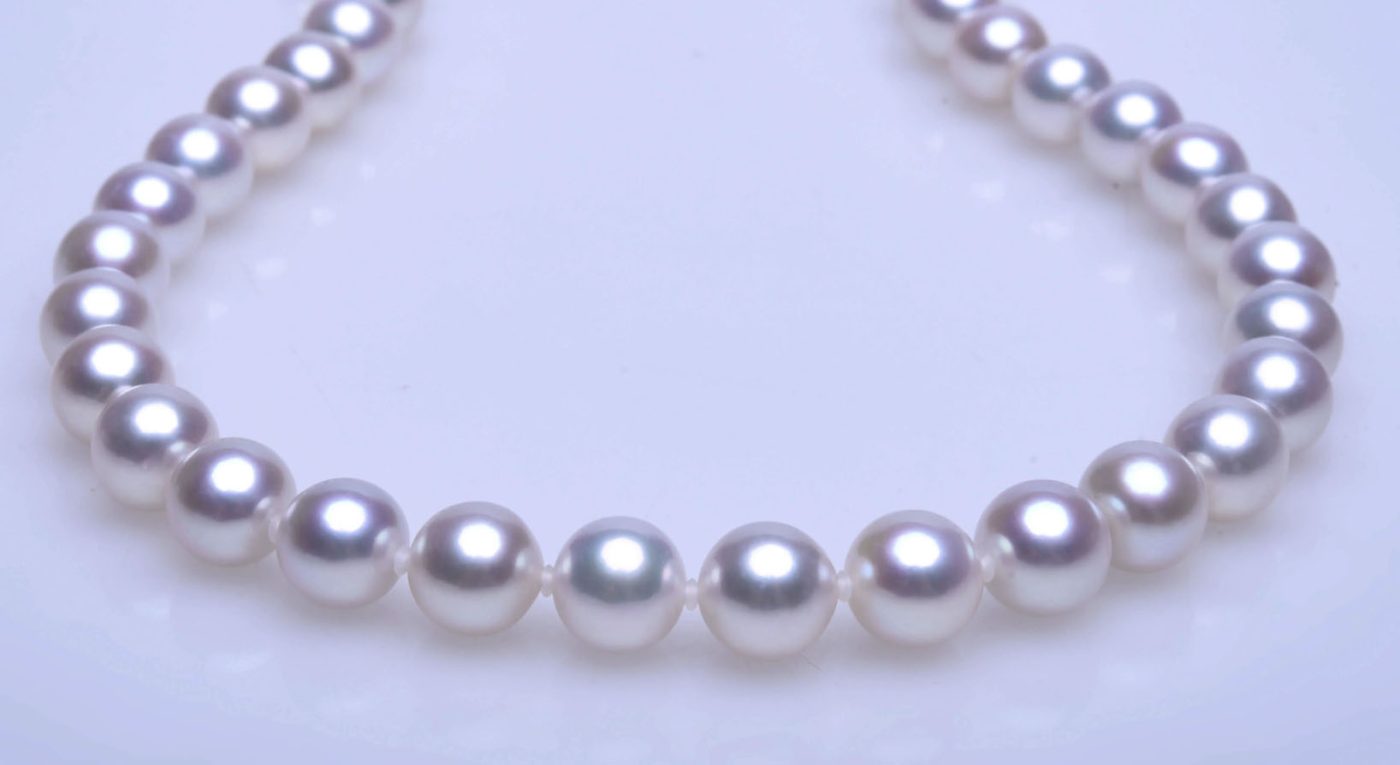
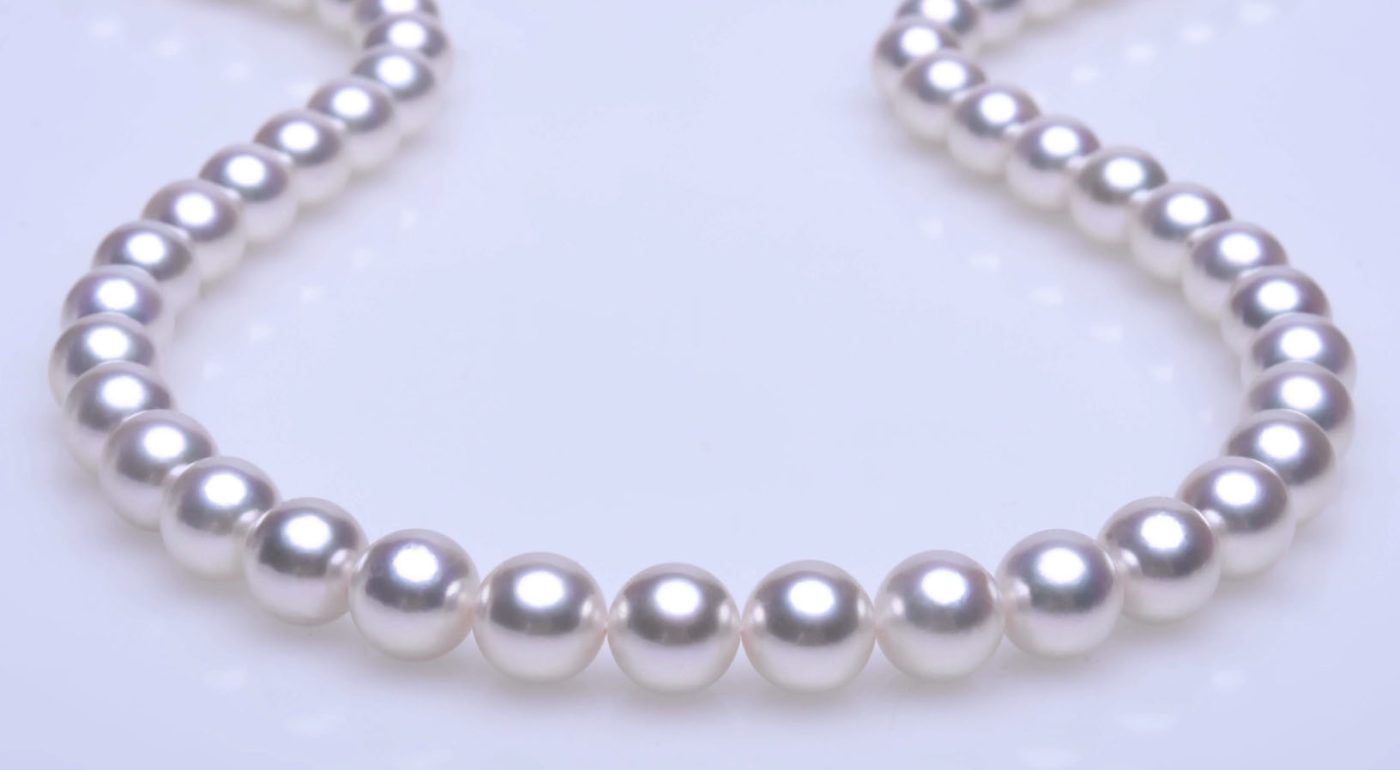
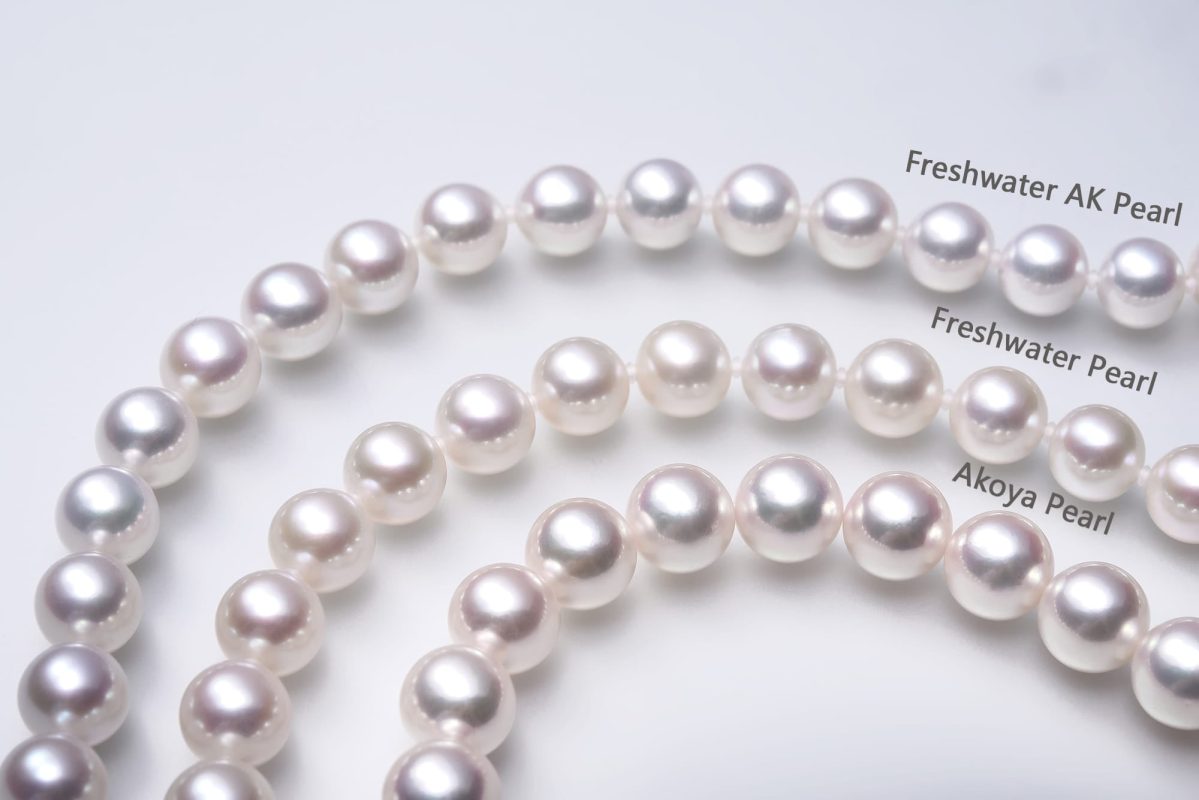
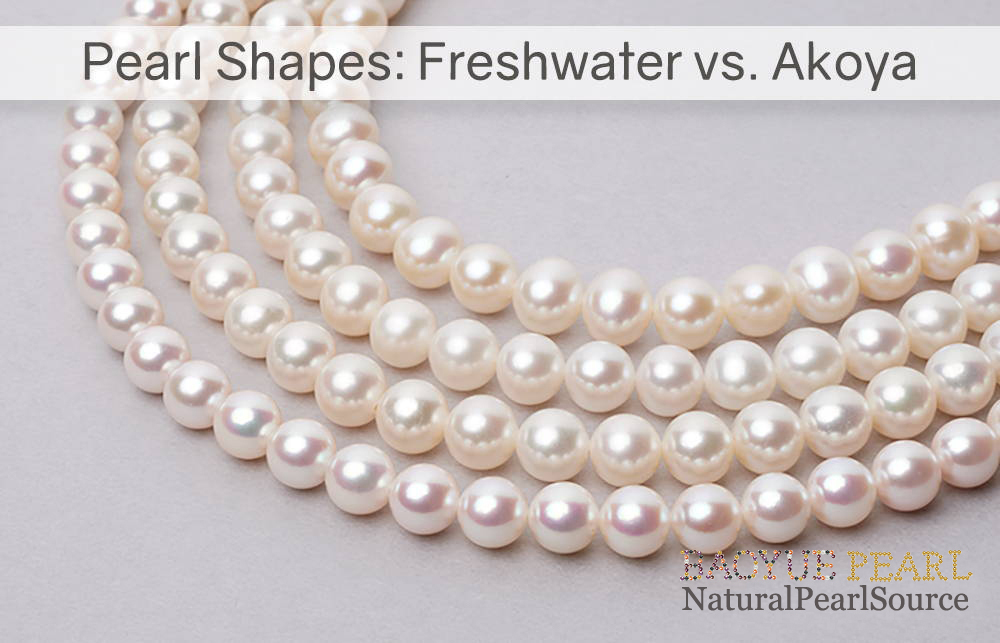
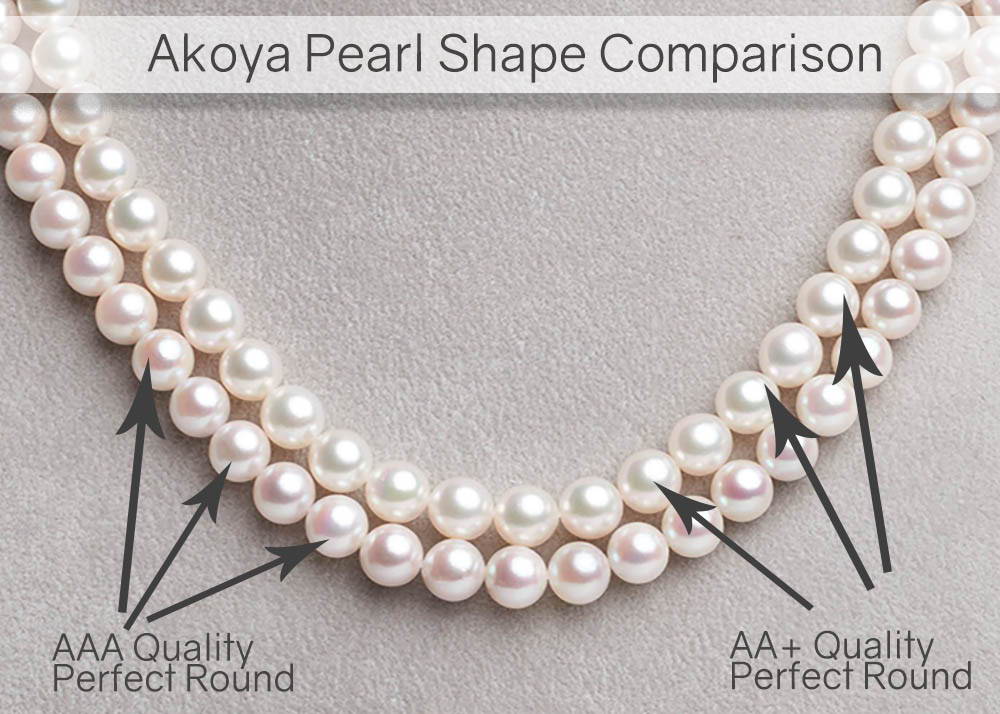
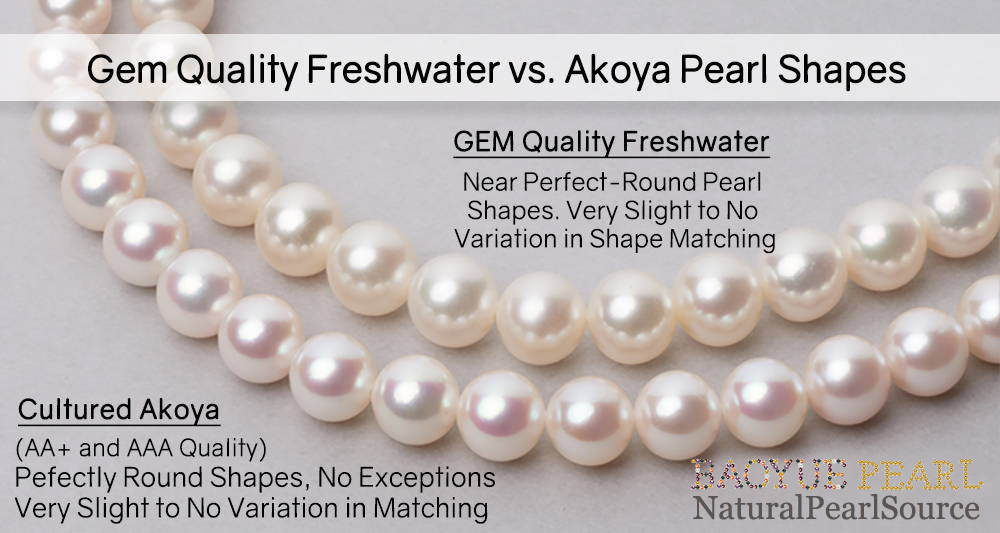
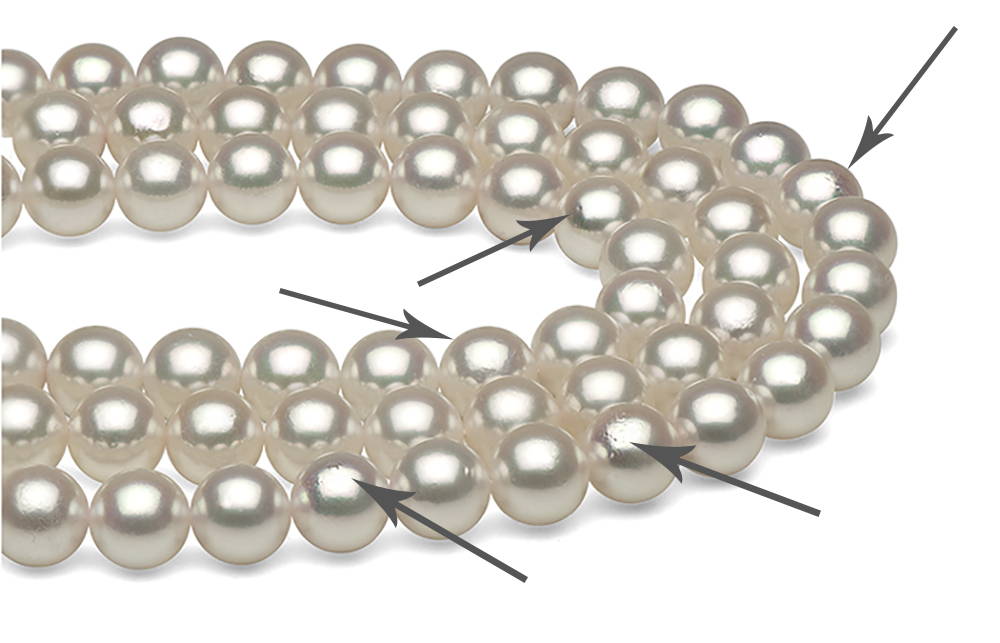
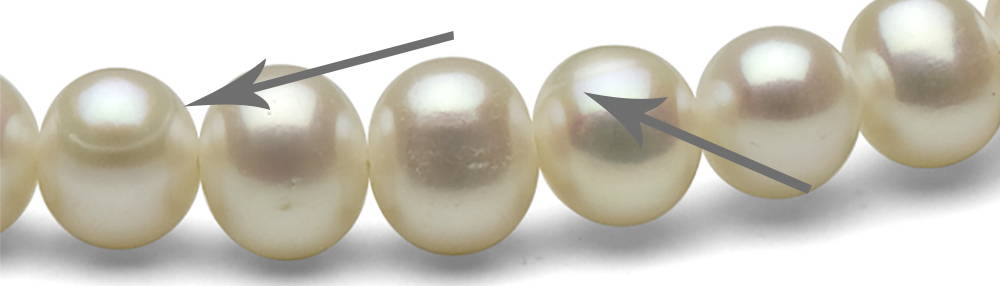
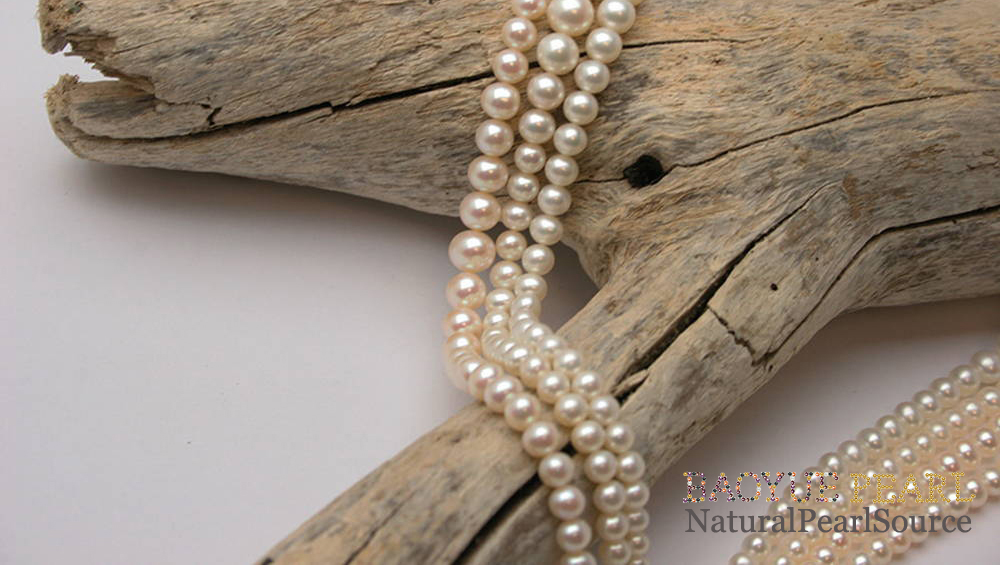
Chinese Freshwater Pearls ( Left ) vs. Saltwater Akoya Pearls ( Right )
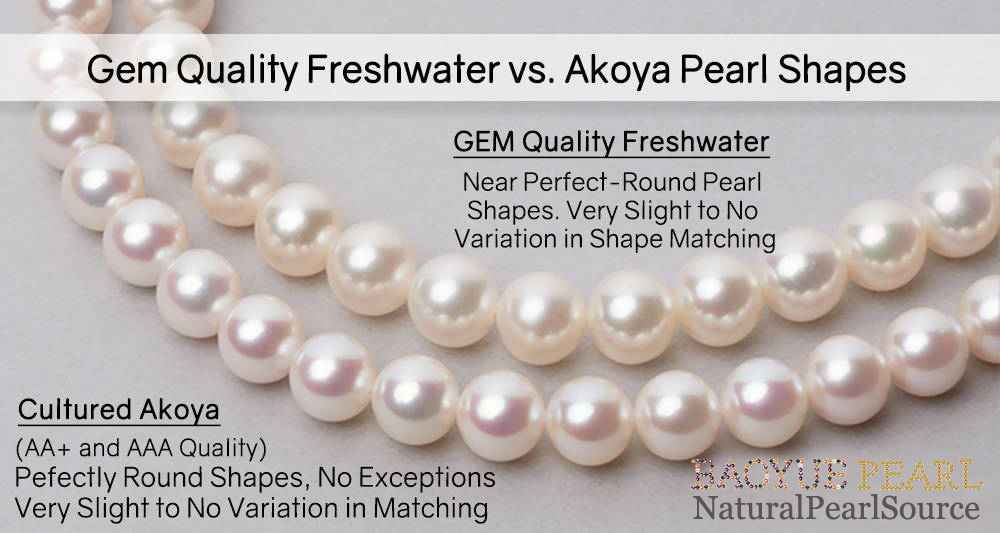
Akoya pearls, which are grown in Japan as well as China and Vietnam, are among the most popular and high-quality varieties of saltwater pearls, prized for their superior luster and nearly ideal round shape.
How Are Freshwater and Saltwater Pearls Created?
Most pearls( 99% ), whether saltwater or freshwater, are cultivated, not natural. This means that a small piece of mollusk tissue or a bead was placed into the mollusk, which covered it with nacre – the material pearls are actually made of. Pearls created this way are also called “cultured pearls.”
Generally, the longer the growing period for a given pearl, the better the formed nacre is in terms of quality. However, pearls that are cultivated for a longer time are also more expensive.
Contrary to what many people think, most saltwater pearls are not natural but cultured.
Naturally occurring pearls are very rare, and that’s why they are unaffordable for most people. The same goes for freshwater pearls – they are also predominantly cultured.
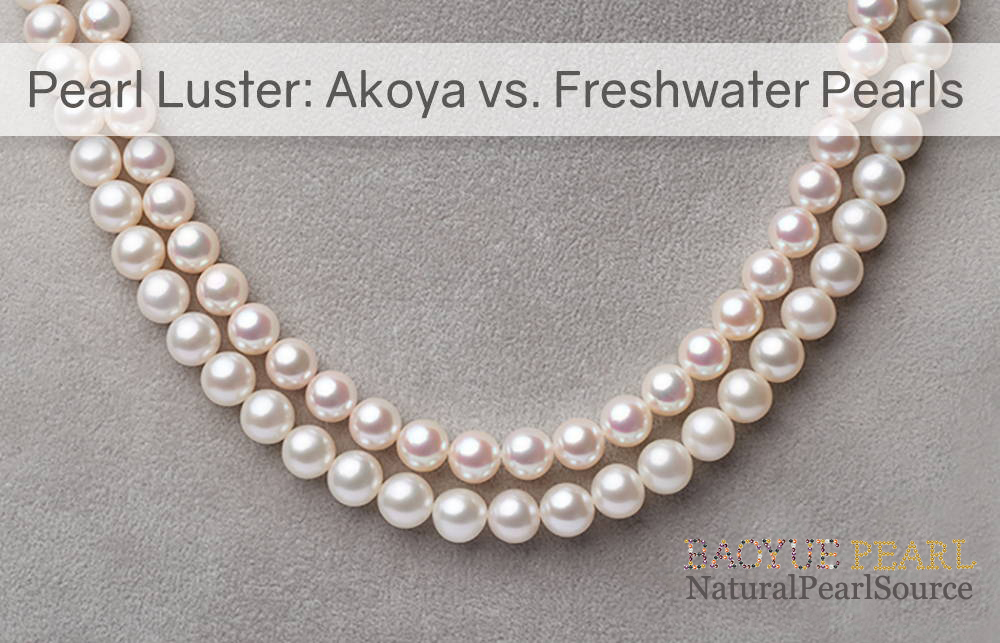
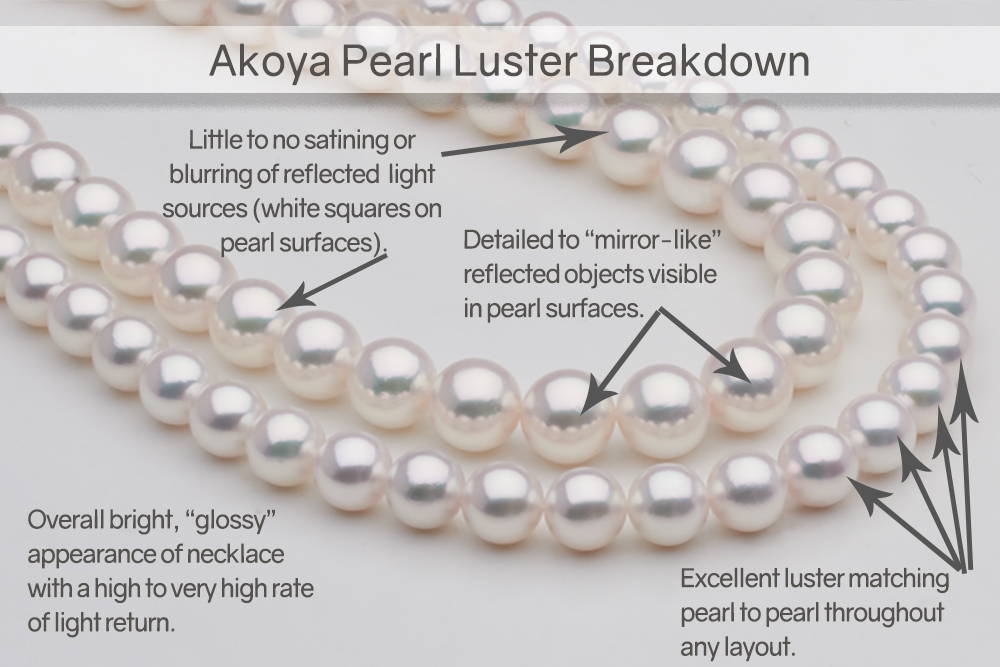
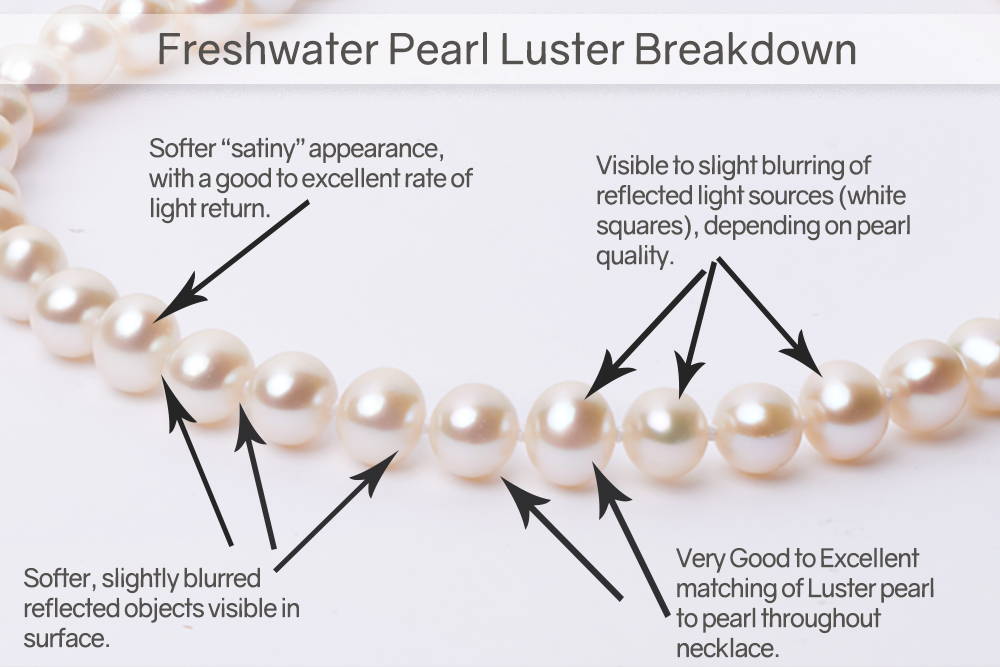
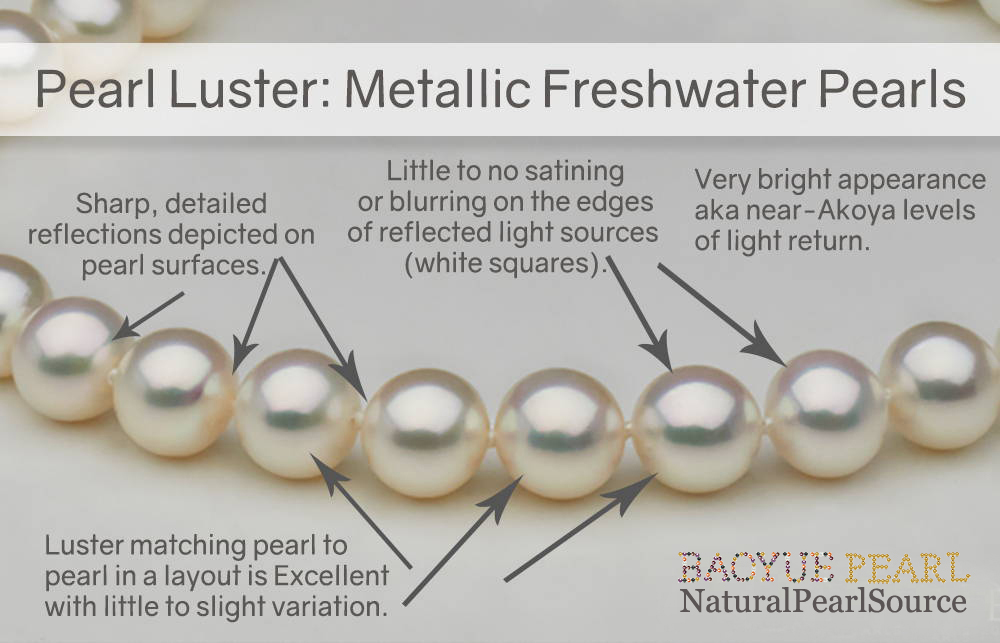
How Freshwater and Saltwater Pearls Differ ? Luster Because freshwater pearls’ nacre is thicker and differs in composition from that of saltwater pearls, freshwater pearls are less lustrous and not as glossy.
However, in recent years, there have been improvements in farming techniques and now there are freshwater pearls whose luster is comparable to that of saltwater ones.
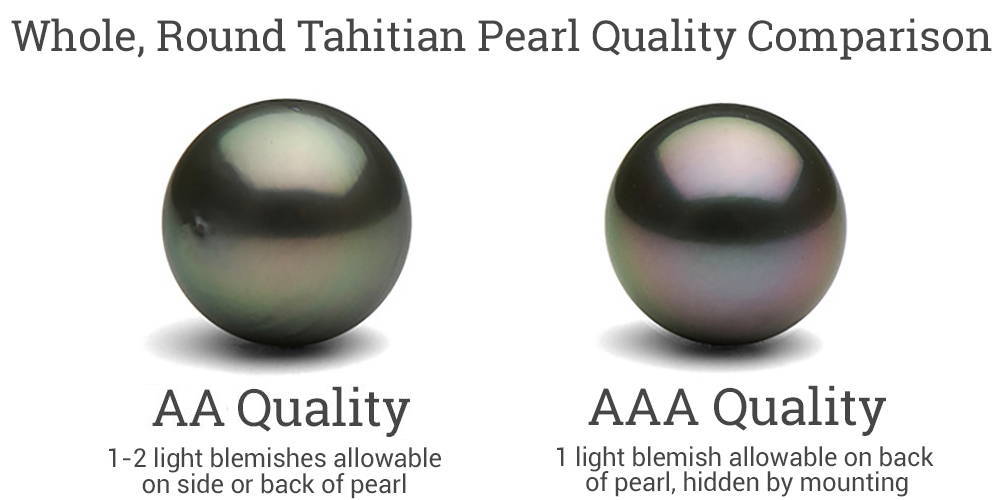
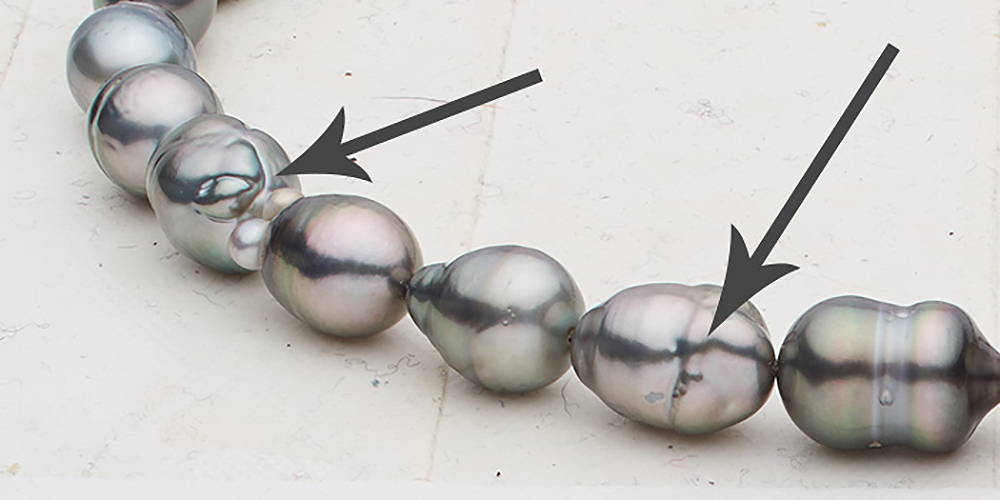
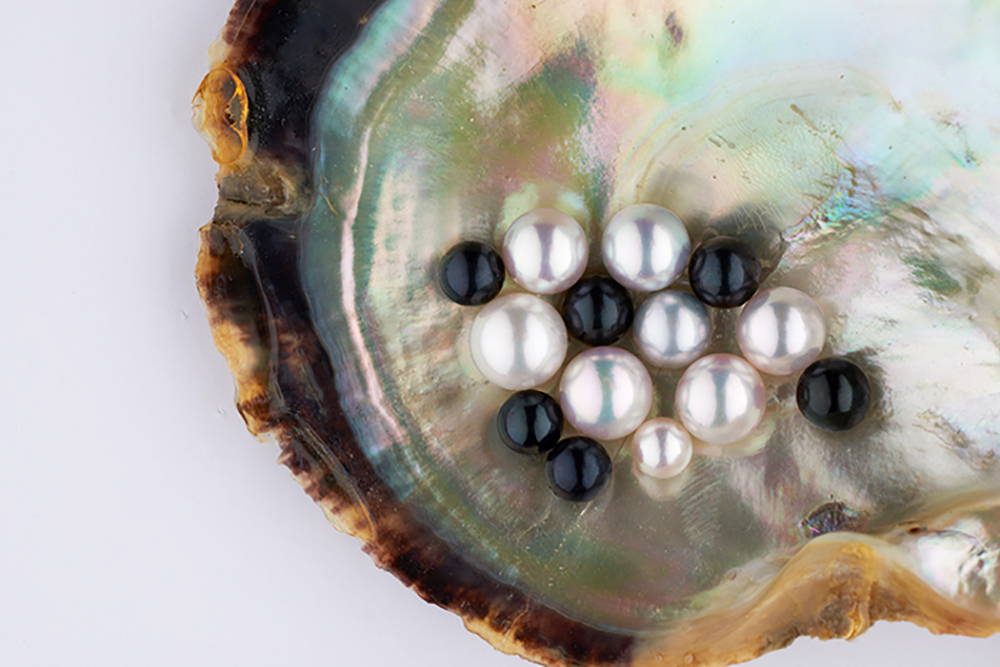
Black Tahitian Pearls
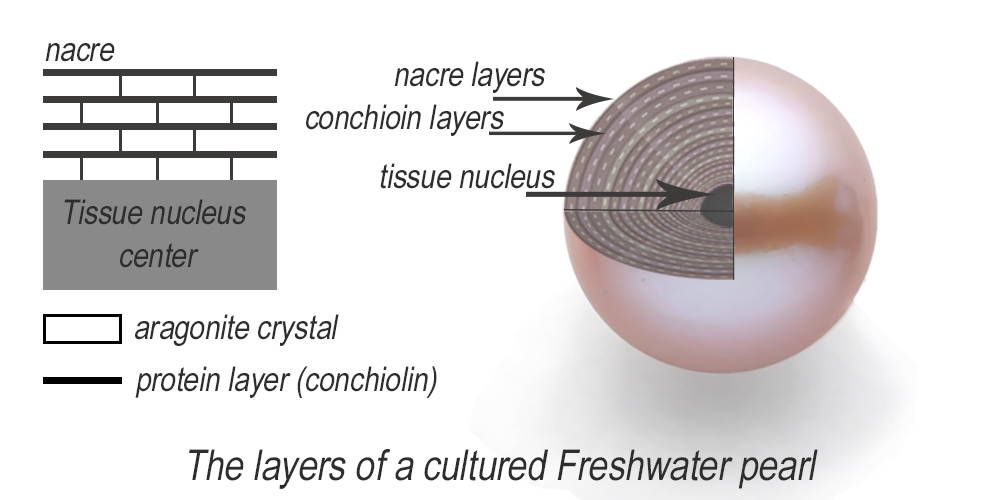
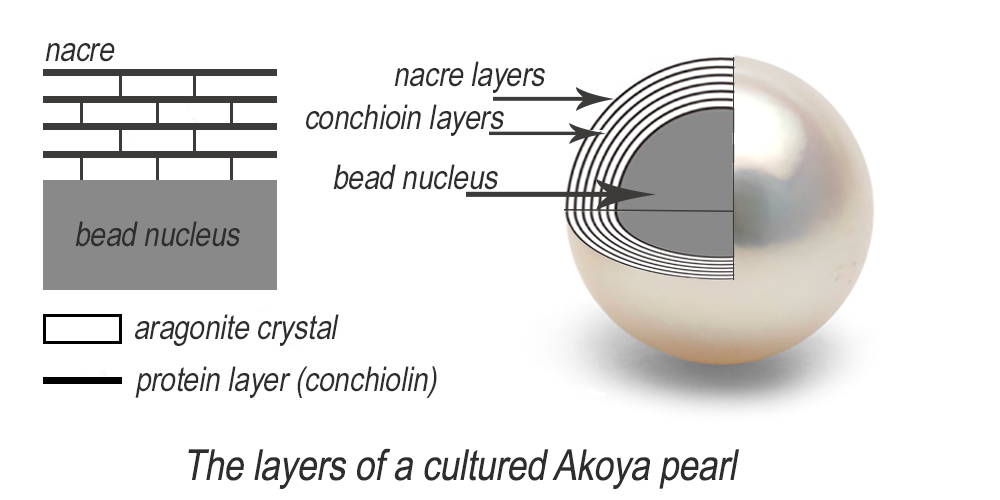
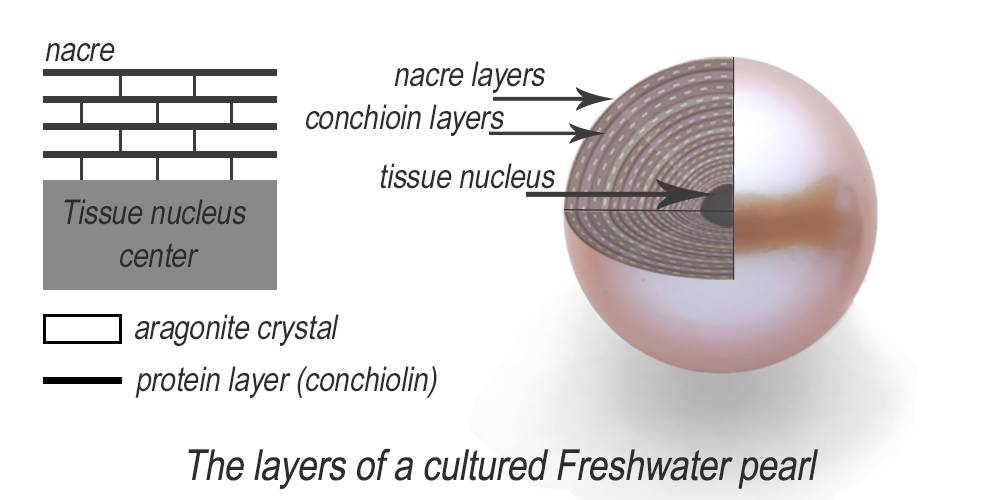
Nacre Saltwater pearls have a thinner nacre coating, ranging from 0.5mm to 6mm. Freshwater pearls, on the other hand, are made almost entirely of nacre. The reason for this difference is that the core piece (the one around which the nacre forms) inserted in freshwater pearls is a lot smaller than that put in saltwater ones.
Saltwater Pearls Nacre
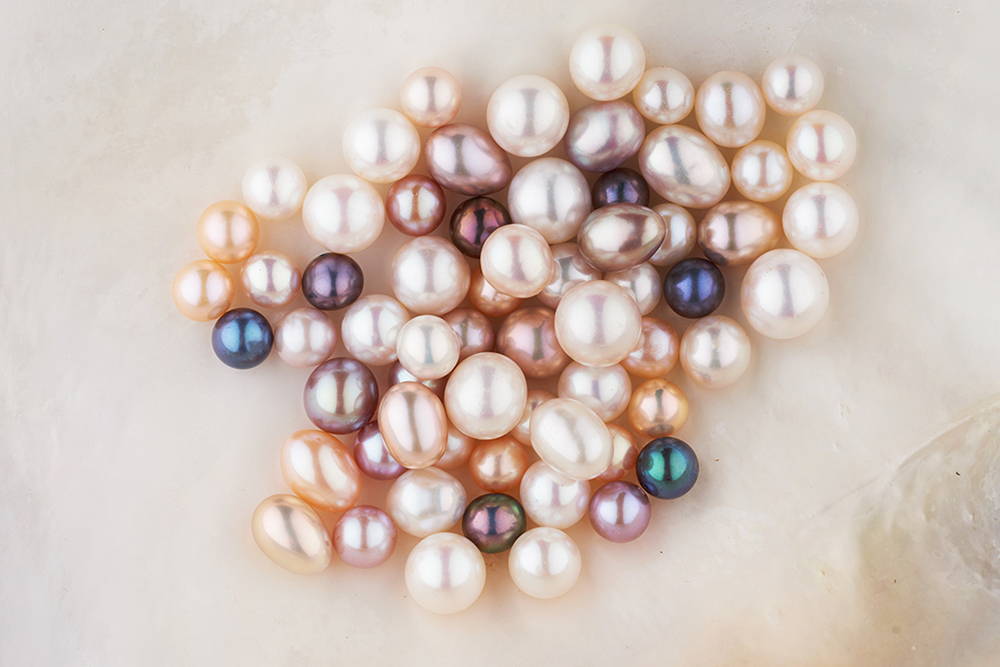
Shape and Color Freshwater pearls come in a greater variety of shapes (round, oval, etc.) and colors. Saltwater pearls are usually only round, which is the shape that is most in demand.
Size Freshwater pearls used to be cultivated over shorter periods (less than 2 years) and as a result, they were smaller in size and had an inferior shape and nacre coating. In recent years, however, many producers started to grow freshwater pearls for a longer time (three to six years), and the resulting pearls are bigger (8-15mm) and are of quality comparable to that of good saltwater pearls.
Price Freshwater pearls are cheaper for several reasons. First, freshwater mussels are larger and can thus produce more pearls at a time than can saltwater oysters. As a result, freshwater pearls are more abundant. It is also worth noting that unlike freshwater pearls, saltwater ones are mostly round and have better luster – characteristics that are more sought after and therefore command higher prices.
Since the nacre layer of freshwater pearls is thicker, they are more durable than saltwater ones, which are more vulnerable to wear and also more prone to chipping. Saltwater pearls, on the other hand, are more lustrous and have a rounder shape. As you can see, when choosing between these two pearl varieties, you need to weigh appearance against durability and decide what trade-off you are more comfortable with. Finally, if you can find freshwater pearls that have been cultivated using modern methods, you will find that these pearls often match the luster and shape of their saltwater counterparts, but at a more reasonable price.
The Modern Pearl Market Today, nearly 99% of all pearls available are cultured pearls.
Whether Akoya, Tahitian, Freshwater or South Sea varieties, pearl farms have spread all over the world. Modern culturing techniques are so advanced that there has never been so many high quality pearls available to anyone who wants to buy them, with new and astonishingly beautiful pearl varieties and hybrids appearing every few years. At NaturalPearlStrand.com you’ll find a curated selection of only the finest cultured pearls.
If you have any question about pearl knowledge, Please come in BAOYUE Pearl Education page to read relevant articles, maybe you can get some answers, the link: BAOYUE Pearl Education . or leave a message to us, we will reply you within 24 hours.
Tahitian Pearl Buying Guide – Your Insider’s Guide to Buy Tahitian Pearls
The popular Tahitian Black Pearl is produced exclusively by the exotic black-lipped oyster found in the waters around the islands and atolls of Tahiti. Its romantic hues, reminiscent of tropical evenings, range from dramatic blue-black to a soft dove gray, with iridescent halos that dance with your every movement.
Tahitian pearls—especially the black ones radiating with purple, green and silver tones—represent the dark side of the moon. Tahitian pearls come in a stunning array of colors, sizes and shapes. Whether in an exquisite necklace or a pair of earrings, combined with sparkling diamonds, Tahitian Black Pearls offer everlasting memories of dreamy, starlit nights in Paradise.
What is Tahitian Pearls ? The Tahitian pearl (or black pearl) is an organic gem formed from the black lip oyster (Pinctada margaritifera). These pearls derive their name from the fact that they are primarily cultivated around the islands of French Polynesia, around Tahiti.
Tahitian black pearls. They’re some of the world’s most captivating, most sought-after gems, and they’re the stuff of legend since real Tahitian black pearls can only be found in The Islands of Tahiti. If you’re traveling throughout The Islands of Tahiti, there’s no better souvenir — after all, you’re here at the source, so you’re definitely going to want to indulge in some Tahitian pearl shopping.
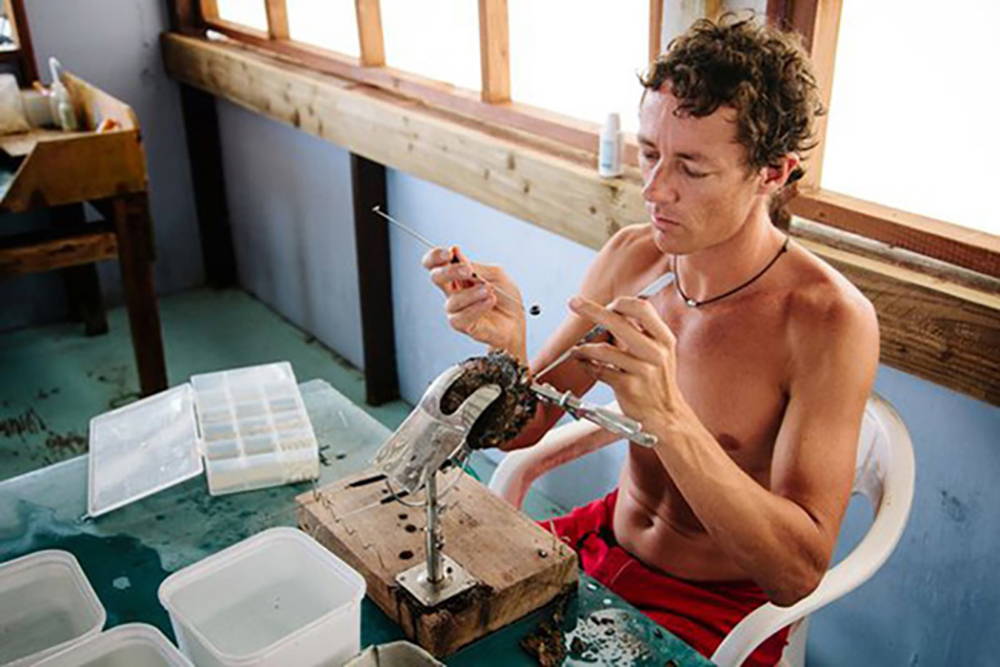
A cultured saltwater Akoya pearl is the product of a synthesis between humans and nature. A mother of pearl shell bead nucleus is inserted into the host oyster, along with a square of donor mantle tissue from another oyster who has previously borne pearls of high or exceptional value, and the oyster is left to begin secreting around the nucleus, eventually forming a pearl.
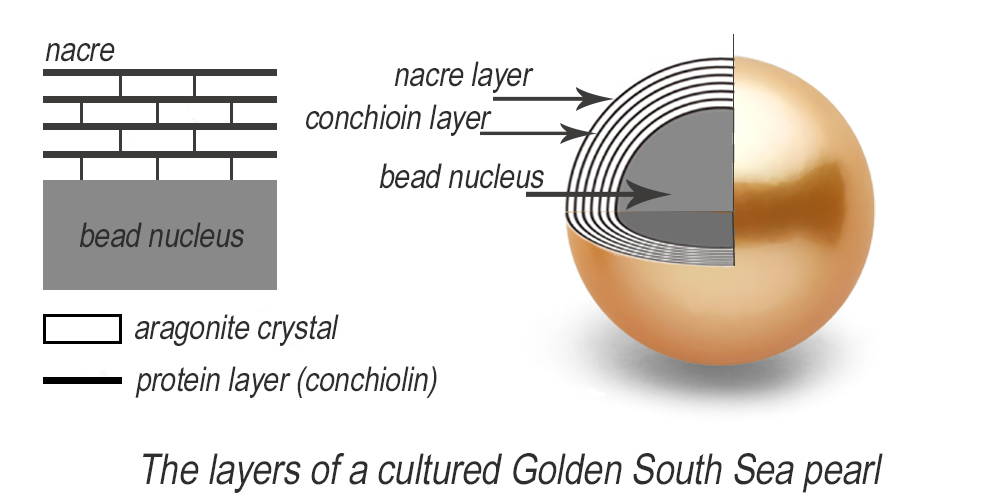
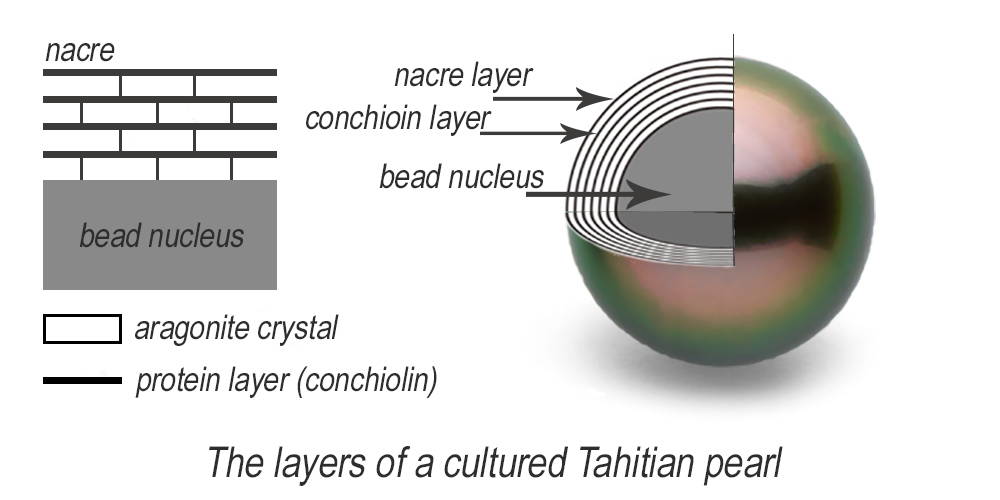
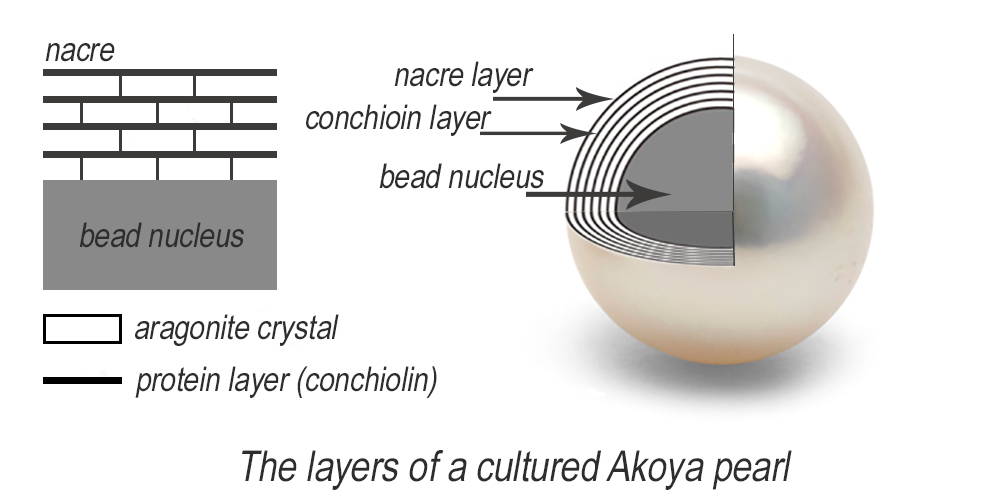
The crystalline nacre layers are made up of microscopic aragonite platelets composed of calcium carbonate, and bound together with an organic “glue” of sorts called conchiolin. The aragonite platelets are fairly transparent to slightly tinged in color, able to both reflect and refract light rays striking their surfaces, giving pearls their trademark pearl luster and subtle glow. The tighter and more compact this arrangement of crystal is, the brighter the luster the pearl displays and the greater the amount of orient or iridescence.
Tahitian Pearls - 3 Things You MUST Know
These exotic "black pearls" are the stuff of legend. Just the mention of black Tahitian pearls, conjures up thoughts of deep tropical waters, swaying palm trees and good men gone mad in search of them. Below are three quick facts I think everybody should know before making the decision to purchase Tahitian Pearls.
1. Tahitian pearls are not grown in Tahiti. Tahiti is the main island hub of French Polynesia, but Tahiti itself does not actually produce pearls. Tahitian pearls are grown in French Polynesia, a group of 5 island archipelagos that covers the size the Europe! Yet only has a land surface of around 1500 square miles. The two archipelagos responsible for most of the pearl production are the Tuamotu Archipelago and Gambier Islands.
2. Tahitian pearls come in many shapes (and that's a good thing!) Tahitian pearls are bead nucleated. Which means the pearl farmer will very skillfully insert a round shell bead inside the oyster. With the hope that the oyster will produce a round pearl. The bead DOES increase the chance of a round pearl, but mother nature is still in charge of this operation. And in fact less than 10% of harvested pearls will be round. The shapes will normally fill into 4 categories: round near round baroque circle (a type of baroque pearl)
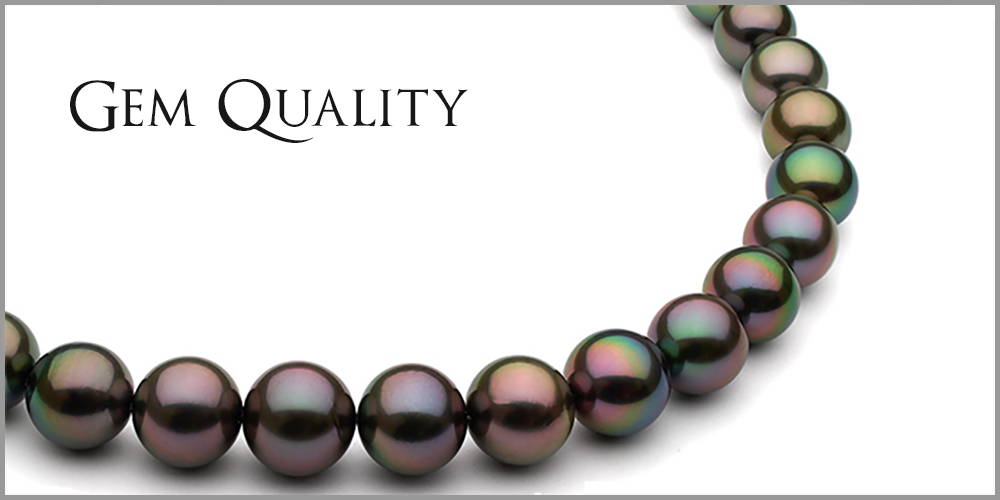
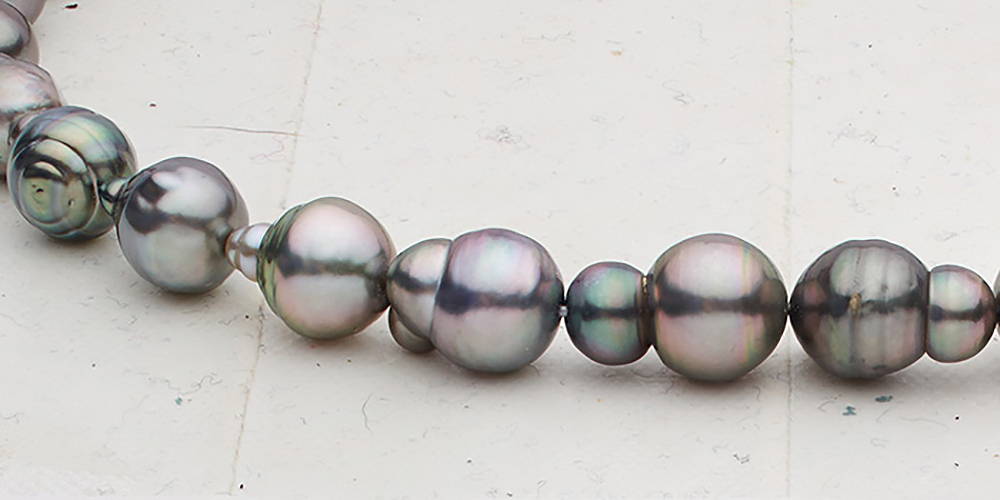
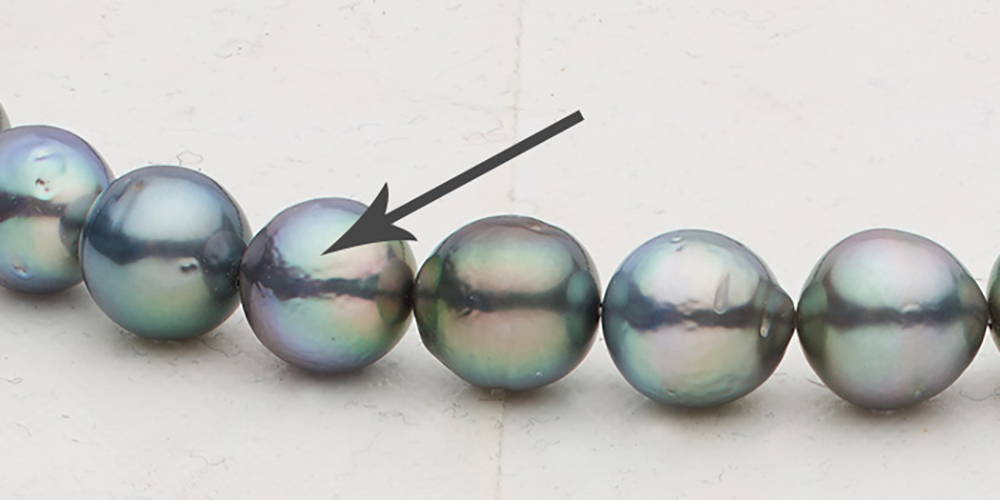
3. "Black" Tahitian pearls aren't actually black When discussing the color of Tahitian pearls(or pearls in general) the term "black" is used to describe pearls with dark body colors. It could be blue, purple, green, brown, silver -- but never a true black. In addition to the body color, Tahitian pearls can display an amazing range of overtones(especially the circle and baroque shapes). Traditionally the most sought after(expensive) Tahitian pearls will have a dark green body color and peacock(think oil slick) overtones. Pearls that look something like this:
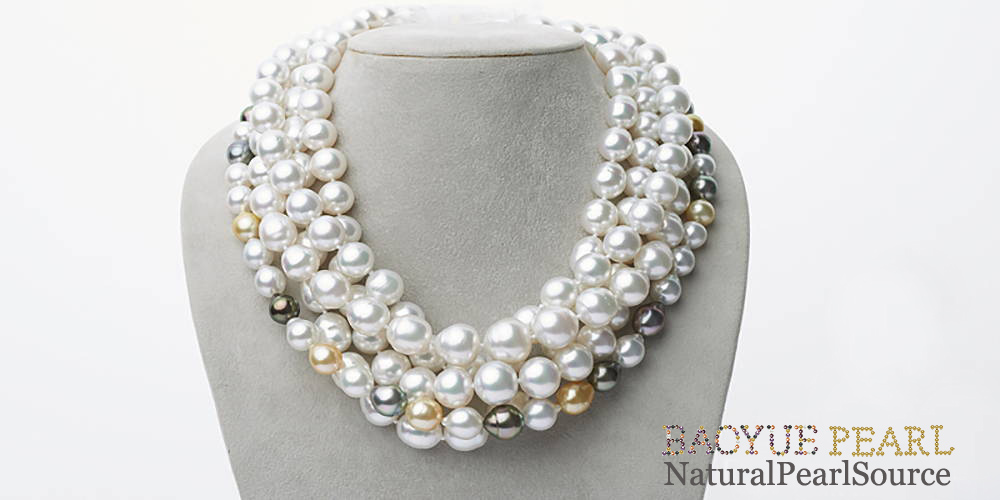
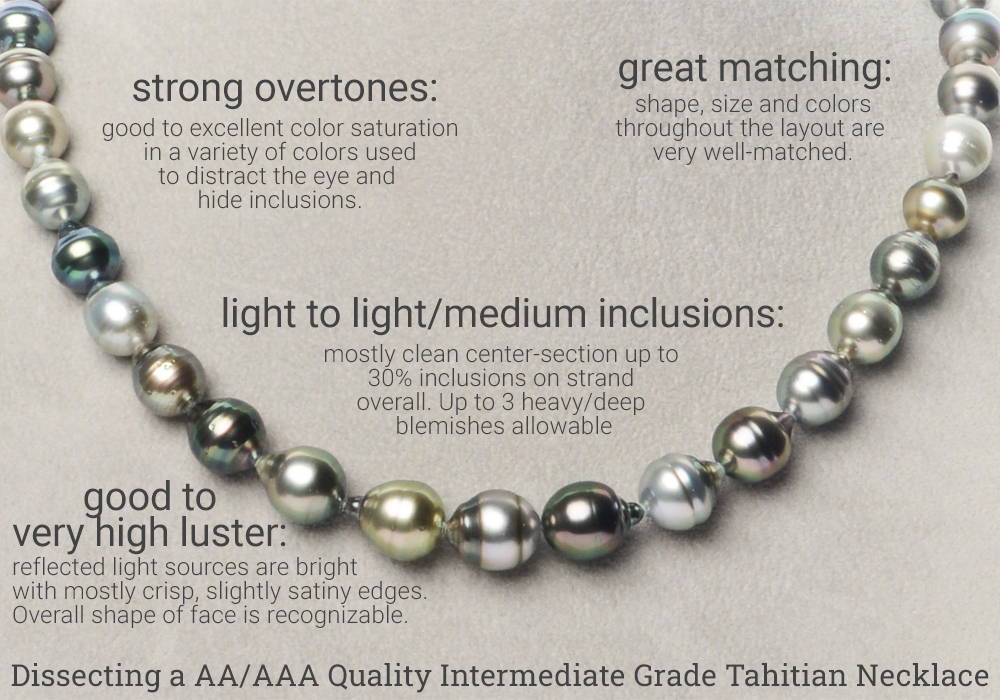
That said, in the last few years we've really seen an increased appreciation for the full range of colors possible This multi-color strand shows how different the colors can be:
It's important to note that Tahitian pearls are the only naturally "black" pearls. Black Akoya and black freshwater pearls are dyed.
Why you want to consider baroque pearls... In a word - COLOR ! The shape of baroque pearls allow for light to reflect from many different angles, making overtones really pop. The most colorful strands are always the baroque and circle shaped pearls.
Baroque Tahitian Pearls:
If you have any question about pearl knowledge, Please come in BAOYUE Pearl Education page to read relevant articles, maybe you can get some answers, the link: BAOYUE Pearl Education . or leave a message to us, we will reply you within 24 hours.
Pearl has a long history, because of its innocence and beauty, because of the birth of life, it has continuously written a harmonious legend of itself and women. In fact, pearls have been out of ordinary people's homes for a long time, but only a few decades, and the pearls that consumers are now exposed to are not the historical East and South pearls (now freshwater pearls and seawater pearls). They are both artificially cultivated, but with different water, different mother-of-pearl varieties, and different nucleation methods, resulting in different varieties of pearls.
Features of Freshwater Pearls:
1.Freshwater pearls are easy to reproduce. There is a saying: "As long as you dig a hole in the ground and fill it with water, you can feed freshwater pearls." Freshwater pearls are located south of the Yangtze River and can be raised as long as there is water! At present, the main producing areas of freshwater pearls have become Hunan province and Hubei province, which is unexpected by many people.
2. Freshwater pearls have a fast culture cycle, large quantities, pure cultured pearls, and some "natural pearls" are well received by some sellers ! Freshwater pearls raised at high densities are fed on feed, as natural baits cannot meet the growing demand for freshwater pearls! Freshwater pearls grow very fast, and each scorpion can produce 20-30 freshwater pearls. In 2-3 years, from seedless to 7-8 MM, the density is much lower than that of seawater pearls. (Like that kind of fast growing forest) From this point of view, sea pearls, raised in the sea, food and clothing, old and sick, and hear the fate of the sky! It is a natural cultured pearl! Because any bait and drugs are thrown into the sea, they are all "dyed to seawater", and seawater pearls, each shell produces only one pearl (my father is breeding seawater pearls)
3.Freshwater pearls have very little density. The density of pearls is much lower than that of seawater pearls. With low density, the gloss will disappear quickly! This is the biggest disadvantage of freshwater pearls! Freshwater pearls are worn on the skin and the luster disappears quickly. The wear time of freshwater pearls is about 1-2 years!
4. Freshwater pearl production area, the best pearl production area I have not heard of pearls in many places in China. Seawater pearls are produced in Hepu, Beihai and other places in Guangxi Province, and freshwater pearls are produced in Jiangsu, Zhejiang, Sichuan, Anhui, Hunan, Jiangxi and other places. In recent years, China has replanted freshwater pearls in the rivers and tributaries of the Yangtze River basin, resulting in different shapes: round, oval, button-shaped, drop-shaped and irregular, in pure white, orange and rose colors. And so on, offering different options and matching personal tastes.
The Pearl of Hepu, Lianzhou, Guangxi, became a tribute to the Tang Dynasty: the classics of the Tang Dynasty have records of pearl mining in Hepu. Tang Liuxun's "Ling Biaolu - Chizhu": According to records, there is a large island Lianzhou on the border, and there is a large pond on the island called Zhuchi. Every year, Thorns are honed to self-monitor Zhuhu into the pool to collect tributes. The Tang Dynasty tribute, known as the "Shangqing Pillar", mainly came from the Western Regions, while Qibin King dedicated it to Xuanzong of the Tang Dynasty.
5. The role of freshwater pearls, pearls have been used in beauty for at least 500 years. Pearls have detoxifying properties, so they have the effect of preventing facial acne and skin infections, but more importantly, pearls also have anti-aging properties. A growing number of research institutes have demonstrated this effect. Research by pharmacologists at Suzhou Medical College has shown that pearls have anti-aging and anti-radiation properties. Chinese scholars have shown that pearls can prolong the survival time of silkworm adults by nearly 60%. It is known that as nerve cells and heart muscle cells lose their ability to divide with age, lipofuscin levels also increase. Reduce the efficacy of lipofuscin for anti-aging purposes.
Doctors now recommend pearls to their patients. This refined pearl powder is processed by modern technology and made into fine powder according to medical standards. The smell is salty and cool, without any side effects, it is convenient for oral administration, convenient for water transfer and external use. For external use, generally take 0.6g each time in cosmetics and wipe it on the face. It has an emollient effect and counteracts the effects of melasma and acne on the face. Pearls can also be taken orally, 0.3 grams per serving. 0.5 grams is enough. You can try pearls for people with swollen eyes, blurred vision, insomnia, sore throat, and aphthous ulcers. Also, the ulcers don't close for long, the kids get stuffy, and those who have trouble sleeping at night receive nice pearls. Influence. Pediatric medication should be reduced according to age.
Your Guide to ALL You Need to Know About Buying South Sea Pearls
Luminous and lovely, White and Golden South Sea pearls are some of the rarest and most sought-after pearls in the world. They're known as the "Queen of Cultured Pearls" and the "Rolls Royce of Pearls" respectively ... and one look at these pearls confirms that they've earned their titles!
The South Sea Pearl Jewelry Buyer's Guide from NatrualPearlStrand.com is here to give you the inside scoop on everything you need to know about purchasing these stunning and luxurious pearls. From their tropical origins and fabelled history to their natural colors and overtones, sizes, shapes and what kind of budget you should plan for. As always, this insider's Buyer's Guide to South Sea Pearls is filled with our trademark real-life pearl pictures and visual aids, so you'll always know exactly what to expect when shopping for South Sea pearl jewelry at BAOYUE PEARL.
Read the entire article and learn how to buy South Sea pearls like a professional.
The South Sea Pearl Basics
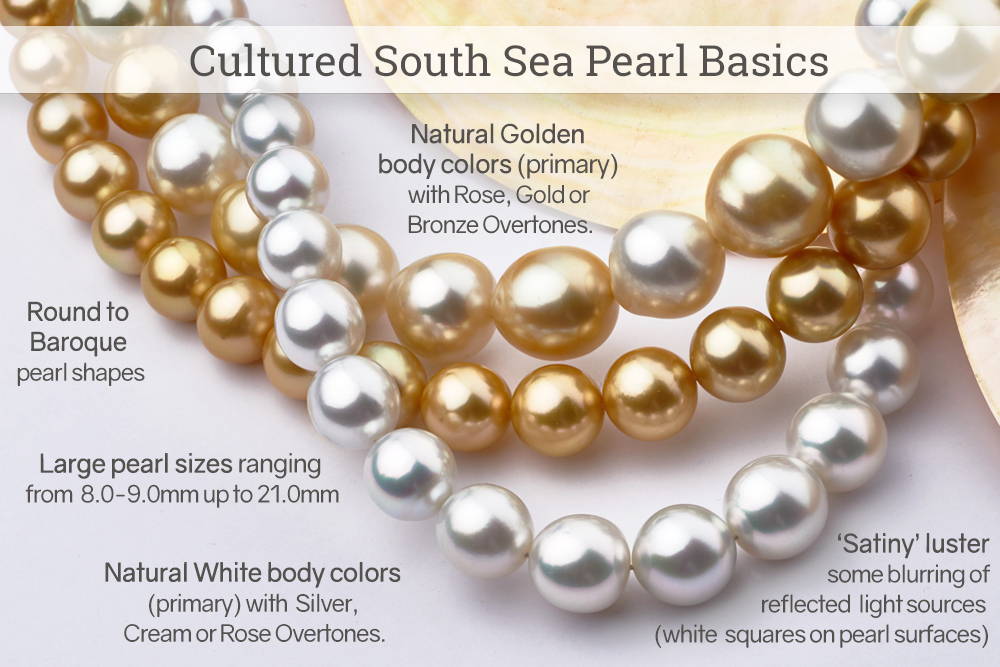
♠ White and Golden South Sea pearls are primarily for their stunning natural colors. The Golden body colors for Golden South Sea pearls are completely natural, with no enhancements or dyes whatsoever. Their most common overtones are Neutral Gold, Silver, Rose and Bronze. White South Sea pearls also feature a totally natural White body color, with classic overtones of Silver, Rose and Cream.
♠ South Sea pearls are known for their softer, more “satiny” luster. Both White and Golden South Sea pearls feature incredibly thick crystalline nacre layers, which means that light penetrating and bouncing back at the viewer has much farther to travel before reaching the eye. The return trip of the light wave diffuses and creates that softer, satin luster effect for the viewer - the pearls display more of an inner glow versus the glossy, mirror-like shine of the Japanese Akoya.
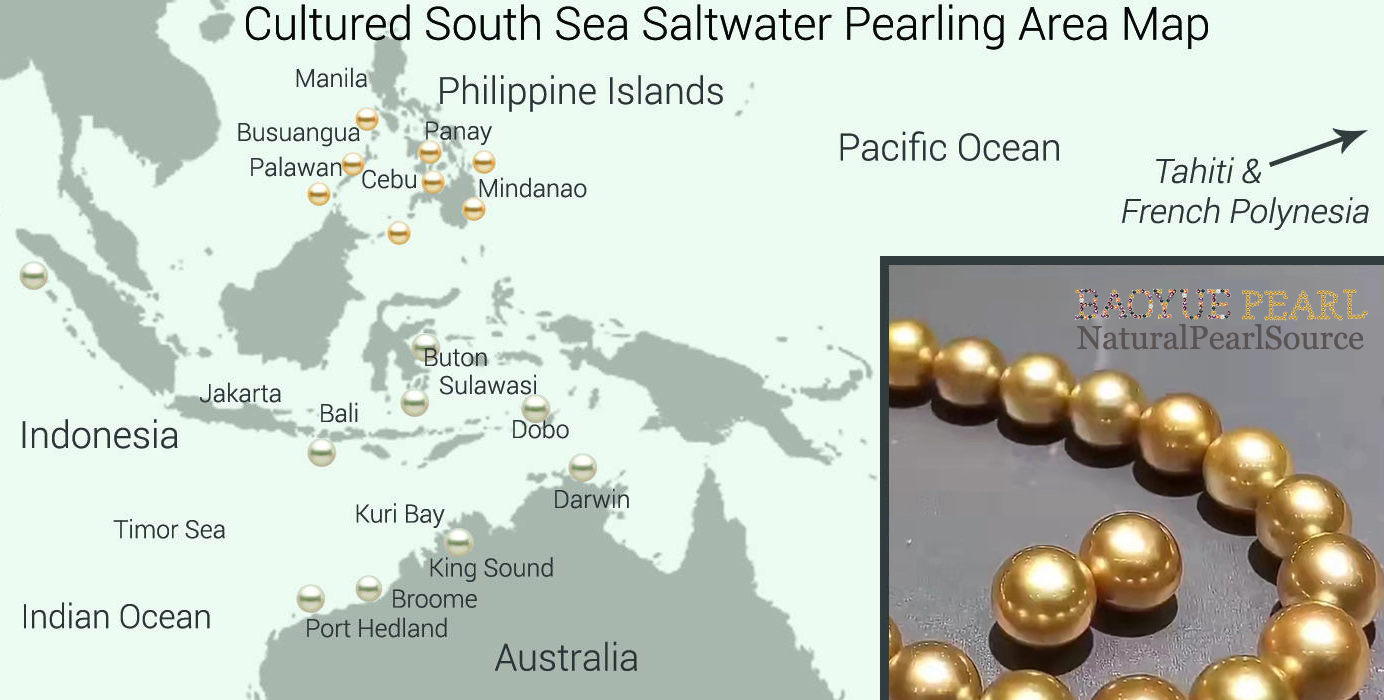
♠ White South Sea pearls are primarily farmed in the open ocean, off the coast of Northern Australia. The town of Broome, AU houses the headquarters of the most famous and oldest cultivation operations, Paspaley Pearls.
♠ Golden South Sea pearls are farmed throughout the island chain of the Philippines, traditionally in the protected lagoons and atolls of these tropical islands. A large percentage of each yearly harvest is produced by small family or community-owned farms, but the most famous Golden South Sea pearl producer by far is Jewelmer, located on Flower Island. Other Golden South Sea pearling areas are Burma/Myanmar (famous for their 24K Golden pearls) and Indonesian islands.
♠ South Sea pearls are cultured in the pinctada maxima saltwater pearl oyster which is the largest of all pearl-bearing oysters, growing up the size of a dinner plate at maturity (12-Inches or more!). The silver-lipped p. maxima oyster produces the White South Sea pearls, and the gold-lipped p. maxima oyster creates the famous Golden South Sea pearls.
♠ South Sea pearls are the largest of all cultured pearl types. Both White and Golden South Sea pearls range in size from the smallest 8.0-9.0mm pearls to 16.0mm– and much larger. The largest South Sea pearls seen in recent years measure over 21.0mm in size! These large pearls are absolutely the perfect choice for use in luxury high-end jewelry designs like one of a kind necklaces and diamond-accented pendants, earrings and cocktail rings.
So those are the basics - keep reading for a detailed breakdown of each attribute to learn all you could want to know about these gorgeous treasures.
South Sea Pearl History
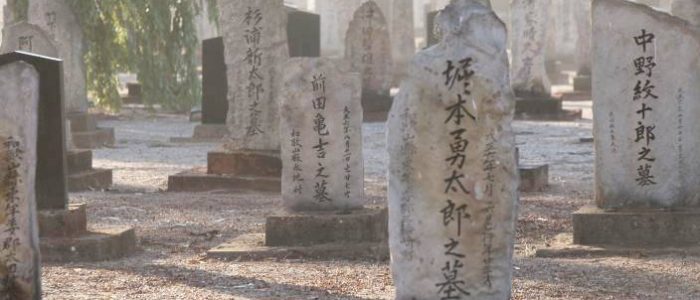
Australia has many graveyards filled with the graves of the early Japanese pearl divers. The Japanese divers were worked 20 days out of each month in the deeper waters of the open ocean, scouring the seabed for oysters. Japanese divers were paid per-piece, so incentives were high for them to collect as many oysters as possible; these divers often brought in nearly triple the shells over their native competition. But that volume came at a very dear cost: the rates of accidents, injury and death was extremely high for Japanese divers.
Cultured White South Sea pearls are relative newcomers to the cultured pearl markets - mainly due to the Australian governmental regulations that were created to protect the profitable mother-of-pearl industry. Pearl farming didn't begin in Australia in earnest until the 1950s.
Golden South Sea pearls have been fished by the native locals for hundreds of years, but like in Australia, the pearls were not highly prized and often given to children to wear and play with. The gorgeous iridescent golden shells were sought after however, and carved into intricate charms and jewelry. The discovery of these stunning shells and their pearls in the 1800's started a pearling rush in these areas, headed by the Dutch, English, French and Spanish ... the Japanese, Chinese and Arabians were also well-represented in the pearling rushes as well.
In all areas where p. maxima was fished, it was the mother-of-pearl shell that was the primary money-making export, with the valuable pearls being sold as rarities and treasures separately to private jewelers, collectors, heads of state and royalty.
South Sea Pearl Farms The tropical waters of the South Pacific and Indian Oceans are perfect for culturing these large sized pearls. The warmer temperatures increase the metabolism of the p. maxima oyster, and encourages a increased rate of crystalline nacre deposition. Combined with the longer-than-average growth times for each pearl, this results in pearls with very thick nacre and beautiful luster and color.
Here are some South Sea Pearl Farming facts for pearl lovers to know:
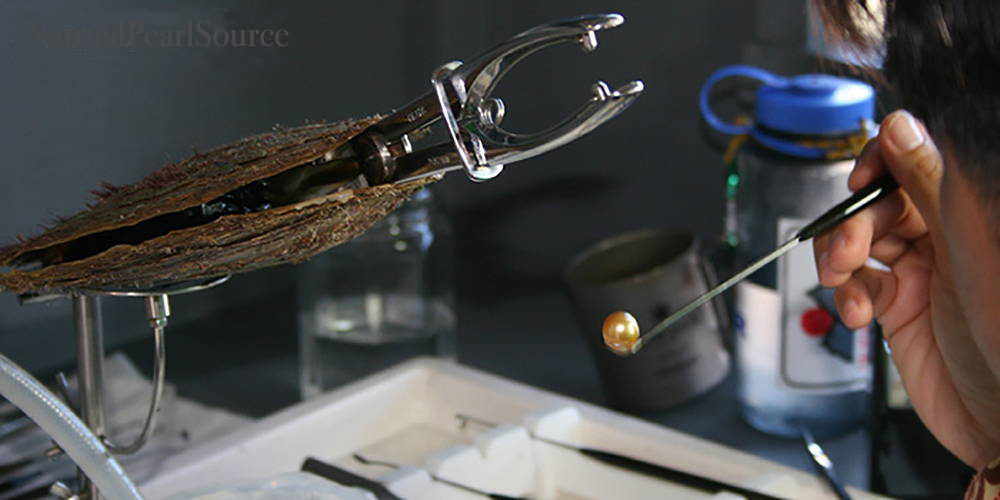
♠ South Sea pearls are "bead-nucleated", meaning that a spherical mother-of-pearl bead nucleus is surgically grafted into the oyster’s gonad to spark pearl formation. A 1.0mm square of donor mantle tissue from another oyster that has previously produced pearls of a very fine color is placed on top of the nucleus and the incision is sealed. The tiny pieces of donor tissue will influence the pearl’s resulting color and overtone.
♠ South Sea pearls are harvested after a 2 year growth period,and the oysters are allowed to recuperate and then are nucleated again with a larger bead. South Sea pearl oysters are nucleated up to 3xs in their lives, and then are returned to the open ocean to replenish wild stocks and contribute to high quality genetics in the native population.
♠ The oysters can secrete nacre at about 1.5-2.0mm per year, so average nacre thickness is 3.0mm to 4.0mm.
♠After harvest, the pearls are washed and scrubbed in a salt slurry which removes left over organic material, and are gently polished in a tumbler filled with waxed bamboo chips.
♠ There is no additional processing to be done, as the pearls are naturally beautiful and colorful. South Sea pearl colors are famous for their un-enhanced, natural beauty. Most of the farmers for both White and Golden South Sea pearls belong to the South Sea Pearls Consortium (SSPC), which forbids any of their pearl-producing members from selling treated and/or color-enhanced pearls. This policy protects both its members and their pearls reputations on the world market, but is also a 30-year old guarantee of quality and natural, organic beauty for pearl buyers around the world.
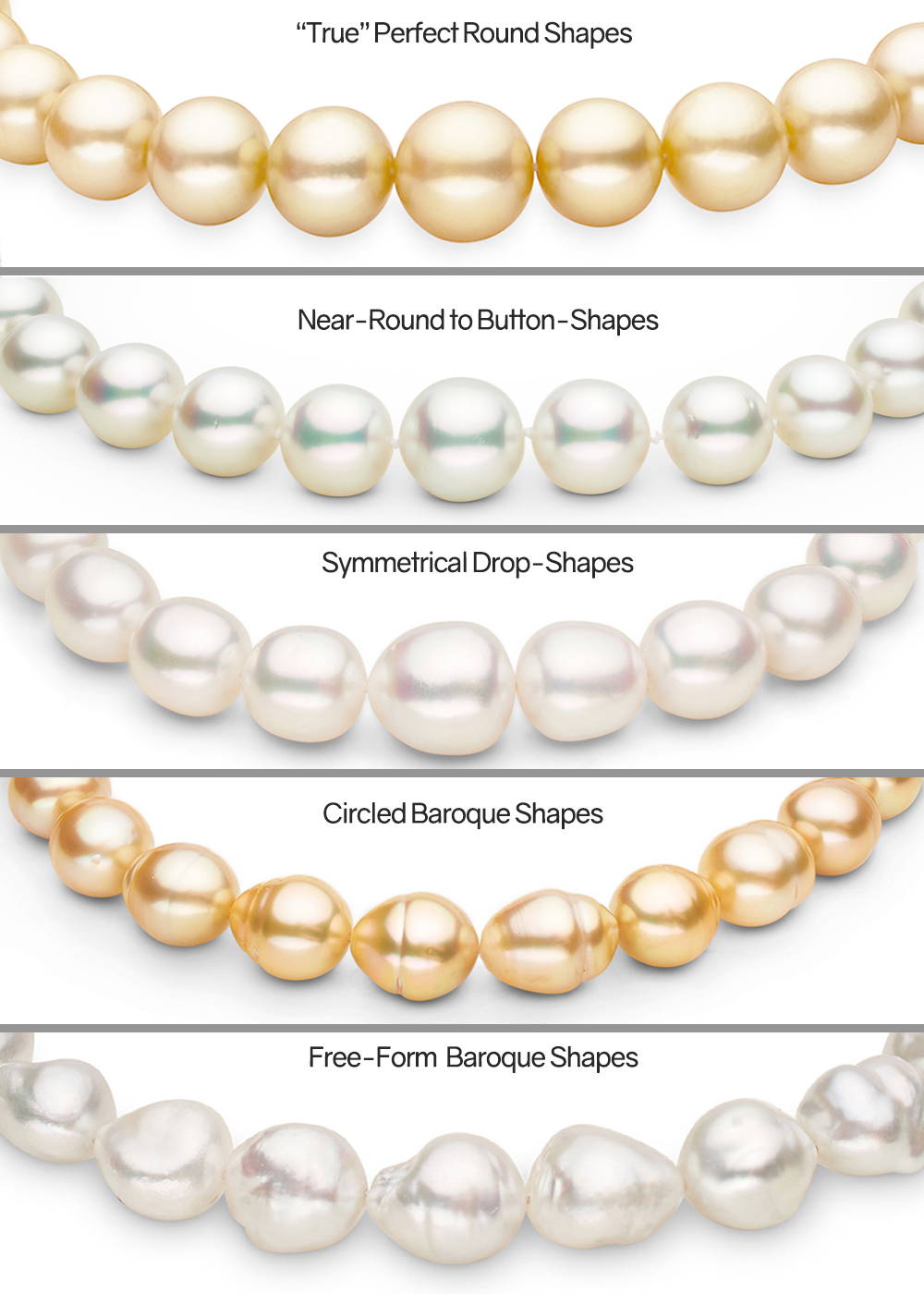
South Sea Pearl Shapes Both White and Golden cultured South Sea pearls are available in a stunningly beautiful array of pearl shapes that are sure to please pearl lovers of all tastes. From the classic True Round shapes, to Buttons and Baroques, the luxurious South Sea pearl type offers a unique beauty that pearl lovers of all stripes are bound to appreciate.
For all pearl farmers, the mission to produce as many perfect "True Round" pearls is of the utmost importance.
Despite that, "True Round" pearls still only account for a small percentage of each year's harvests ...
This often means that building a South Sea Necklace layout of perfectly round pearls, matched for body color, overtone, luster and surface quality can take years to accomplish, while the appropriate pearls are located and slowly added to the building necklace layout.
♠ True Round pearls are less than 5% of each yearly harvest on average
♠ Near-Round South Sea Pearls account for 20% of each yearly harvest (approximately).
♠ Symmetrical Drop-Shapes are about 50% of each pearl harvest.
♠ Baroques and Circled Baroque pearls make up the rest of the yearly yield.
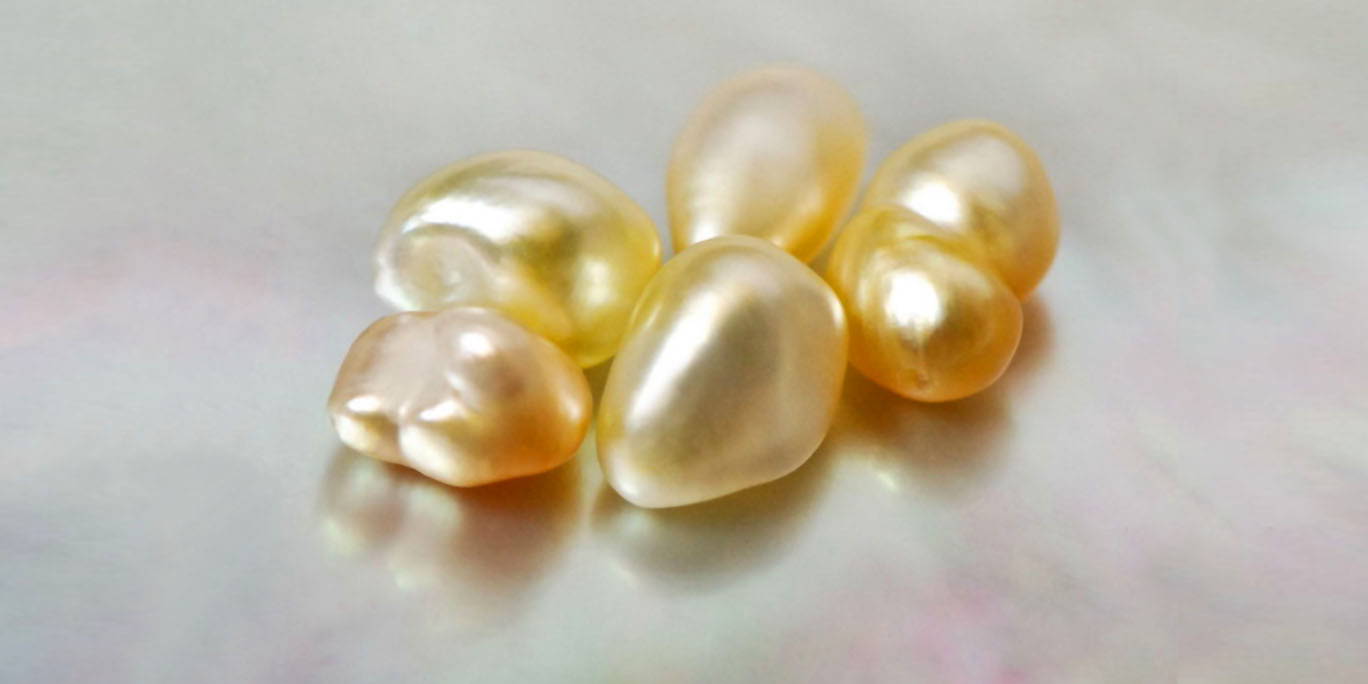
Keshi pearls (pictured above) are a little-heard-of "Collector's Item" that are quite lovely and unique in their own right. Keshi pearls are not strictly considered "Cultured pearls" ... these pearls are actually a by-product of the pearl growth process.
Occasionally, a tiny piece of nacre will break away from the main body of the pearl while it's forming, and begin acquiring its own pearl sac. When this happens, the irritant begins to become an independent pearl on its own. Keshi pearls are 100% solid crystalline nacre (having no bead nucleus), and are generally small in size and Free-Form Baroque in shape.
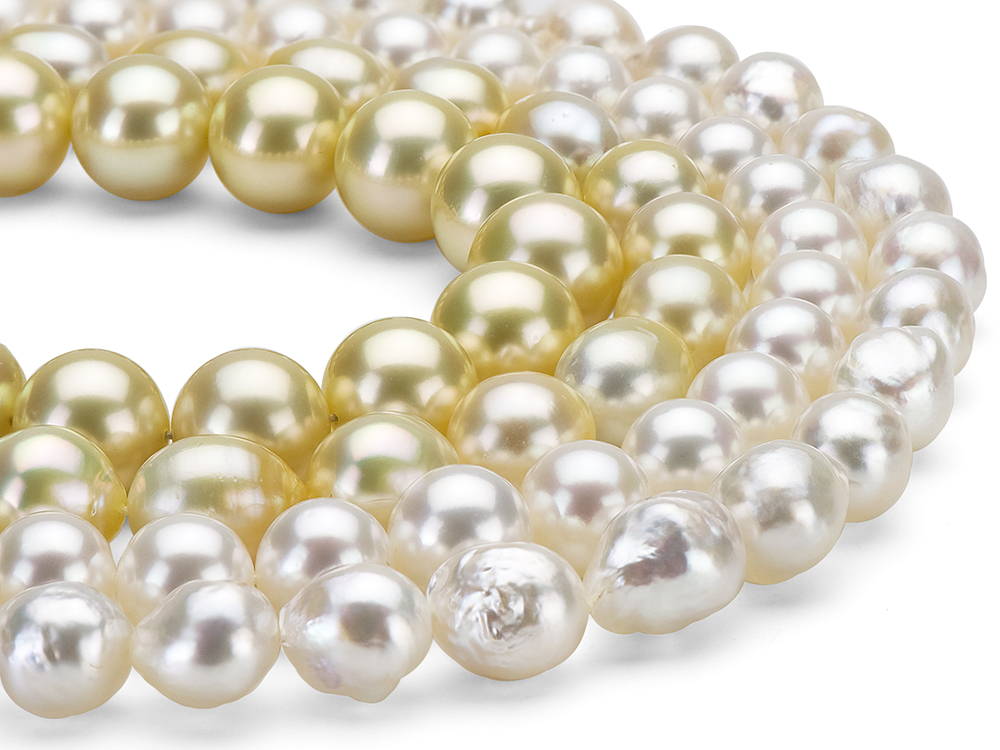
South Sea Pearl Colors South Sea pearls display natural colors of White or varying shades of Gold. The White South Sea pearls from Australia are primarily a bright, even Silver-White body color, and White South Seas from Indonesia often feature a warmer, more creamy White body. The range of natural Golden colors is quite wide, and can roam from pale, lemony yellows to nearly orange/copper hues.
Common South Sea Pearl Body Colors (primary colors):
For White South Sea Pearls ♦ Neutral White ♦ Blue-White ♦ Cool White ♦ Warm White For Golden South Sea Pearls ♦ Pale Yellow ♦ Lemon Yellow ♦ 10K Light Gold ♦ 14K Medium Gold ♦ 18K Medium-Deep Gold ♦ 22-24K Deep Gold
Popular South Sea Pearl Overtones
There are many Primary Body Color and Overtone combinations when it comes to White and Golden South Sea pearls – this will just be a short list of the most common. The intensity of the primary color and saturation of Overtone does vary from pearl to pearl - this is where a skilled eye for color matching become very important.
Pearls with pronounced iridescence and saturated colors are considered more valuable, all other factors like Luster, Shape, Surface Quality and Size being equal.
The Most Popular and Famous White South Sea Pearl Overtones are: Silver – Extremely popular, this is a bright white with a hint of ephemeral Blue to cool the overall tone. Rose – The most rare. Rose is a hint of pink over the warm or cool white body color. Cream/Ivory – Fairly common, the Ivory Overtone adds a touch of French Vanilla warmth. Silver-Blue – Somewhat rare. The Silver Overtone has so much Blue is in it, that the pearl appears Blue to Blue-ish Grey.
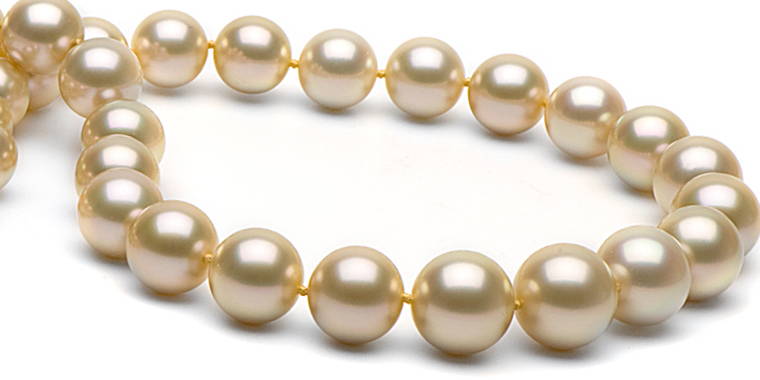
The Most Popular and Famous Golden South Sea Pearl Overtones are: Rose – A hint of iridescent pink over the primary Golden body color. Silver – Very common overtone for Golden South Seas. This is a soft, shimmery whitish sheen over a Gold body color – almost “neutral”, but lightens up the pearl a bit. Neutral Gold – Incredibly common. The Neutral Gold overtone is exactly what it sounds like - additional Gold over the primary Golden body. Bronze – A unique overtone that can make the pearls really "pop", but can be difficult to wear. Bronze is actually an iridescent Green that can be pale or saturated, laid over the Golden body color. Champagne - Very rare. Champagne is a mix of Silver and Rose, with strong flashes of iridescent Violet colors. It's a complex color-combination and very visually appealing - excellent.
The photo above features one of my favorite, most colorful overtones for Golden South Sea pearls: Champagne. Champagne is a very rare overtone, and an unique combination of very pale Yellow/Gold body color with a mix of Silver, Rose and Purple-Violet flashes.
Learn more about the rainbow of pearl colors in available all pearl types today, visit: BAOYUE PEARL Pearl’s Ultimate Guide to Pearl Colors.
South Sea Pearl Sizes The South Sea pearl oyster, p. maxima, is the largest of all pearl-bearing oysters, growing to about a foot in diameter at maturity. This allows the oyster to be nucleated with large mother-of-pearl beads, producing the largest pearls in the world.
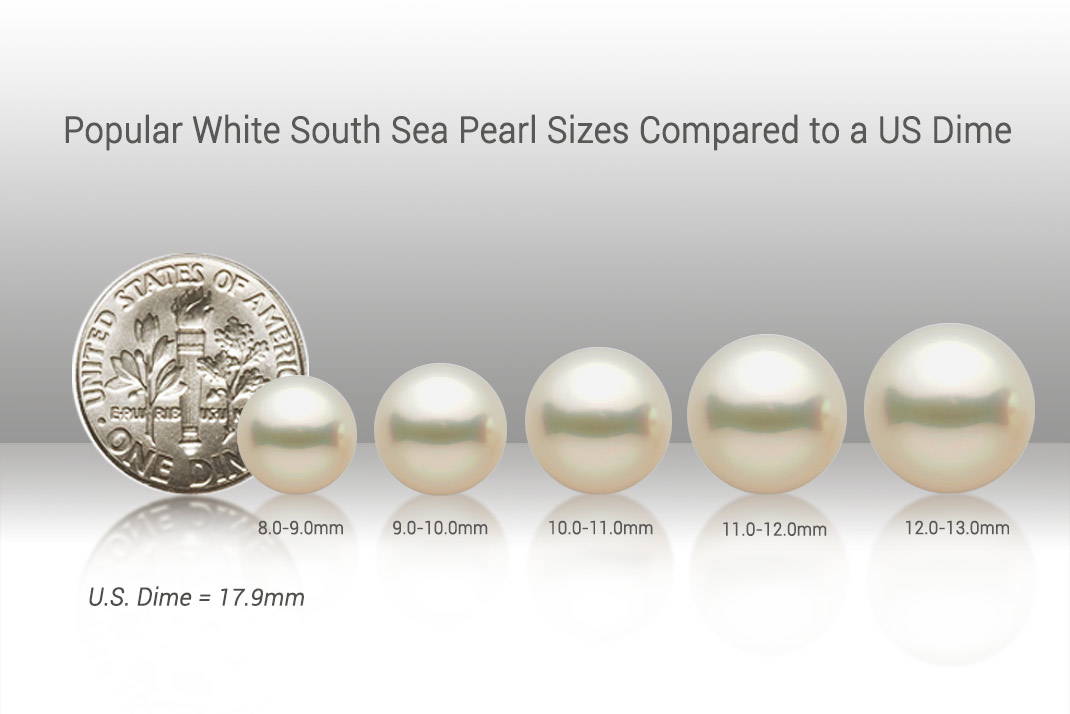
Size ranges for South Sea pearls range from 8.0-9.0mm through 16.0-17.0mm and larger. The pearls ranging from 9.0-10.0mm through 13.0-14.0mm sizes are the most popular pearl sizes to buy. At their largest, pearls measuring up to 21.0mm have been cultured.
Each whole millimeter increase in pearl size equates to a 20-25% larger pearl on average. So a 11.0-12.0mm South Sea pearl will be twice as large as a 9.0-10.0mm pearl.
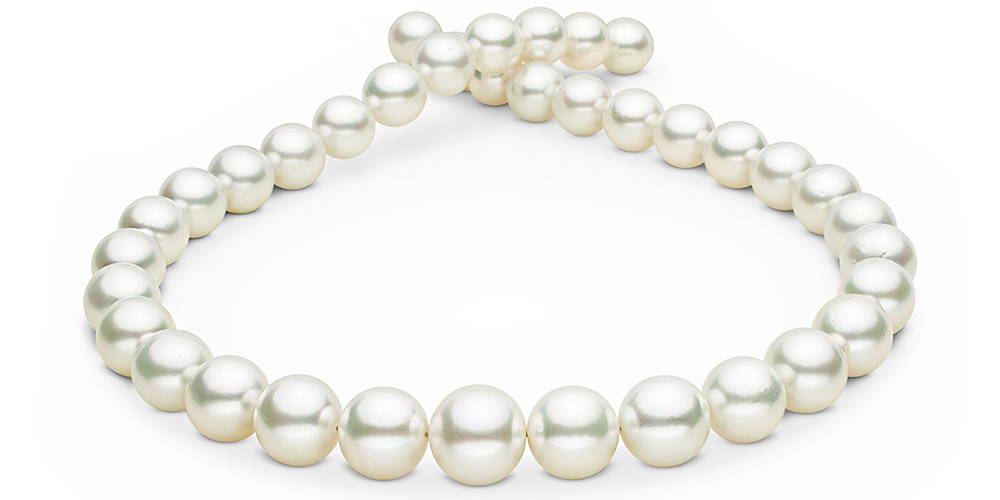
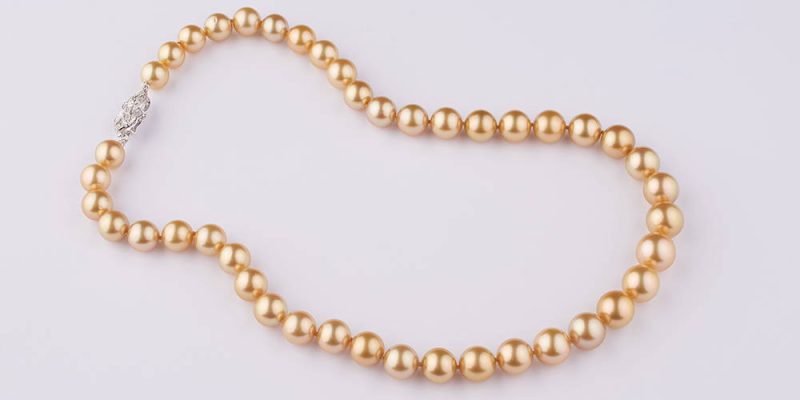
South Sea Pearl Necklace Sizes Typically, most White or Golden South Sea pearl necklaces - both round and baroque shapes - are laid out in a “Graduated” design. This means that the pearls will begin near the clasp at their smallest size, and gradually increase throughout the layout, culminating in nice large center section. Traditionally, these graduation rates span 2.0-3.0mm on average, so you'll often encounter necklace descriptions with measurements reading 10.0-12.5mm, or 9.0-12.0mm and so on. This Light Golden South Sea Pearl Necklace had a typical graduation rate of 10.6-13.2mm
“Non-Graduated” Necklaces are layouts featuring pearls that do not increase in size more than 1.0mm from the smallest to largest pearls. These layouts would read 11.0-12.0mm, for example. As mentioned in the Pearl Farming section, “Non-Graduated” South Sea Pearl Necklaces take much, much longer to assemble, and so are rarer and more expensive. The pearl sorters at the farms have a narrower range of pearls to work with while creating a "Non-Graduated" layout, and a full strand of perfectly matched South Sea pearls can take years to create.
For more information on pearl size visit: BAOYUE Pearls Ultimate Guide to Pearl Sizes Our Pearl-Necklace-on-Model pictures are sure to be a helpful visual guide for anyone who wants to see how these larger pearl necklaces look when worn.
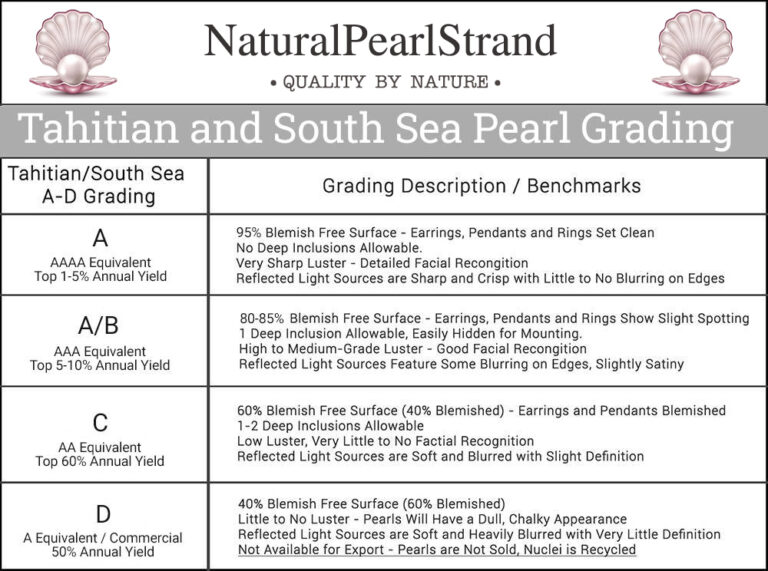
South Sea Pearl Grading Pure Pearls employs the ‘A-AAA’ Grading System for all our South Sea pearl jewelry. With the A-AAA Scales, ‘A’ denotes the lowest, commercial grade pearls, and ‘AAA’ represents the finest pearl quality of each yearly harvest.
The A-AAA Grading Scale converts easily from the A-D Grading Scale used on the pearl farms in Australia and the Philippines, and takes into account the seven major pearl attributes. These are:
Surface Quality (blemishing) Luster Color / Overtone Depth Symmetry of Shape Pearl Size Matching Origin / Cultured or Natural
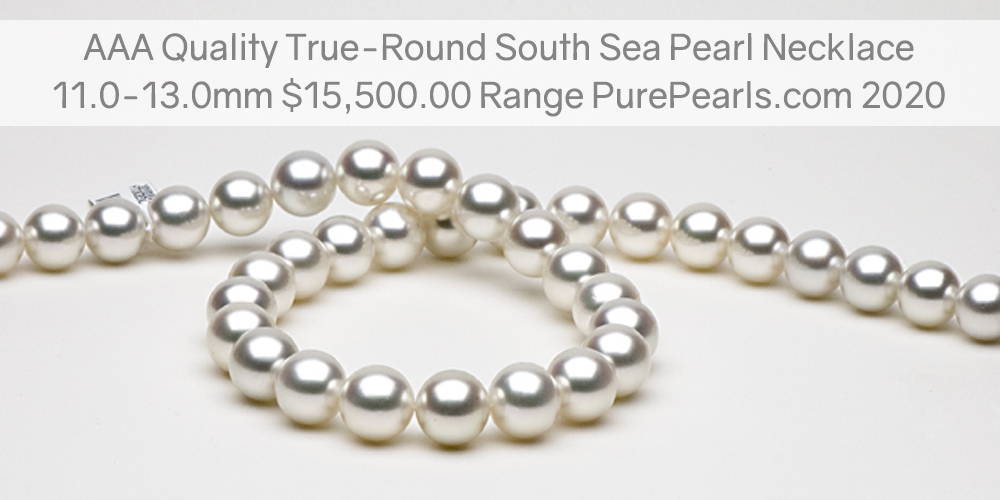
The BAOYUE Pearls “AAA Quality Only” policy for South Sea pearl earrings, pendants and rings has been in place for nearly two decades. This ensures you’ll always receive only the highest quality pearl jewelry with every purchase.
To dive deeper into South Sea pearl grading, and learn about the detailed benchmarks for each pearl grade, examine examples of common surface inclusions and more, visit: BAOYUE Pearl's Ultimate South Sea Pearl Grading Guide
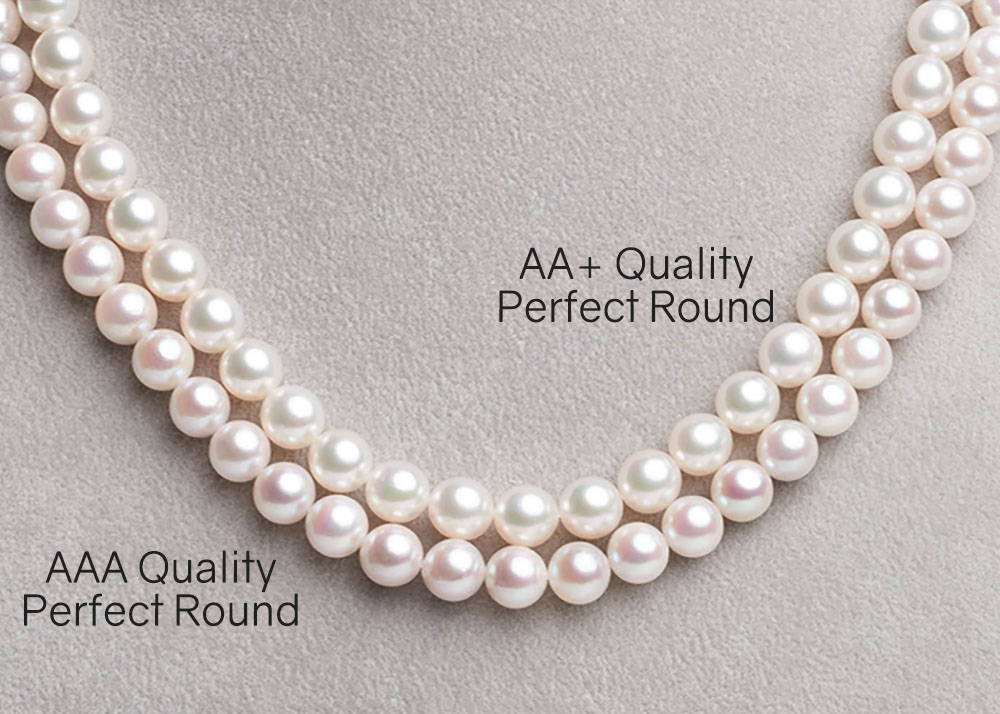
Should I Buy AA+ or AAA Quality South Sea Pearls? Great question! The answer is that you'll want to balance beauty with budget. Both our AA+ Quality and AAA Quality South Sea pearls will feature:
Very High to Excellent Luster Perfectly Round and/or Symmetrical Baroque and Drop Shapes Excellent Matching Throughout Beautiful, Even Color Saturation and Overtones Fine Presentation When Worn
Every South Sea Pearl Necklace listed on NaturalPearlStrand.com is a totally unique, one of a kind necklace. Ashley herself selects each necklace in this highly curated collection. Pearl necklaces are hand-picked for stunning colors or overtones, particularly bright luster or an artistically arranged layout. Our South Sea Pearl Necklace collections are continually updated, and we do our very best to provide new pearls for everyone to admire at a range of price points for every budget.
While shopping for a pearl necklace, it's helpful to keep in mind that cultured pearls are the result of a natural, biological process. As such, pearls can never be completely, flawlessly perfect.
The goal is not to find perfectly characterless round beads - that's what Swarovsky crystal pearls are for! With pearls, we aim to bring you precious gemstones that sparkles with character and personality that will become yours and yours alone. Our standing recommendation is to always look to find pearl Luster and Colors that you can fall in love with first, then consider other factors like Size or Surface Quality.
If you'd like help finding the perfect Pearl Necklace, feel free to Contact Us anytime - our pearl experts are always happy to help.
Luxurious South Sea pearls have been used to create some of the most beautiful and impressive pearl jewelry designs the pearl world has ever laid eyes on. Our South Sea pearl jewelry collections include styles from the traditional classics like pearl stud earrings to more couture designs sparkling with diamonds and precious colored gemstones. Every design is created by hand, to order here in our Los Angeles, CA production offices.
High quality South Sea pearl jewelry should all be matched to near-perfection with very little to slight variation in size, shape, body color and overtone (Multi-color layouts are excepted here), luster and surface quality .
BAOYUE Pearls has curated a stunning collection of White and Golden South Sea pearls to suit every desire and price point. We truly do have something for everyone to fall in love with.
South Sea Pearl Necklace Styles
The majority of South Sea Pearl Necklaces will knot out to 18-inches (including the clasp), but we can build custom layouts and alter existing designs easily (in fact, it’s one of our favorite parts of the job!). All strands are individually double-knotted between each pearl using fine matching silk thread, and we finish all of our strands with matching 14K Gold clasps and 14K french wire-wrapping to ensure the ends withstand daily handling.
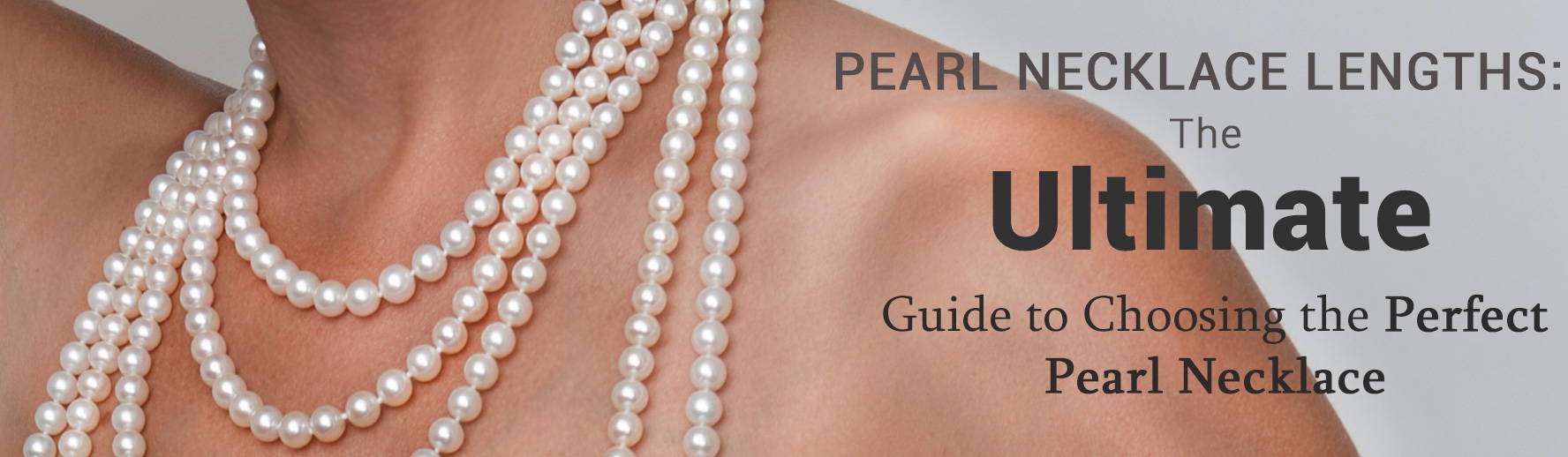
To learn more about which pearl necklace length or size is right for you visit: BAOYUE Pearl’s Ultimate Guide to Choosing the Perfect Pearl Necklace. This helpful guide features photos of every classic pearl necklace length you can imagine, and a primer on how to properly measure pearl necklaces and bracelets.
Featured inside are TONS of photos, tips and charts to help you understand how these pearls “measure up”, and which South Sea pearl size is right for you.
Custom Design South Sea Pearl Jewelry
NatrualPearlStrand.com has for many years specialized in Custom Design pearl jewelry; with hundreds of loose White and gorgeous Golden South Sea pearls in our Vault to choose from we revel in the creation process! All South Sea pearl designs by hand, to order. With our on-staff goldsmith and years-long relationships with high-end findings suppliers, we can make almost anything you can dream up. View some of our most recent work:
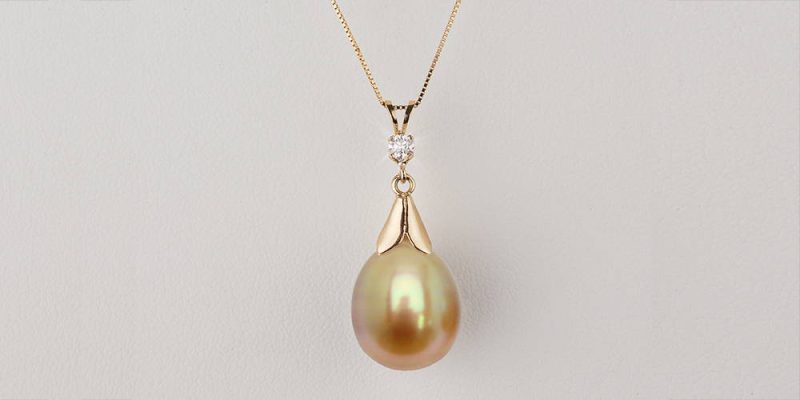
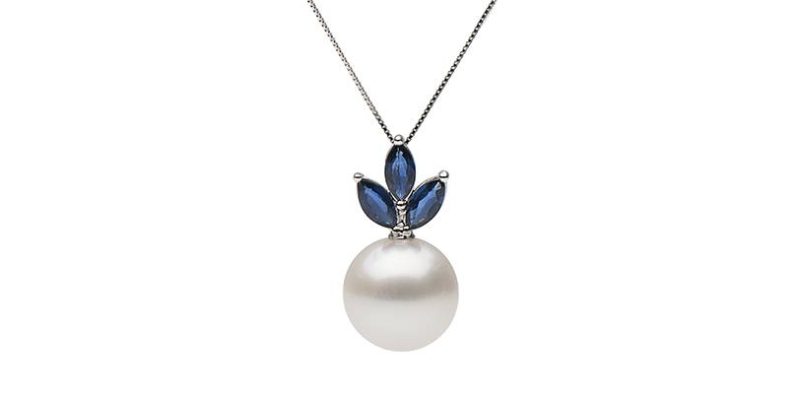
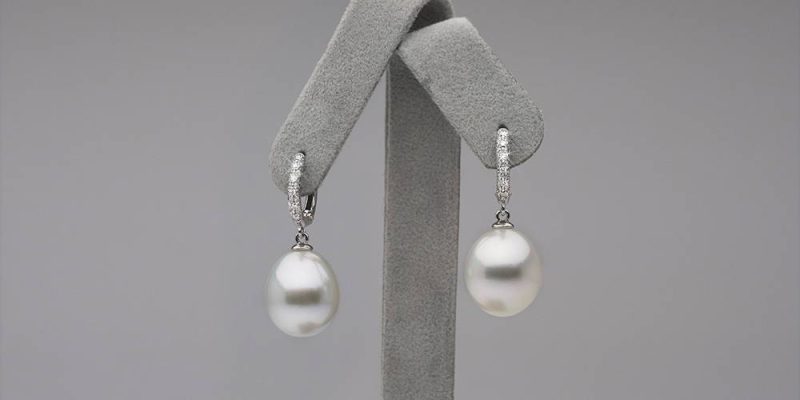
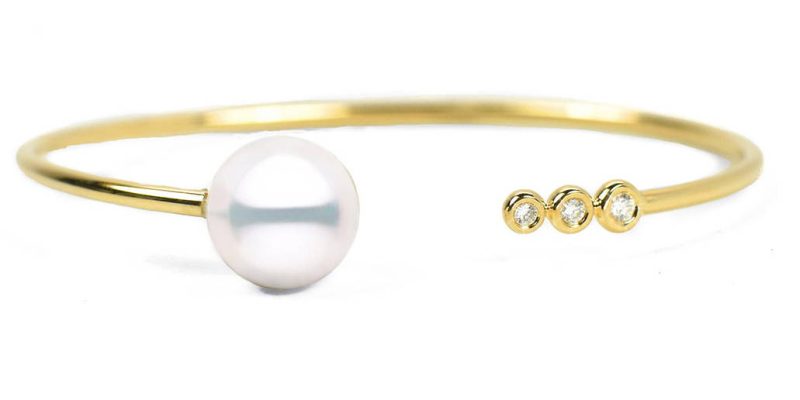
Customized Golden South Sea Drop-Shape Pearl and Diamond Lily Pendant, 14.0-15.0mm size. Mounted in 18K Yellow Gold with a sparkling 0.10cttw VS1-GH Quality diamond accent."Blue Moon” is a custom-design White South Sea Pearl and Blue Sapphire Pendant, mounted in 14K White Gold. Pearl measures 15.0-16.0mm in size, Sapphires measure 3x5mm eachA tribute to "The Girl With The Pearl Earring" by the painter Van de Meer, and an Anniversary present for a very lucky wife, this large 16.0mm pair of White South Sea tear-drops were mounted on our diamond pavé hoop earringsA BAOYUE Pearls FAVORITE, this Custom-Design Bracelet features a stunning AAA Quality White South Sea pearl measuring 12.0-13.0mm in size. The South Sea Pearl and Diamond Bangle Bracelet is accented with 0.10cctw of bezel-set VS1-GH Quality diamonds, mounted in 18K Yellow Gold.
Adding a sparkling Diamond Clasp or Diamond Rondelles to a South Sea Pearl Necklace in various configurations is a stunning way to customize a strand of pearls (and a specialty of ours!). This stunning Golden South Sea True Round Pearl Necklace was created for a very special event.We LOVE building custom South Sea Pearl Necklaces from scratch using loose pearls - the possibilities are truly endless. This stunning strand features Free-Form Baroque White South Sea Pearls graduating from 10.5-13.4mm and measures a full 36-Inches in length.
To get started creating the South Sea pearl jewelry you’ve been dreaming of, simply Contact Us by email for pricing, photos and more.
What Pearl Necklace Length Should I Get? This is common question I field on a weekly basis. It's not always an easy answer – it depends on a variety of factors like personal style, which events you’d like to wear the necklace to, what kind of “look” you’d like to project. This short, photo-rich guide breaks down the most popular pearl necklace lengths in an instantly “easy to get” format and includes a short bio on each strand length. Feel free to read the entire article, or use the table of contents to the length of necklace you're interested in. Enjoy!
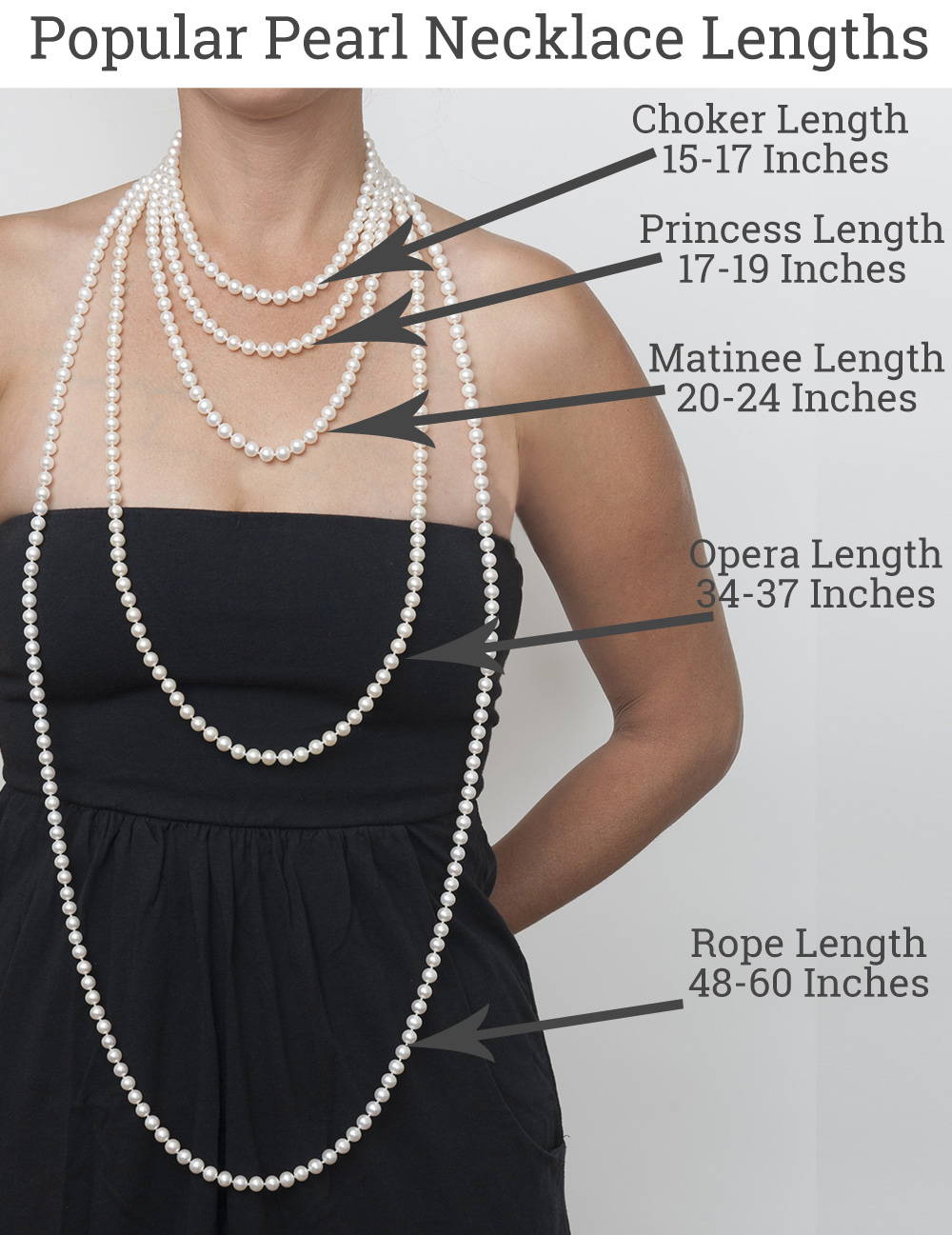
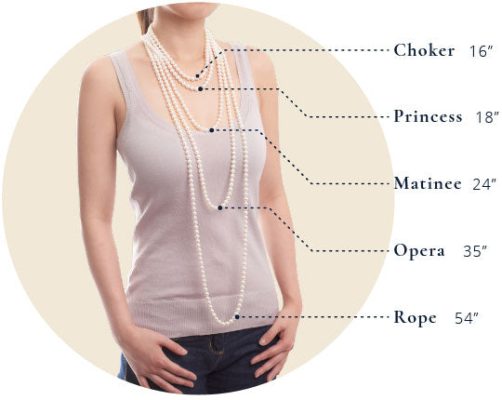
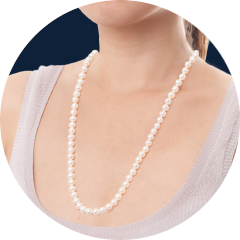
Popular Pearl Necklace Lengths – An Overview Pictured below are the most common necklace lengths for Akoya pearl necklaces -- but these hold true for other pearl types as well. All the necklaces featured in this article are 7.0-8.0mm pearls, which are our most popular pearl size range.
Pro-Tip: Due to the organic nature of cultured pearls, not every strand is going to measure out to its exact measurement, on the nose, 100% of the time. Natural variations occur in each hank of pearls, so a variance from 0.10” up to 0.25” deviation is considered acceptable in the industry when measuring necklace lengths.
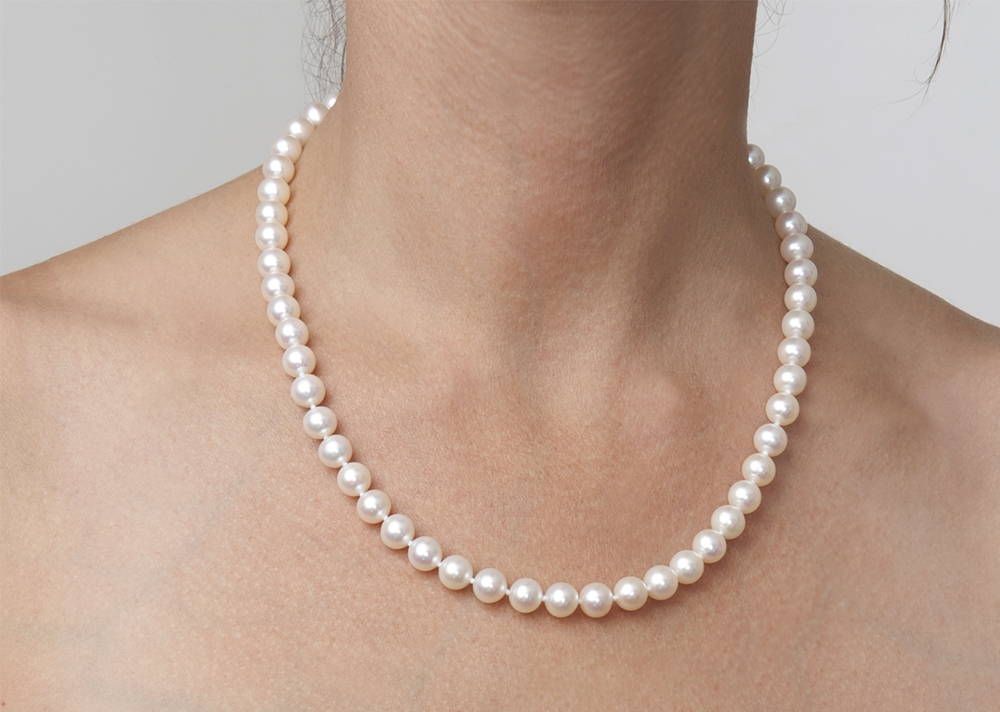
The 16-Inch Pearl Choker – Retro Beauty
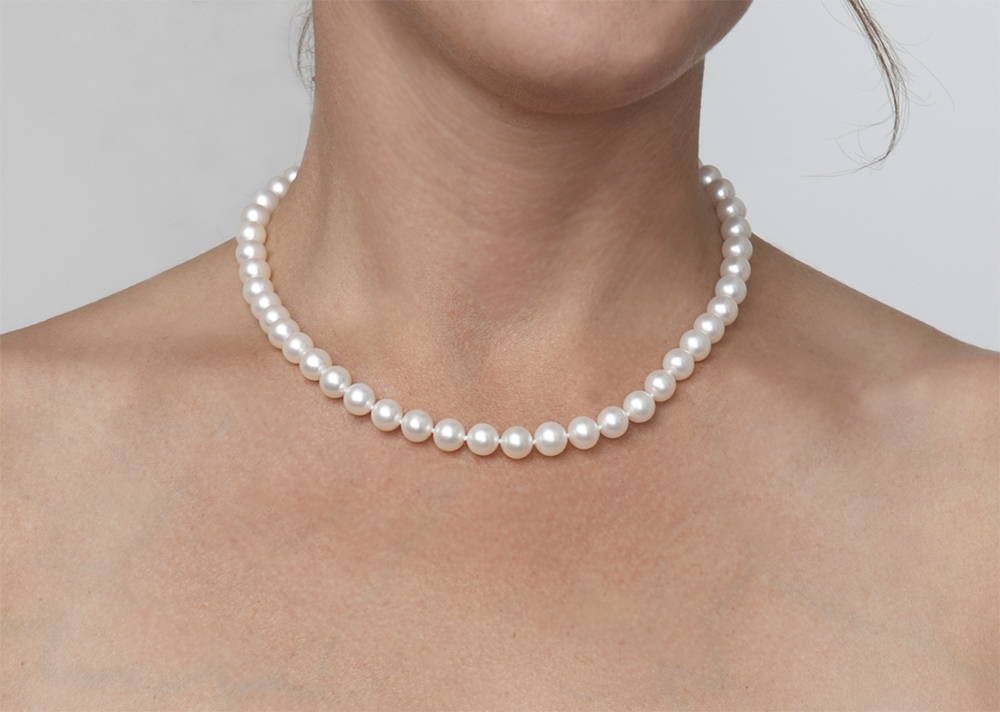
This is the ‘traditional’ pearl necklace length popularized in the 40’s and 50’s. The Pearl Choker should gently encircle the base of the neck, running over the collarbones and coming to rest just below the hollow of the throat. For petite frames, this length may hang slightly lower, looking more like a princess length necklace instead. Excellent for high or open necklines, strapless dresses or boat neck shirts, this length has a more formal appeal that was considered “the standard” for previous generations, but will always remain fashionable and elegant for any age group.
The 18-Inch Princess Length Necklace – A Modern Classic
Our most popular pearl necklace length, the Princess will rest about 1.5 to 2-inches below the collarbone, and actually can range from 17 to 19-Inches depending on the jeweler.
Pure Pearls creates a standard 18-Inch length for all our Princess Length necklaces. Versatile and elegant, this necklace accommodates a large variety of necklines from open collar shirts and over a cozy fall sweater to boatnecks and evening gowns (hello, LBD!).
The Princess is today’s Modern Classic for pearl necklace lengths: from casual day wear to glamorous evening events this necklace always look chic and lovely.
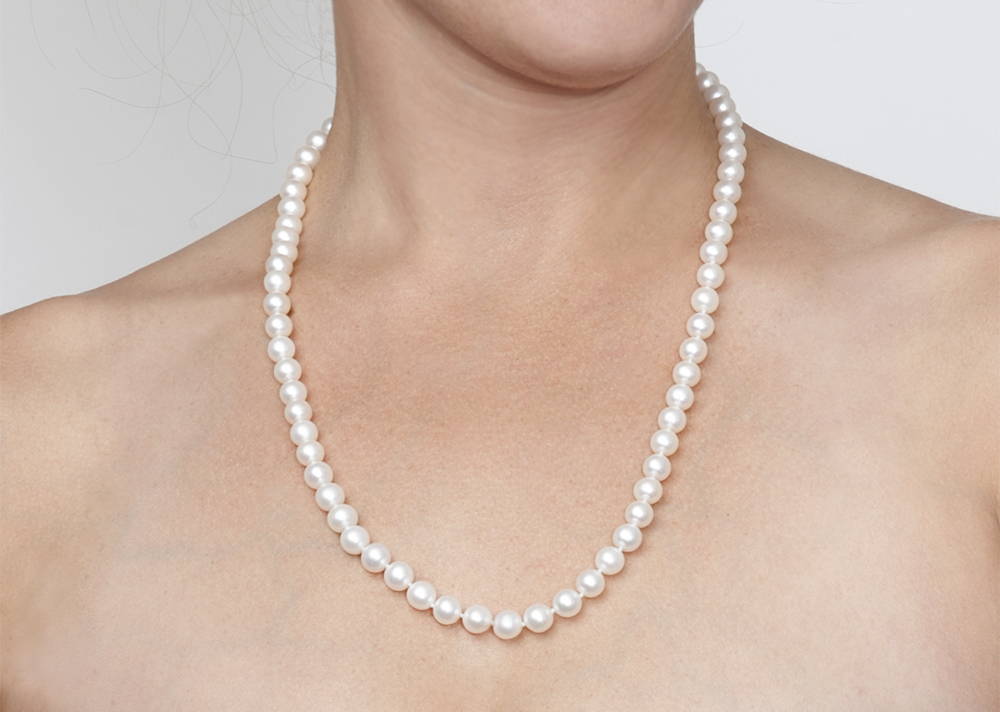
The 22-Inch Matinee Length - A Little Longer
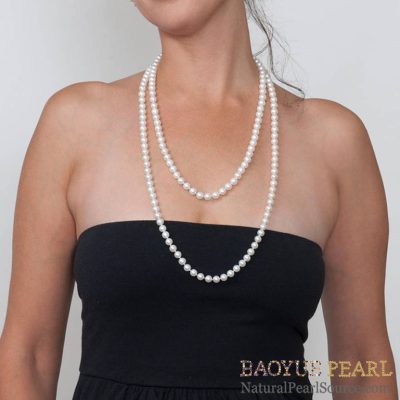
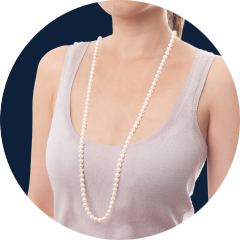
A NaturalPearlStrand.com favorite, the 22-inch Matinee will rest about mid-chest level, just above the bosom, and has a slimming effect on the wearer by drawing the eye down in a vertical line from the chest. This is a classic Akoya pearl necklace length. This length adds a dash of personality to conservative outfits, while still looking elegant. Perfect for office settings and evenings out, this necklace looks best when worn with turtle or cowl neck tops and tailored shirts. To create a more dramatic effect, layer this necklace with longer and shorter necklaces with different gemstones and styles. The modern Matinee can actually range from 20 to 24-Inches in length; Pure Pearls offer the 22-Inch as our “standard” but can tailor any necklace to a specific measurement should you desire (the 20-Inch Matinee is very popular), so feel free to Contact Us for a current price quote.
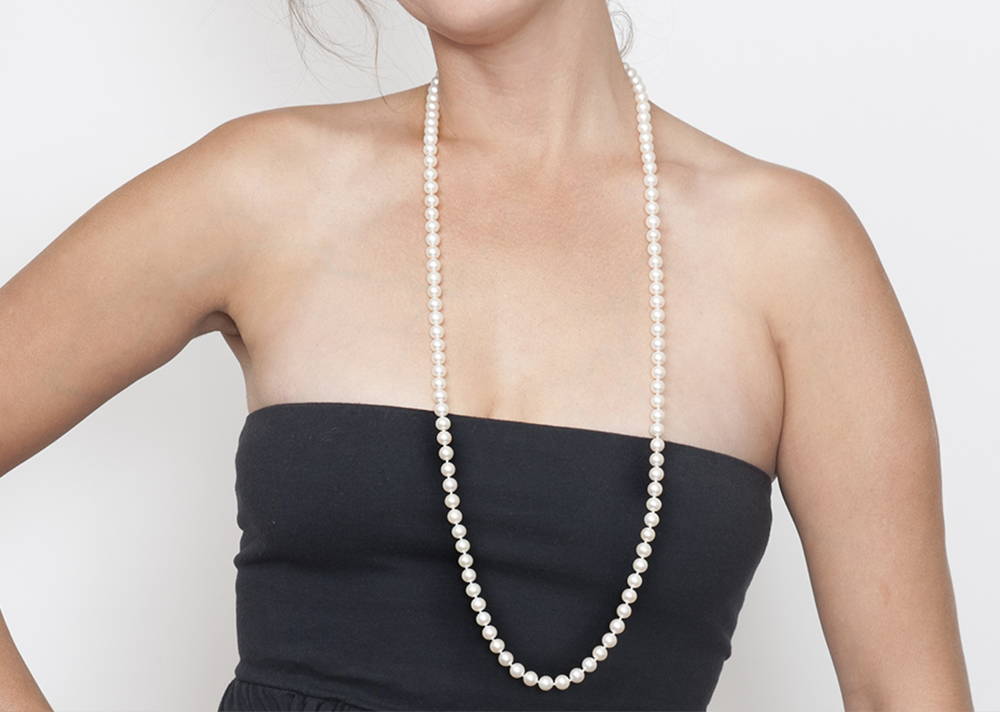
The 36-Inch Opera Length – A Study in Elegance
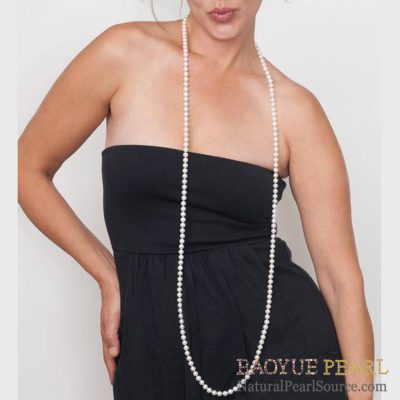
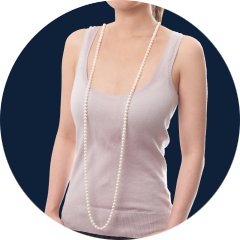
This long pearl necklace will rest right around the end of the rib cage/upper abdomen area, and has a range of 34 to 37-Inches. BAOYUE Pearls creates our Opera Necklaces to measure out at 36-Inches total, but we can make any length you want. Contact Us for a current price quote.
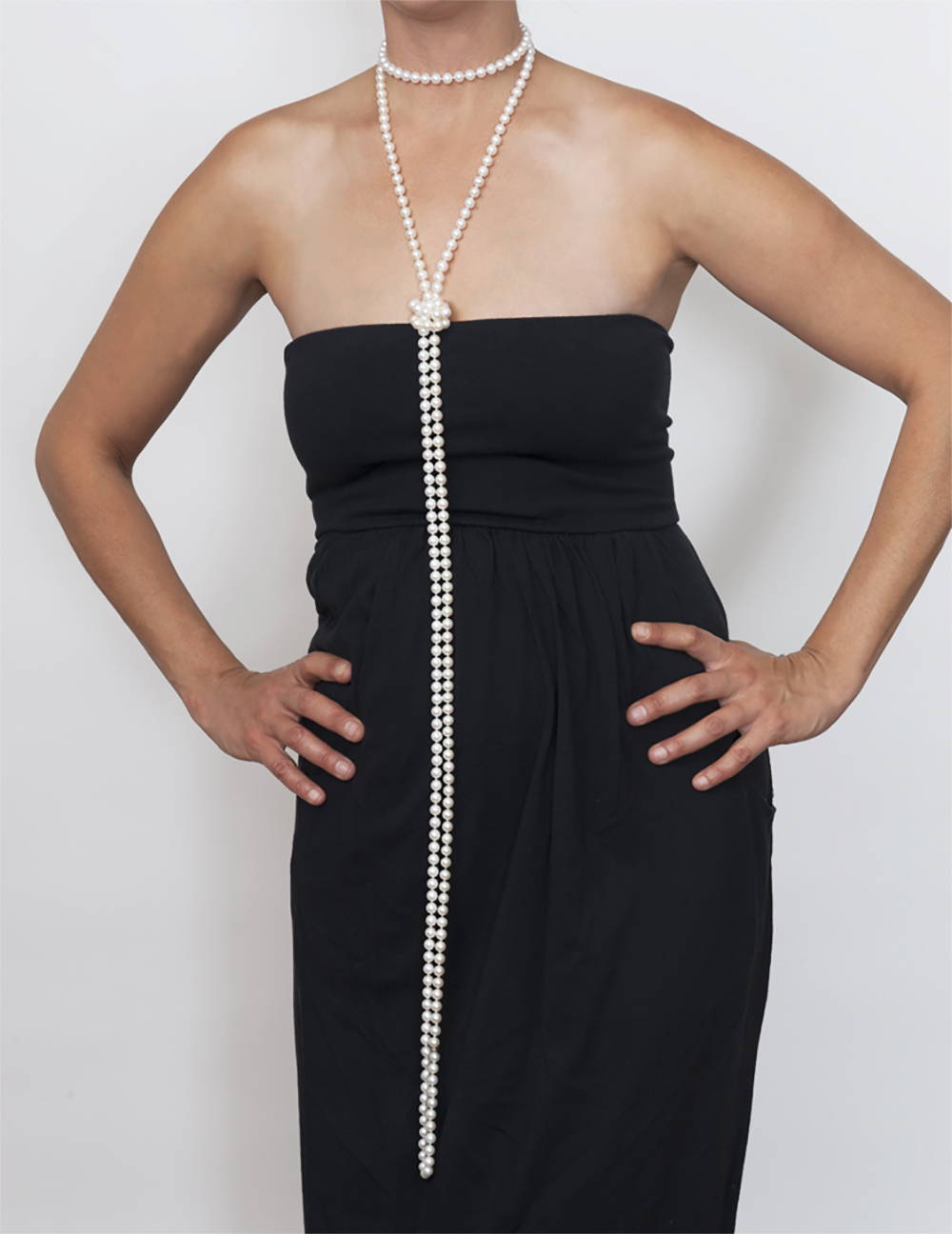
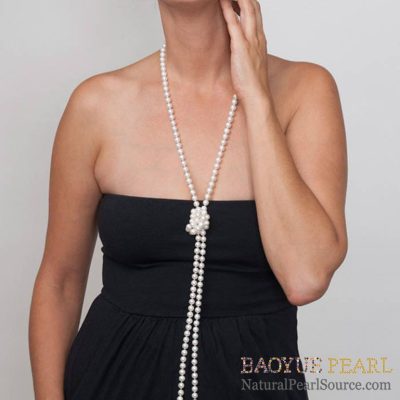
Named the “Opera Length” because women would wear these pearls when attending glamorous evening events, this necklace has a fanciful, dramatic length that adds elegance wherever it is worn. You can wear this necklace as a single long strand, wrap it twice around the neck for a layered look, or knot it a-la flapper-style to add vintage flair to your attire.
*Did You Know? Almost all pearl necklaces arrive in pre-matched, 18-inch “loose” hanks which are then individually double-knotted and finished with a clasp of your choice by a pearl stringer in our vaults. This allows us to create virtually ANY necklace length imaginable, limited only by current inventory.
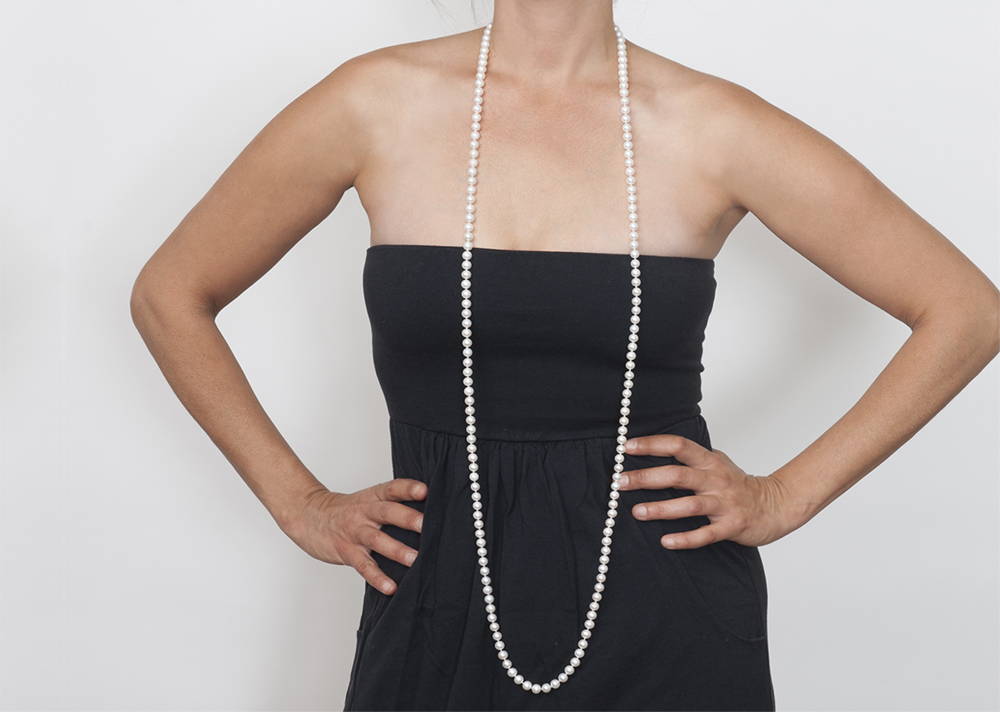
The 52-Inch Pearl Rope – Girls Just Wanna Have (Fashionable) Fun
Highly popular, the 52-Inch Pearl Rope is easily one of the most versatile and just plain fun necklaces to own! A Pearl Rope can actually range from 48 to 60-inches (about 3 hanks of loose-matched pearls), but Pure offers the “standard” 52-Inch length.
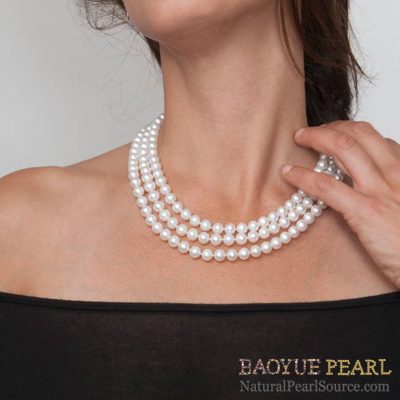
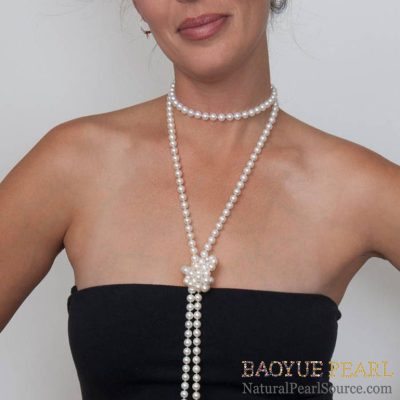
This necklace can be worn singly, long and loose, or doubled and even tripled around the neck for an elegant, layered look. Pearl Ropes can also be knotted "flapper style" with the bottom "loop" having plenty of length left over to play with.
The 100-Inch Endless Pearl Rope – Layers of Lustrous Luxury
One hundred inches of elegance, the “Endless” Pearl Rope is one of my absolute favorite necklace lengths. If you love pearls – looking at them, playing with them, wearing them – this is the necklace for you. Called the “endless” because of the endless ways to wear it, a 100-Inch Pearl Rope can be doubled, tripled, quadrupled, knotted, double-knotted, draped down the back and more.
Popularized by HBO’s smashing success, Sex In the City, Sarah Jessica Parker’s killer Pearl Rope look instantly put these stunning strands back on the map for pearl fashionistas, and modernized pearl necklaces for new generations (we give you thanks, SJP!!). Totally unforgettable, the 100-Inch Pearl Rope is a masterpiece in affordable luxury.
How to Measure a Pearl Necklace ?
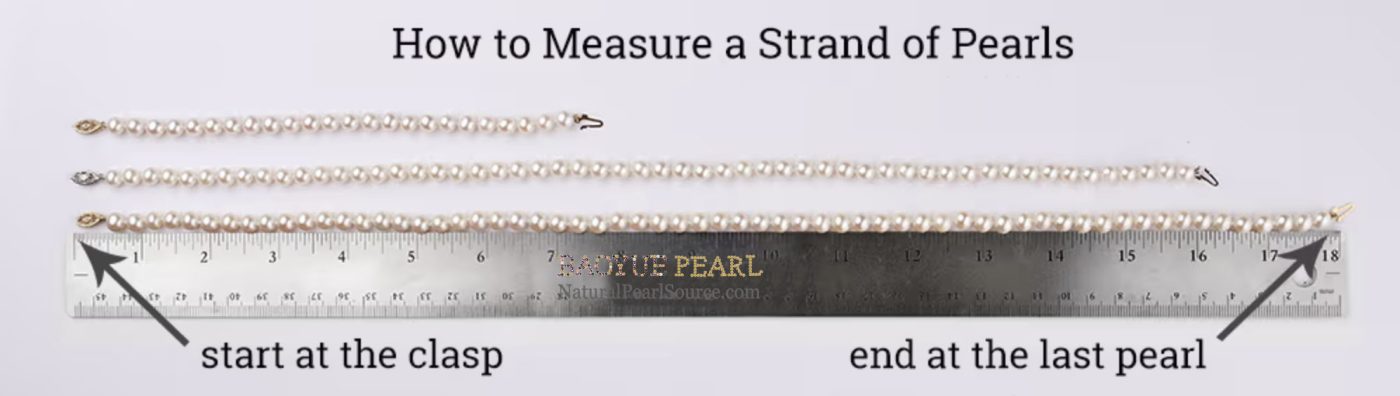
The simple methos to measure a pearl necklace is to stretch out your necklace (or bracelet) end to end next to a ruler. Starting at the clasp, measure all the way to the end pearl to get the exact final length. Clasps are included in the final measurement, but not the connecting “tongue” or folded tab at the very end – this is because the tongue gets inserted into the clasp when the pearls are worn, and does not add any extra length to the layout.
With all pearl strands, you'll encounter slight variations in total length – this is due to hanks of pearls matched according to size range, i.e. 7.0-8.0mm or 8.0-8.5mm. Meaning not pearl size can vary within the same in the strand.
This means that after knotting and clasp, the final length may not be an EXACT 18.0-Inches on the nose. Measurements of 17.8-Inches up to 18.2-Inches are quite common. And again, this is simply due to natural, slight variations in any hank of cultured pearls.
Because clasps are included, it’s important to figure in their dimensions when creating a custom design necklace like our Dark Knight Rises Pearl Necklace, inspired by the Batman movie. That particular necklace should only measure 15.5-inches maximum in order to achieve the desired effect, so selecting a clasp that adds no more than ¾-inches to the final length is really important.
How to Style A Pearl Rope ( With Pictures ! )
This is purely fun stuff here! Wearing a pearl rope isn't just about layering around your neck (although that's my favorite way to wear one myself ! ). There's a bunch of beautiful, fashionable ways to incorporate a long strand of pearls into your every day look and special occasions.
Click each tab below to view different pearl rope looks we've compiled for easy reference, and how to create them. Invent something really pretty? Send me a picture and tell me about it !
Long and Loose - The easiest configuration, the Pearl Rope can be worn long and loose all the way down the front. This is best with a smaller 52-Inch Rope, as the 100-Inch Endless will be way too long to wear comfortably as a single strand. Both the 52 and 100-Inch Ropes are a ton of fun to layer with other necklaces, too - mix and match is the name of the game here.
Doubled Up – The long double-strand configuration can be done by just looping the rope over your head twice. Adjust to suit your style. A tightly wrapped single stand choker around the base of the neck with a long line of pearls draping down your front is also really pretty!
Triple Strand – to get this look with a 52-Inch Rope, you’ll need to undo the clasp and wrap the pearls around your neck three times, then re-clasp the pearls in back. A 100-Inch Rope can handle going over the head 3xs and then adjusting the final look.
Knotted Single – This is a fabulous way to add a touch of vintage glam to any outfit!
Knotted Double – Loop the Rope around your head, then knot the strands of pearls wherever you like! I’m a mid-chest girl myself, but knotting the pearls up by the neck like a kerchief is super cute, too.
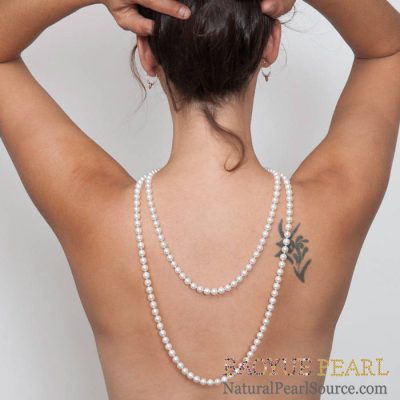
Sexy Back – This configuration I rarely see done unless the pearls are worn with a backless dress. But it’s one of the sexiest ways to wear pearls I’ve ever seen.
Guiding for Slender woman to choose Necklace Lengths
Traditionally, different pearl necklace lengths and sizes have been ascribed to particular age groups and attires. But the versatility of a pearl strand should not be limited by such rules, and should ultimately reflect the wearer's personal taste. Below you will find popular lengths and sizes of pearl strands, along with some of their more traditional guidelines for how to wear pearls. Choosing the right length of pearl necklace can be a bit daunting. This handy necklace length guide will help you narrow down the perfect length. BAOYUE PEARL Wholesale products suggested:
Pearl bracelet wholesale. Pearl necklace wholesale.. Pearl sets wholesale. Pearl strand wholesale
This Guiding for most of Asian women.
16 Inch Choker A choker pearl necklace will range from 14-16" and will sit above the collar bone on most women. This is a popular choice for young ladies, petite women or wearing with a high neckline.Suggested Products Akoya Pearl Necklace: 6-6.5mm Akoya Pearl Necklace: 6.5-7.0mm Akoya Pearl Necklace: 7-7.5mm
18 Inch Princess Without a question this is the most popular length of pearl necklace sold throughout the world. A princess-length pearl necklace will go with almost anything and any neckline, from dinner dresses to a T-shirt and jeans. If a woman owns just one strand of pearls, it's our opinion that it should be a classic 18-inch pearl necklaceSuggested ProductsGem Grade Freshwater Necklace: 7.5-8.0mm Akoya Pearl Necklace: 7-7.5mm Akoya Pearl Necklace: 7.5-8mm
24 Inch Matinee A mid-length matinee pearl necklace, at 20-24 inches, is great with business attire or a dress. While classically this length would be reserved for semi-formal events, many women will rock strands of this length with casual clothing.Suggested ProductsAkoya Pearl Necklace: 6.5-7mm Akoya Pearl Necklace: 7-7.5mm Akoya Pearl Necklace: 7.5-8mm
36 Inch Opera The opera pearl strand is 28-36 inches in length. The strand may be worn in two styles; a long elegant single strand, or doubled on itself and turned into a highly versatile, shorter length. In recent years we've seen a trend of women wearing multiple layers of opera length strands.Suggested ProductsFreshwater Pearl Rope: 7.5-8mm Freshwater Pearl Rope: 8.5-9mm
45 Inch Rope The rope style pearl necklace is very luxurious and highly sexy! There's something incredibly satisfying about having a rope of pearls draped around the neck.Suggested ProductsContact Us For Options
Got a question about a product ? Need someone to help guide you through our website ? Got feedback? Go to BAOYUE Pearl Education link: BAOYUE Pearl Education page to read some relevant articles about pearls. For Normal Questions, please check FAQ , and for other question, feel free to Contact Us , we make it easy for you to get in touch with us !
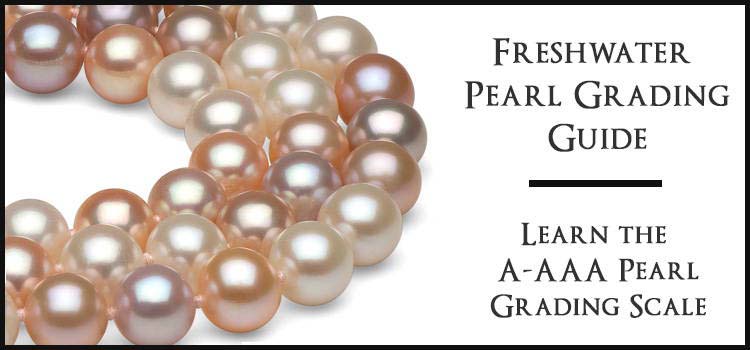
Get more pearl grading by type? Click the links below to head directly to each Pearl Grading Guide:
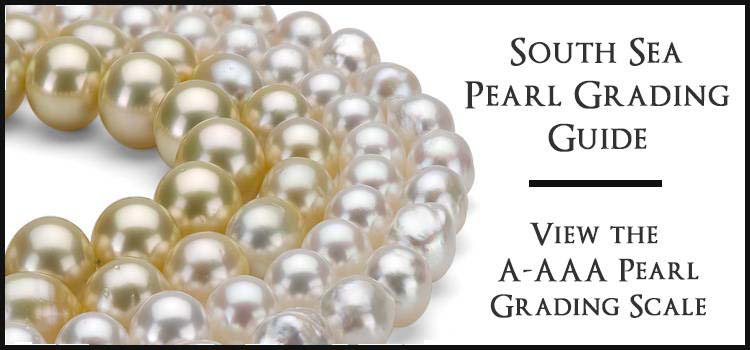
This detailed visual guide is a fantastic reference article for learning about White and Golden South Sea pearls and the A-AAAA Grading Scale that NaturalPearlStrand.com uses. Featuring visual aids and a systematic breakdown of what exactly you can expect to observe in each grade, this guide will be like having your very own jewelers’ grading hank!
Feel free to read the whole article, or use the links featured in the Table of Contents to skip ahead directly to parts that concern you, Use these links to navigate this article:
What Makes South Sea Pearls Beautiful?
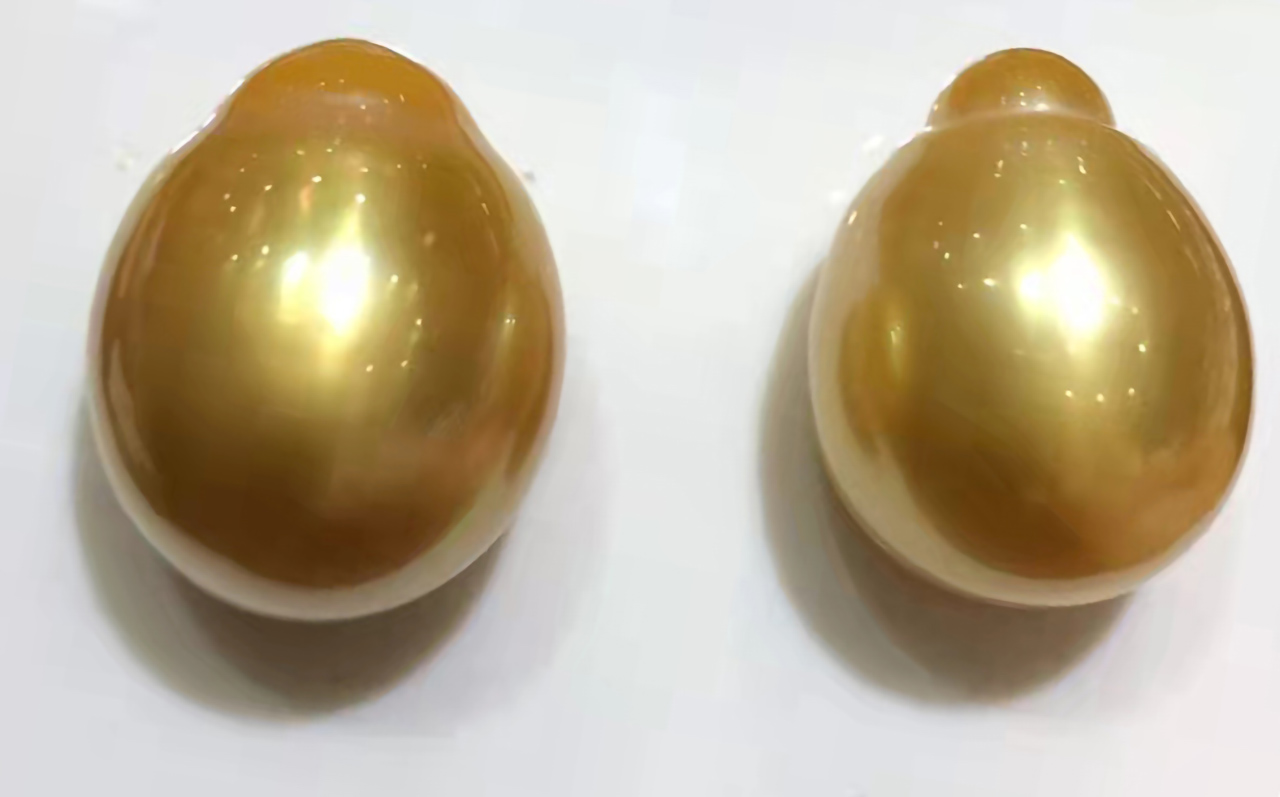
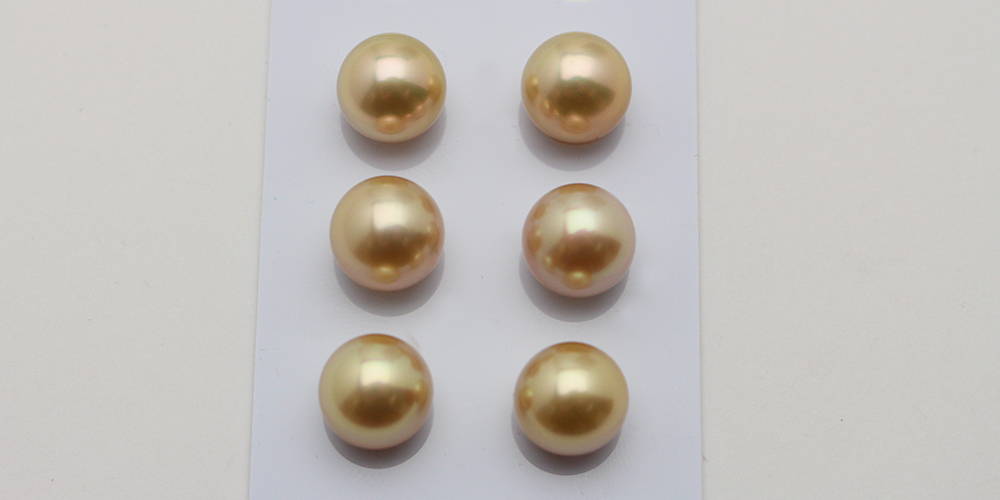
Luster, Luster, LUSTER! And natural pearl colors found nowhere else on Earth. White and Golden South Sea pearls are known to have the thickest nacre layers of all cultured saltwater pearl types, averaging between 2.0-4.0mm thick, or more. Almost universally described by pearlers as “satiny” in look, the South Sea pearl’s luster is softer in appearance than that of the Japanese Akoya Pearls. South Sea pearls radiate a gorgeous “glow” that appears to emanate from within, rather than the harder “mirror-like shine” that Akoya pearls are famous for. That’s not to say that South Sea pearls can’t feature very bright, very sharp luster – they can and do. Check out this picture that showcases a pair of Golden South Sea Drops with almost Metallic levels of luster (WOW).
The Science Behind Pearl Color and Luster
Like every other cultured pearl variety out there, the visual phenomenon of Body Color, Overtone and Luster are due to the compaction and smoothness of the pearl's crystalline nacre layers. White and Golden South Sea pearls are both nucleated using a perfectly round mother-of-pearl bead nucleus.
The nucleus is surgically placed into the gonad of the oyster, along with a tiny, 1.0mm square piece of donor mantle tissue from a different oyster. The incision is covered over and the oyster is placed into an “after surgery” tank for a few days while it heals from the procedure.
After a short time, the bead nucleus stimulates the formation of a pearl sac, which envelopes the nucleus in a loose “purse” and the oyster begins secreting nacre.
This continues on for about 2-3 years, as the oyster continuously covers the interior bead nucleus with thousands of concentric layers of nacre and conchiolin, forming a pearl.
Some definitions you should know are:
♠ Nacre is the sum total accumulation of aragonite and conchiolin. ♠ Aragonite is composed of hexagonal-shaped, semi-transparent crystal platelets made of crystalline calcium (CaCo3). These platelets are extremely tiny - measured in the microns! ♠ Conchiolin is the semi-transparent to darker organic “glue” that is layered in between the aragonite platelets. I imagine that conchiolin is like the cement interspersed between bricks, holding a wall together. ♠ White South Sea pearl conchiolin is usually colorless to light grey and pale beige, which allows the pearl to present that “bright white” appearance that is so well-loved. ♠ Golden South Sea pearl conchiolin is present in a range of darker pigments like orange, brown and reddish-brown. This contributes to the pearl’s famous Golden color (depending on a variety of other existing factors).
The tighter and more compact the aragonite and conchiolin layers are, the more intense the luster, color and orient you will perceive on the pearl’s surface.
Now that you’re a bit more familiar with how and why these various elements combine to create the visual phenomenon of "Wow!!" to us humans, we can move onto learning about the A-AAAA South Sea Pearl Grading Scale that Pure uses.
The breakdown below examines each pearl grade, and lays out specific benchmarks that South Sea pearls must meet in order to "make the grade".
South Sea A-AAAA and Gem Quality Pearl Grading Breakdowns
The images depicted in these grading breakdowns include a mix of perfect round and off-round/button and baroque South Sea pearl necklaces.
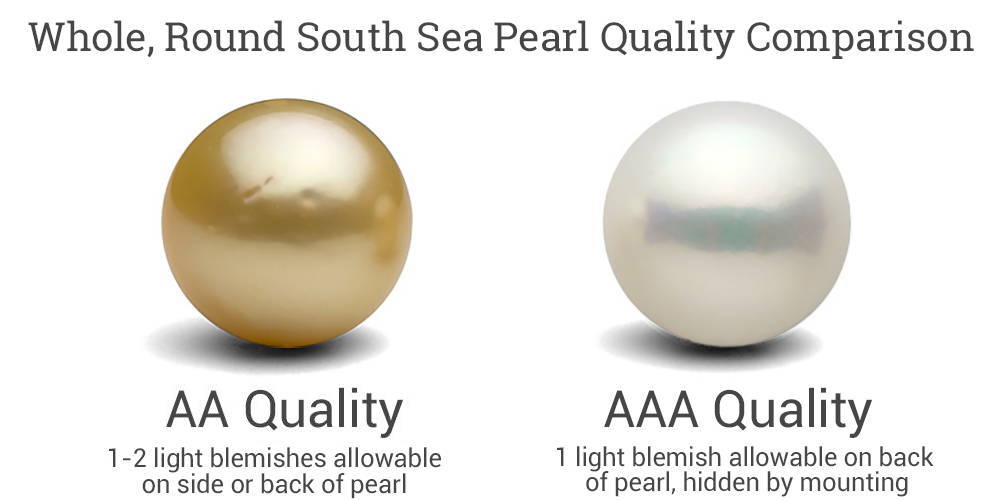
Keep in mind that baroque or drop-shaped pearls are graded using the same A-AAAA scale as perfectly round pearls. In addition to luster, color and surface quality, for baroque and semi-baroque pearls, the symmetry of shapes and shape-matching play very important roles in determining the pearls' overall quality.
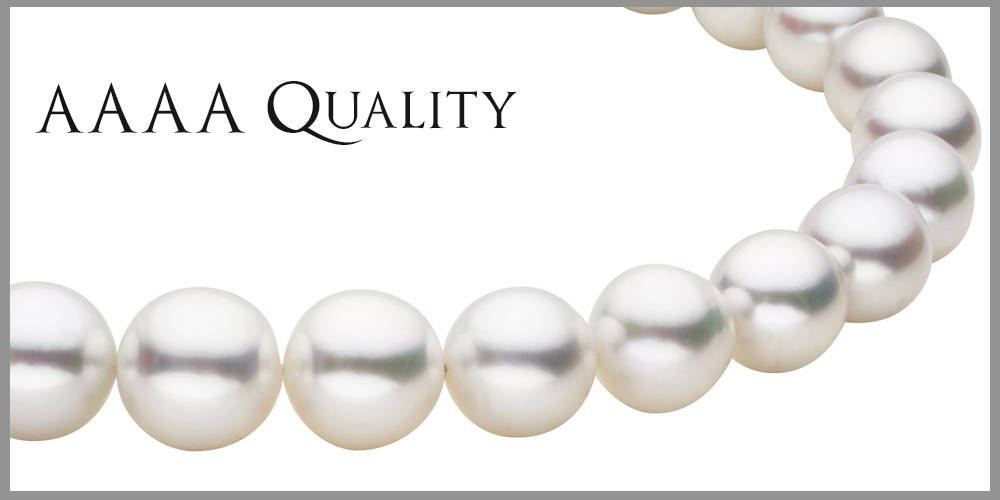
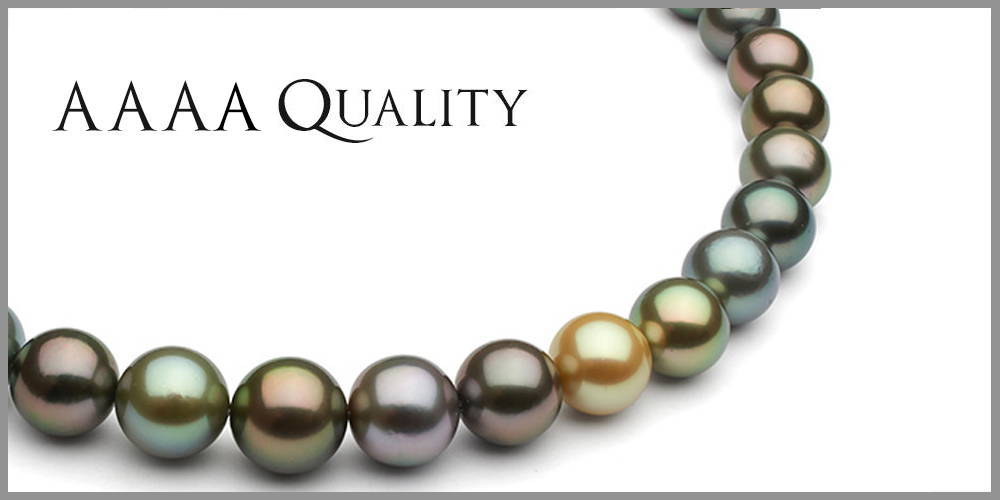
♠ Finest South Sea pearl grade available – Very Rare. ♠ Luster is extremely sharp, with crisp, distinguished reflected light sources. ♠ No blemishing or inclusions may be seen with the naked eye. ♠ Perfectly spherical and/or symmetrical pearl shapes. ♠ Nacre measures between 2.0-4.0mm thick or more. ♠ Pearl Earrings set perfectly clean. ♠ Pearl Necklace will be very clean upon close inspection (6-Inches or less). Zero deep inclusions allowable. ♠ Excellent matching; little to no variation in color, tone, luster, shape or size.
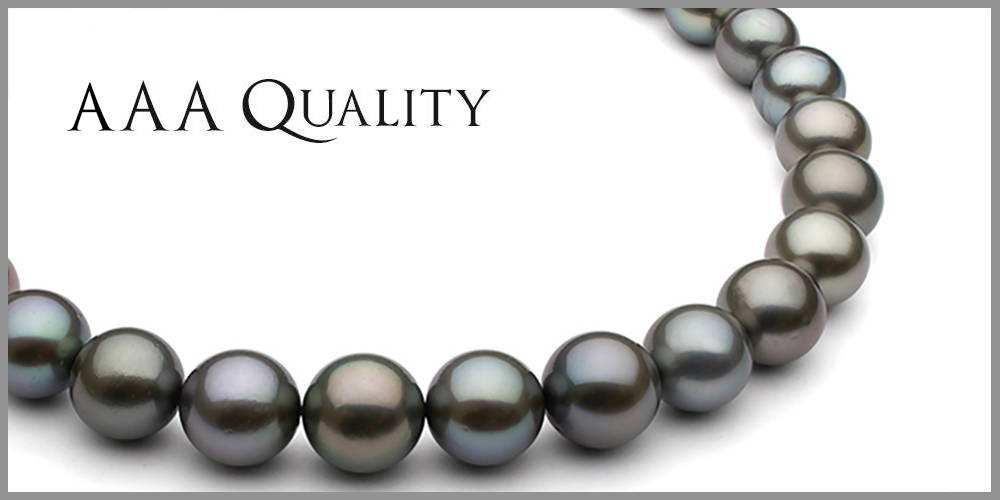
♠ Nacre measures between 2.0-4.0mm thick. ♠ Luster is sharp with Excellent rate of reflection. ♠ Reflected light sources have mostly crisp edges; satining or blurring may be observed with careful inspection. ♠ Excellent light return. ♠ Blemish rate less than 5-10% on each pearl surface. ♠ Earrings will set clean in front. ♠ Strands will be mostly clean to the eye upon inspection. Only very small inclusions allowable. ♠ Near-perfect matching; little to no variation in color, tone, luster, shape or size.
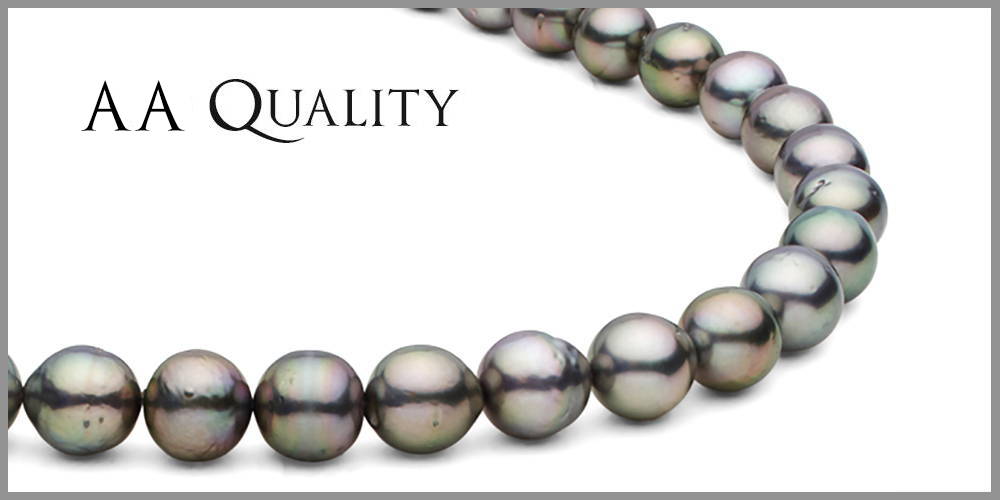
♠ Nacre measures between 2.0-4.0mm thick. ♠ Luster is mostly sharp with Very Good rate of reflection. ♠ Facial features can be observed in pearl surfaces, overall face shape easily visible. ♠ Reflected light sources have slightly blurred, some slightly satiny edges. ♠ Very High light return. ♠ Blemish rate less than 10-15% on each pearl surface. ♠ Up to two deep blemishes allowable on 18-inch strand. ♠ Very good matching; little variation in color, tone, luster, shape or size.
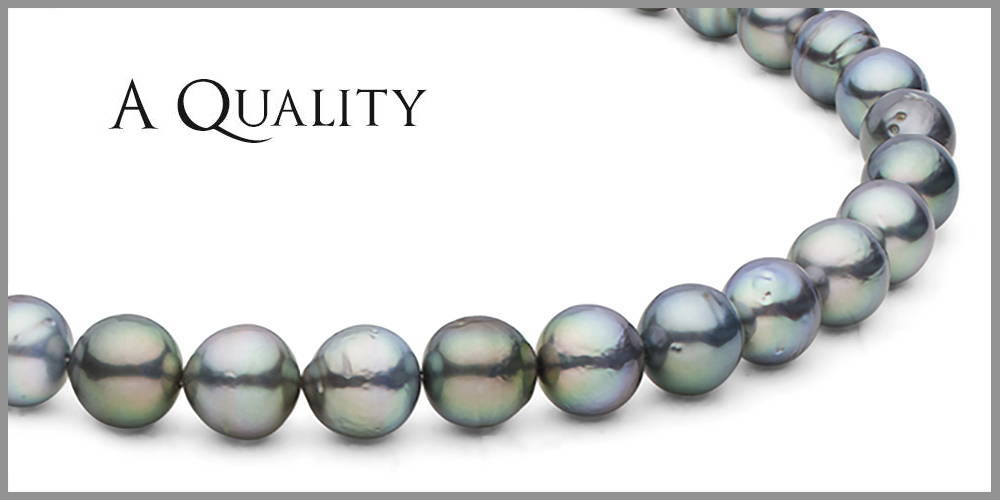
♠ Nacre measures between 2.0-4.0mm thick. ♠ Luster is Good to Soft, reflected objects are blurred. ♠ Facial features are typically not observed in pearl surfaces. ♠ Reflected light sources have blurred edges. ♠ Good rate of light return. ♠ Blemish rate less than 30% on each pearl surface. ♠ Two to four heavy/deep blemishes allowable on 18-inch strand. ♠ Good matching; some variation in color, tone, luster, shape or size
♠ Luster is Fair to Soft with low rate of reflection. ♠ Reflected light sources are blurry. ♠ Facial features cannot be observed in pearl surfaces. ♠ Blemish rate less than 40% on each pearl surface. ♠ Some heavy blemishes may be observed throughout layout, however deep inclusions should not make up more than 10-15% of the total layout. ♠ Fair to good matching; some variation in color, tone, luster, shape or size..
With Golden South Sea pearl grading, color also plays an important role. The best rule of thumb to go by is: the deeper the golden color, the rarer and more valuable the pearls are, all other quality factors being equal.
** Cultured White and Golden South Sea pearls are one of the few “organic gemstones” in the world (the others being amber, jet and coral). That means they are the end result of a biological process. Tiny imperfections in even “Gem” Quality pearls are expected.
Per the FTC: § 23.26 Misuse of the words "flawless," "perfect," etc. (a) It is unfair or deceptive to use the word "flawless" as a quality description of any gemstone that discloses blemishes, inclusions, or clarity faults of any sort when examined under a corrected magnifier at 10-power, with adequate illumination, by a person skilled in gemstone grading.
Cultured pearls will never be as flawlessly perfect as a synthetic glass or plastic bead can be – nor should you want them to be. Mother Nature always signs her creations, and these unique inclusions and marks can act as a built-in ID system that marks the pearls as yours and yours alone.
Pure’s AAA Quality Only Policy for South Sea Pearls Pure does not offer any AA+ Quality Round loose or matched South Sea pearl pairs; all Round pearl earrings, pearl pendants and pearl rings featured on Pure are AAA Quality only.
We use this Quality Control policy to make sure that each pendant, pair of earrings, or pearl ring that leaves our office will set clean in front and the sides of the pearl, so you’re only showing off Pure gorgeousness, and NOT blemishes.
As with all precious gemstones, and especially when it comes to online bargain shopping it pays to remember: price isn’t everything.
BAOYUE PEARL’s “AAA Quality Only” policy may make our prices look to be a bit less competitive at the outset, I believe that adhering to this high quality standard results in prettier pearl jewelry and happier, more loyal customers in the long run.
AAA vs AAAA Quality South Sea Pearl Necklaces
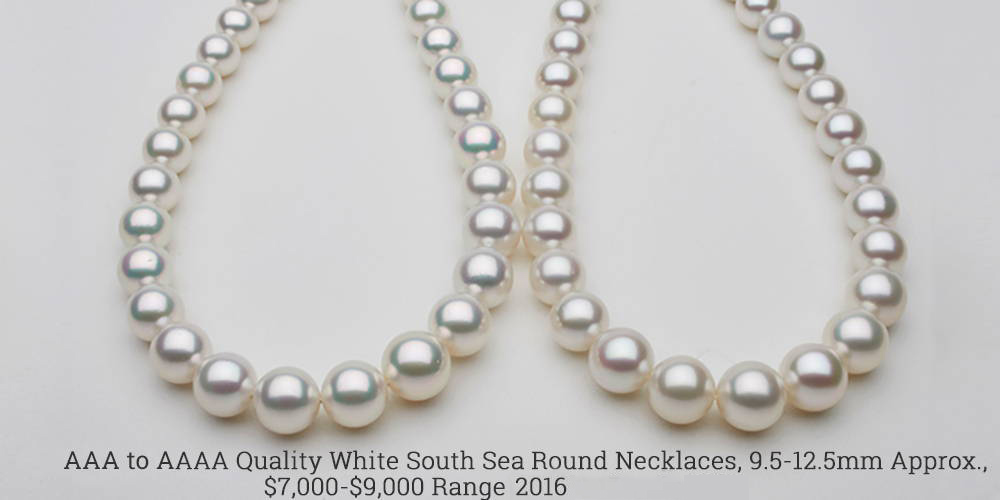
A full 18-inch strand allows us some more room to play with pearl necklace layouts, so we can offer a bigger variety of price points – we want all of our customers to be able to afford the "Queen of Pearls". Pure offers an array of South Sea pearl necklaces that span the entire range from A-AAAA Quality that will suit almost any budget.
In my personal, professional opinion, I almost always recommend selecting a smaller-sized but higher quality strand of South Sea pearls over larger, less lustrous pearls … or to not get too hung up on "Perfect Round" pearl shapes.
Remember that Luster - and Orient whenever visible - makes or breaks these little guys as gemstones, so aim to up that “L” factor whenever possible.
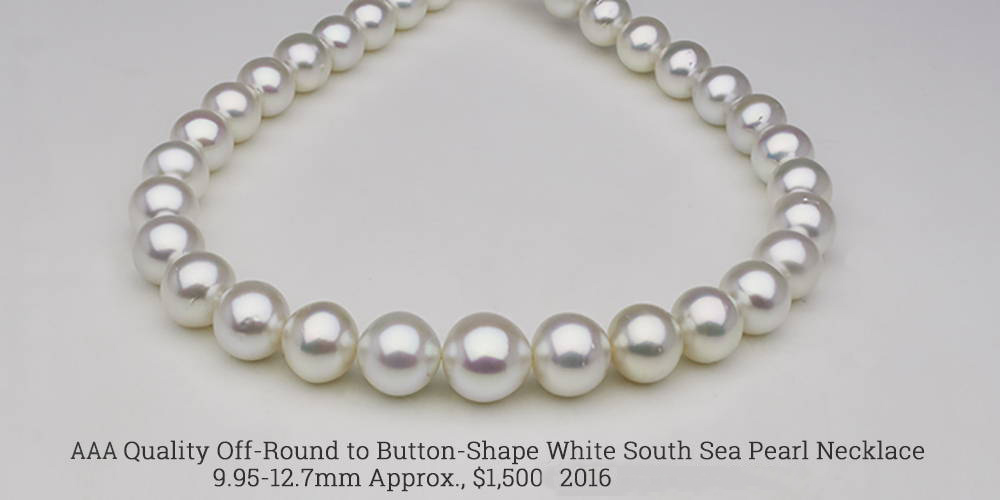
That said, there’s no denying the WOW Factor that a really large layout of White or Golden South Sea pearls exudes. The Off-Round / Button-Shape South Sea pearl necklace pictured just above crossed my desk in 2016 and was gone within a few weeks (because look at that Orient!!)
Snagging a screaming deal like this depends on whether off-round and button-shaped pearls, or a few inclusions is a huge turn off for you, or if the luster and orient that is plain to see here overwhelms those other factors.
If you’d like to learn more about the 7 Value Factors for cultured pearls click here.
With BAOYUE PEARL’s South Sea necklace collection, you’ll often see necklaces with grades that will look like "AA/AAA Quality" and/or "AAA/AAAA Quality" in their descriptions. These “intermediate” grades are given to pearl strands when the pearls almost-but-not-quite make it to a whole letter grade like AAA Quality.
Generally, what these intermediary grades mean is that the pearl’s surface quality (i.e. amount of inclusions) or shape is graded at a lower level like AA, but the pearl’s luster and shine pushes the layout to that higher grade.
It could also be the reverse in that the pearls’ surfaces are extremely clean, but the luster isn’t quite there. However, I usually grade strands like that with a lower grade anyways because what makes pearls beautiful as a gemstone?
That's right: Luster!
Let’s see how this plays out with real South Sea necklaces …
**Ridges are an inclusion that is unique to Freshwater pearls, quite likely due to their solid-nacre composition. Ridges are totally covered in nacre, so they’ll be whatever color the pearl is, i.e. white for white, pink for pink and so on.
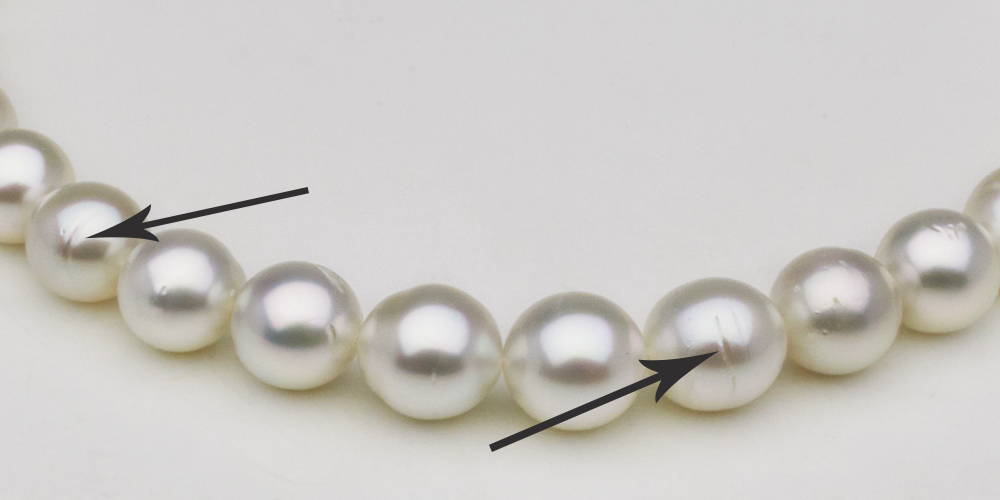
**Score marks or scoring begins with a small pin prick or pit, and then appears to be drawn off lightly over the surface of the pearl … they can look like small comets or shooting stars for those of us with a romantic viewpoint.
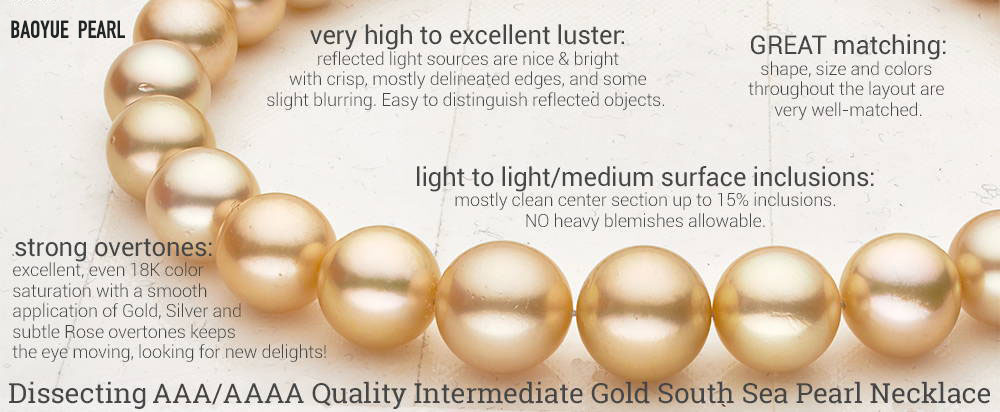
Check out the photo above showing a section of BAOYUE PEARL, an 18K Medium-Deep Golden South Sea Round Pearl Necklace which was given an intermediate AAA/AAAA Grade. Notice in particular:
Bright, touchable Luster: The high rate of light reflection from the pearl’s surfaces really brightens up the pearls, and gives these gorgeous gems a visual sense of epth, and helps the pearls appear to glow for the observer. The Luster could be sharper and more defined around the edges of reflected light sources, so AAA Quality.
Nicely saturated colors: The strand featured is an 18K Medium-Deep Golden hue with pale Silver, Gold and subtle Rose overtones. If the primary body color were deeper, say a 22K Golden hue, it would push the pearls into AAAA Grade territory.
Well matched pearls: The pearls are incredibly well matched for shape, size, luster, surface quality and overall tone. AAAA Quality level. Very light surface inclusions. I count 5 very tiny blemishes in this center section, and the rest of the layout is really Very Clean. AAAA Quality, easily!
So based on our pearl grading value factors we have:
Luster: AAA Quality. Surface Quality: AAAA Quality, hands down. Color: AAA Quality – pretty, but pastel. Matching: AAAA Quality easily - the pearls are excellently matched for round shape, smooth and subtle graduation of size, luster, surface quality and overall tone. Overall Grade: AAA/AAAA Quality Golden South Sea Pearl Necklace, leaning HARD to a true AAAA Grade.
Common South Sea Pearl Inclusions
Inclusions are a fancy-sounding jewelry term for surface blemishes and natural growth characteristics that interrupt the smoothness of the pearl’s surfaces.
In this section, I’ll break down what is and is not an inclusion (it’s not always what you think!): how these growth characteristics effect the pearl, and how they can affect value.
South Sea pearl inclusions and growth characteristics are an easy way to:
A: Ensure that the pearls are the genuine article, and not man-made fakes like shell pearls. Created synthetic pearls are usually perfect, with identical pearl beads through a layout, and feature no marks, spots, bumps, ridges, scoring or bulleting.
B: Are a built-in ID system that you can use to identify that set of pearls as yours and yours alone. Get to know your pearl's unique markings, and you’ll never get fooled by a pearl swap !
MOST White and Golden South Sea pearl blemishes are the color of the corresponding nacre (so, gold or white in color), so often these surface blemishes don’t stand out glaringly unless they’re very deep or there are a lot of them bunched together. The pictures below are all of White and Golden South Sea pearl strands that are raw, unretouched photos (so no “glamourizing” has been done here). Keep in mind that these are close-ups of inclusions on pearls for educational purposes … in other words, don’t get scared by the focusing on the spots!
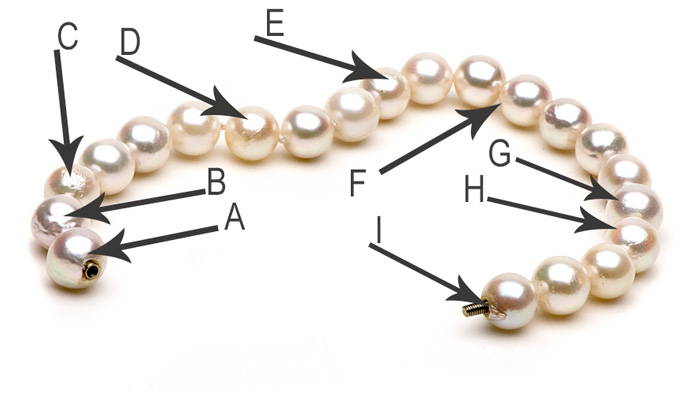
Mottling/Bulleting/Plating of the Surface – “Mottling” also known as “Bulleting” and sometimes “Plating” is a subtle texture on the surface of the pearl that (to me, at least) often looks like a tiny hammer has been used to repetitively mark the pearl.
This is a growth characteristic, and NOT an inclusion – it’s actually indicative of very thick nacre layering. Mottling is created in the same nacre color as the rest of the outer surface of the pearl, and so usually can only be noticed upon up-close inspection. Bulleting does not count against a pearl’s surface grade.
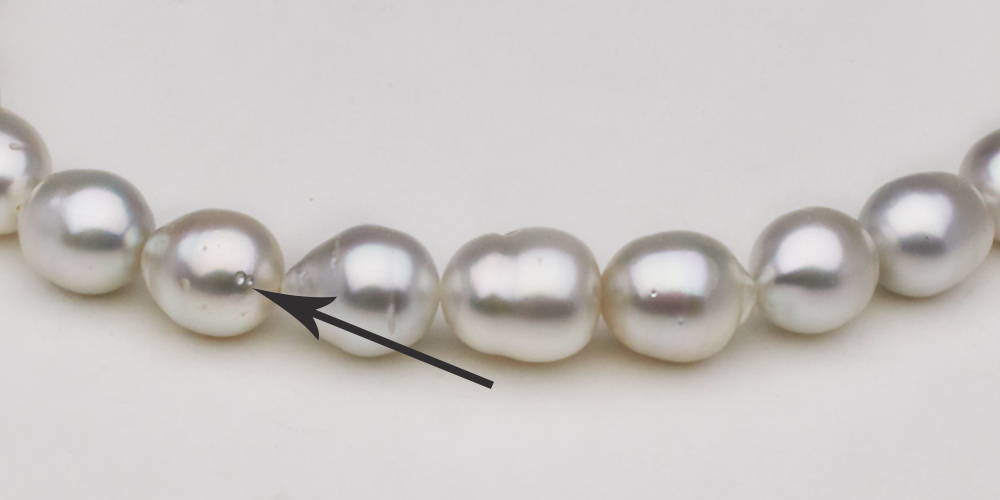
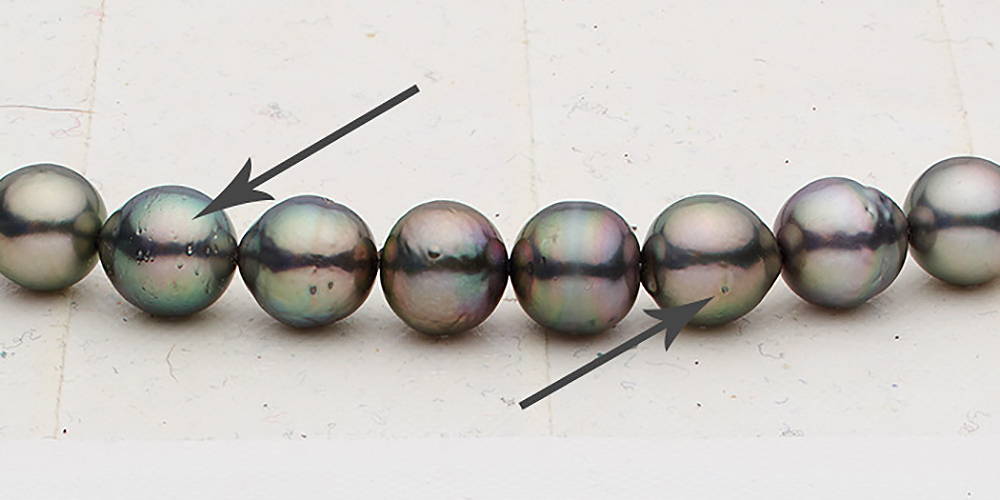
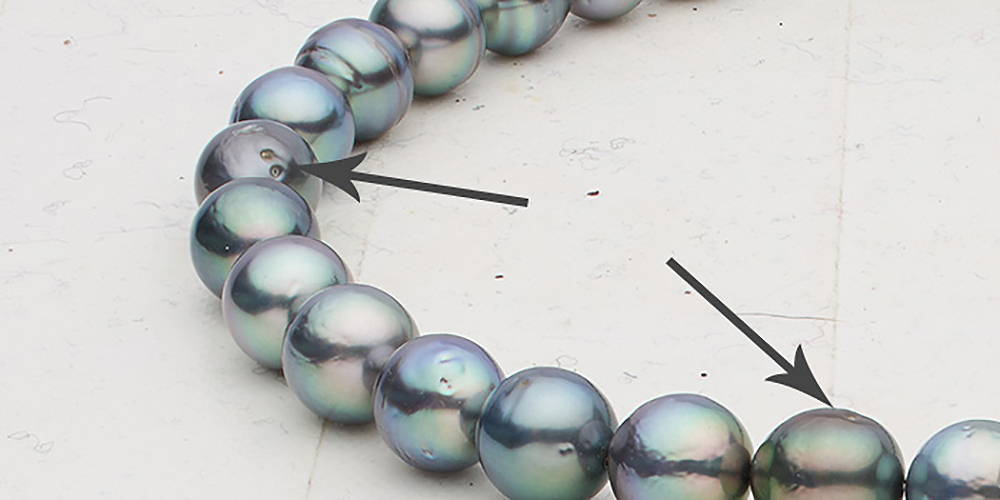
Pin Pricks – Ranging in size from a tiny needle points to small pricks that look like the pearl has been poked with a pencil, pin pricks are probably the most common pearl inclusion visible today.
Pin pricks can be grouped together in small clusters, or stand on their own individually, which is preferable.
Pits – These formations are pin pricks taken to extremes, and resemble large indentations, craters or even holes in the nacre. Pits count as heavy or deep blemishes when grading a strand of pearls, and their best case scenario is that they are at least the color of the pearl, and totally covered by nacre.Worst case scenario is they are very deep and display the organic conchiolin layer; jagged, sharp edges may eventually lead to chipping.
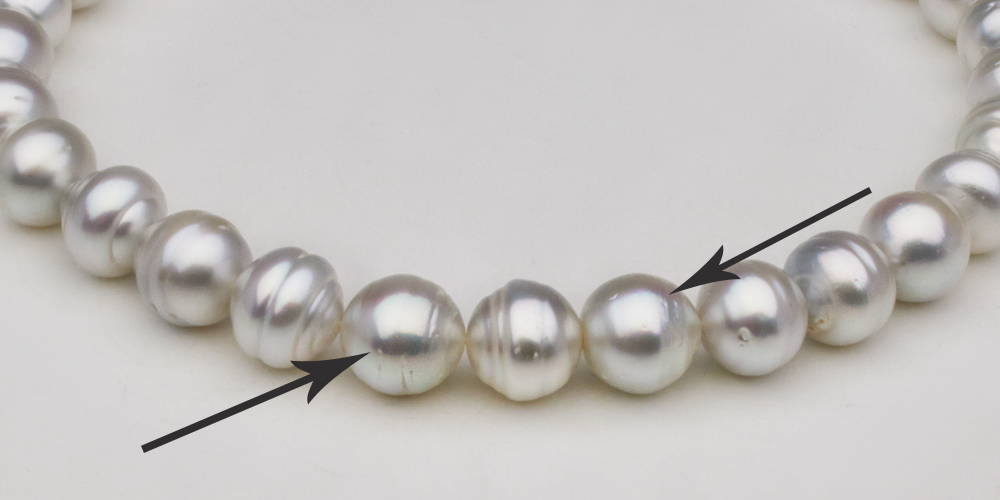
Score Marks / Grooves - Scoring and/or groove inclusions are the second most common South Sea pearl inclusion. They resemble tiny streaks to moderately-sized channels that look “carved” in the surface nacre (often they remind me of little shooting stars or comets trailing their way across the pearl when they’re very thin and light). The shallower, the better when it comes to scoring marks, and these should also be totally covered in nacre, with smooth, unbroken edges.
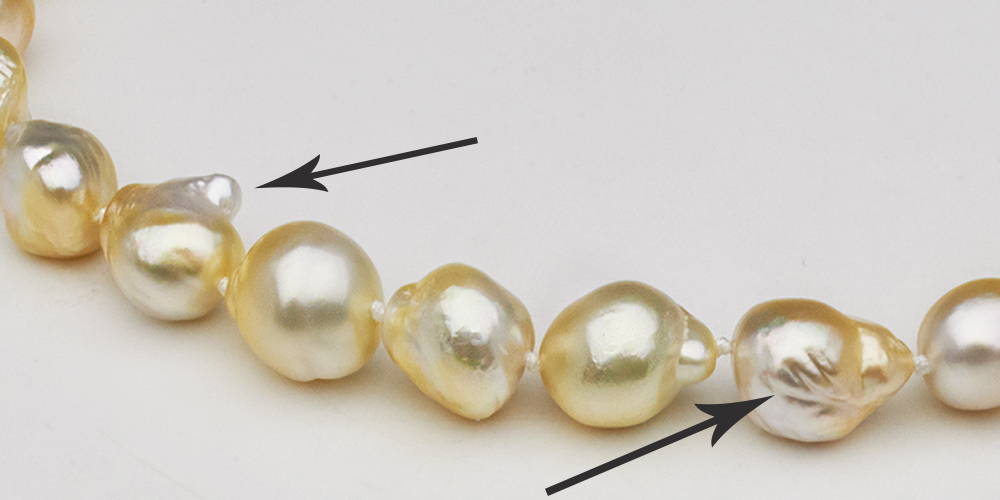
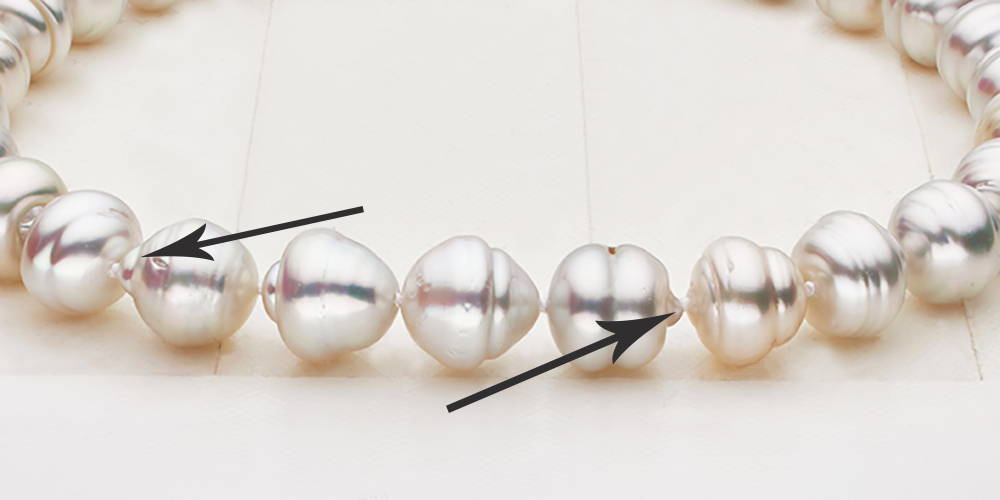
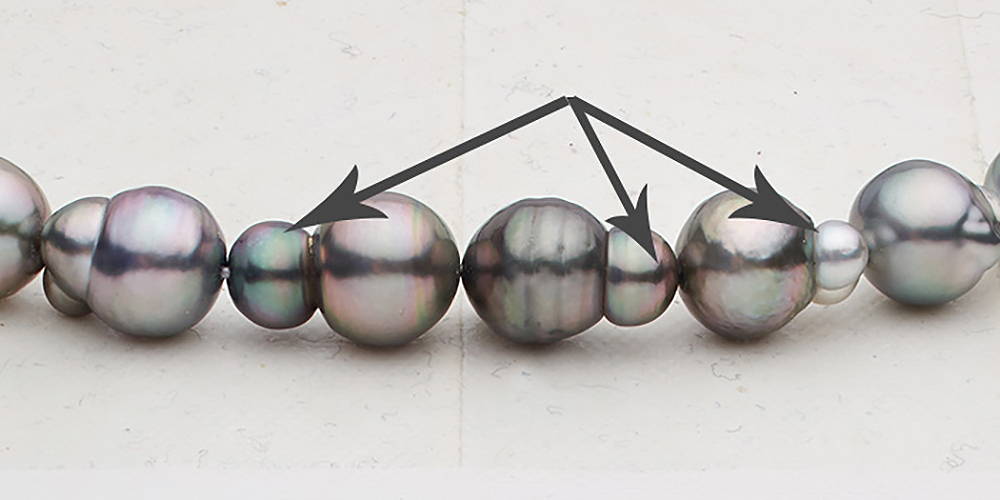
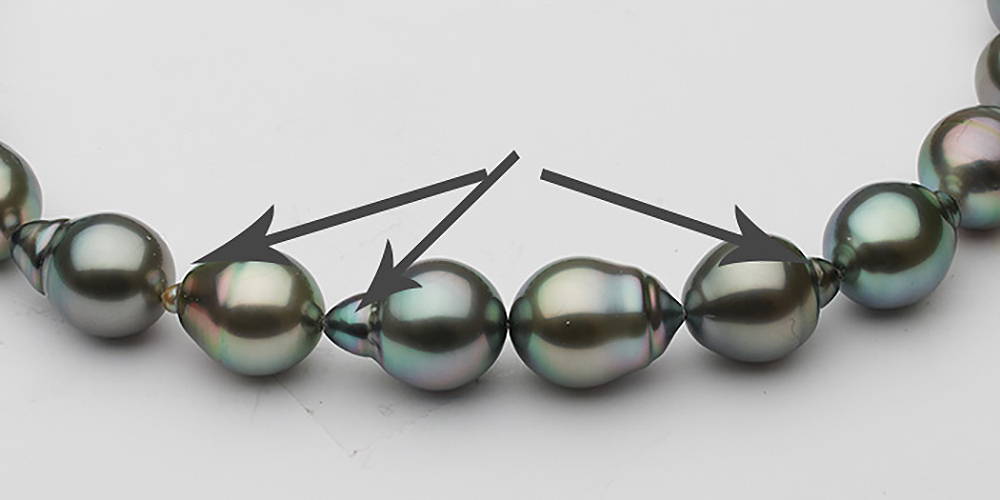
Knobs and Tips – Maybe one of the most interesting looking growth characteristic of all.
Both tips and knobs form on the ends of the pearl (99% of the time on baroque shaped pearls).
Occasionally, knobs can have additional features that resemble small bubbles. They can be rounded or elongated, pointy protrusions located at either end of a pearl.
Knobs and tips are natural growth characteristics and are also not counted as inclusions or blemishes.
Keep an eye out for chipping or cracking however, as these vulnerable areas may affect the pearls’ long-term durability.
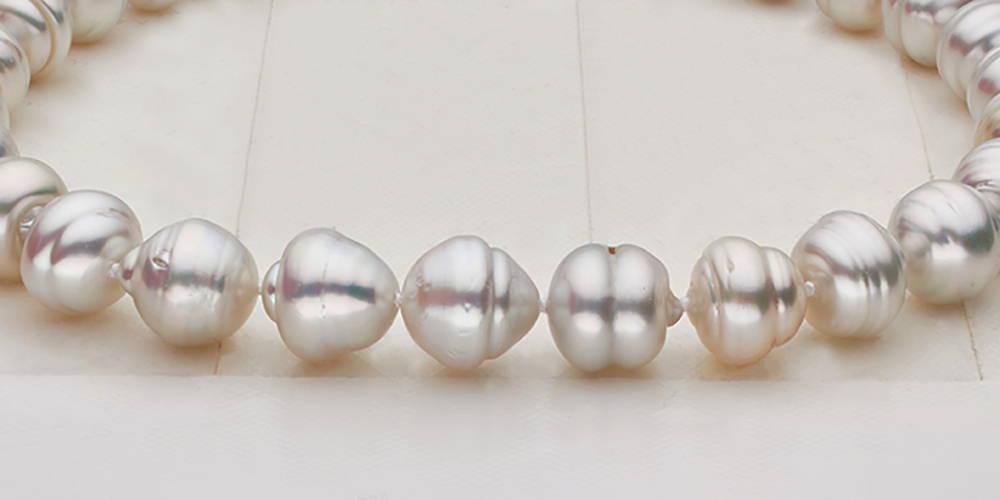
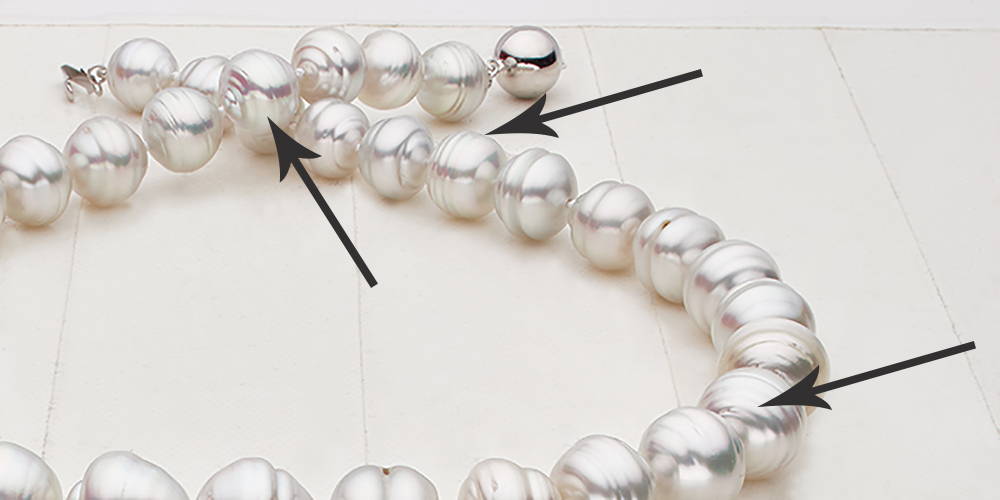
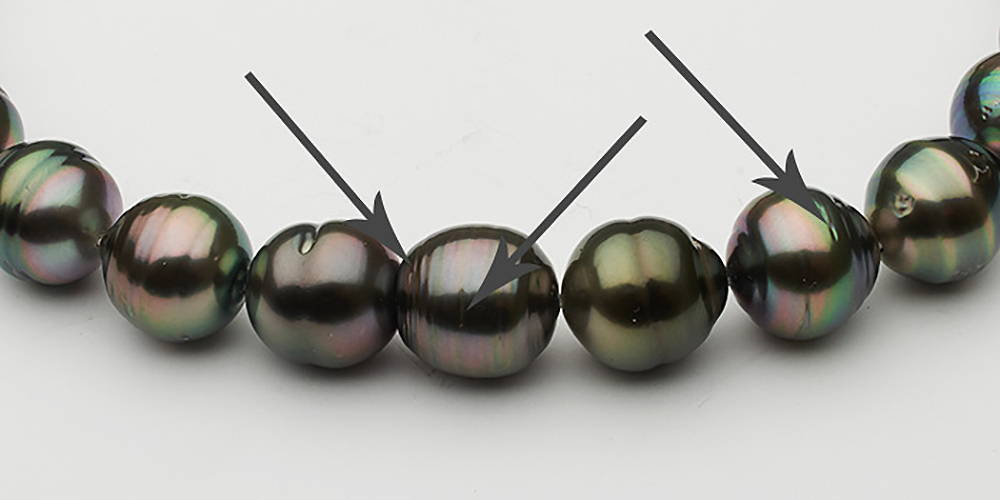
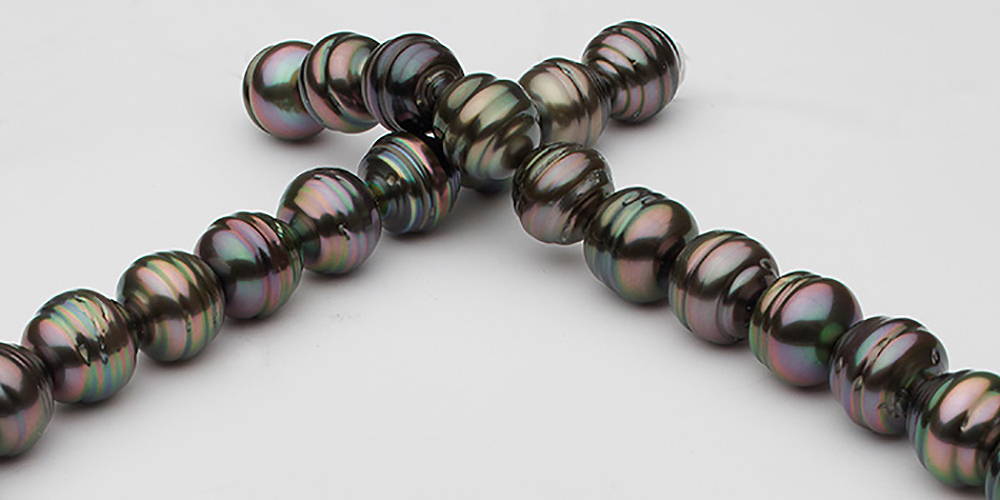
Circles / Circling – Originally marketed for black Tahitian pearls under the “Circles of Love” campaign in the 1980’s, “circles” or “circlés” are also a natural growth characteristic that does not count negatively towards the surface grade of the pearl.
These are single or heavily concentrated rings running around the pearl’s entire circumference, and imbue the pearls with an incredibly unique appeal.
Again, circles are not pearl blemishes, but, blemishes can form inside them (usually in the form of tiny pin pricks or grooves).
Uneven Nacre Accumulation –Smooth, concentric and even layers of nacre producing a totally unblemished, shiny pearl surface is ideal.
However, nacre building within an oyster responds to a variety of factors: environmental, temperature fluctuations, parasites, etc., can all interrupt this process to some degree or another.
When the layering process is disturbed, a build-up of crystalline material can occur, resulting in bumps, ridges and uneven surfaces.
Finding the perfect strand of White or Golden South Sea pearls for anyone is a balancing act of beauty over budget.
MOST South Sea pearl inclusions are small and isolated, and their color generally will match that of the surrounding surface nacre, meaning that they’ll blend with the surface and will be only noticeable upon up-close inspection of 6 to 12-Inches.
This is especially true if the pearl’s overtones and luster are at high levels, masking marks and distracting the eye.
Also, remember that the A-AAAA South Sea grading benchmarks count blemishes for each pearl, as well as the entire strand overall – so the 90% or 80% blemish-free totals only count for a relatively small area of blemishes, and there remains plenty of room for pearls that are clean and lovely on even a lower quality necklace.
When viewed through the eyes of one who loves their pearls, pearl inclusions can become an integral facet of the pearl’s unique character.
Like a snowflake, or the infamous “jardins” or “gardens” (which is the French name for inclusions in Emeralds), a pearl’s markings declare each gem as a totally unique and individual creation of Mother Nature.
Freshwater Pearl Grading – Your Insider’s Guide to Grading Freshwater Pearls
The world of Freshwater pearls is the fastest evolving of all cultured pearl types. Be it a Freshwater pearl necklace, pearl bracelet or pearl earrings, the options for freshwater pearls is endless. New shapes, colors, sizes and textures are being introduced at breakneck speeds, with new varieties making debuts yearly at the international pearl shows.
This guide to A-AAAA Freshwater Pearl Grading is going to deal primarily with the classic near round to round white Freshwater pearl, which is the most popular of all Freshwater pearl varieties available today. Read the whole article, or use the links featured in the Table of Contents to skip ahead directly to parts that concern you.
BAOYUE PEARL wholesale natural freshwater pearls All sizes All grade with low prices.
From this article to navigate what pearl size and shape you should buy.
Why Choose Freshwater Pearls?
It creates a pearl composed of solid crystalline nacre, the closest you can get to the way a natural pearl is formed in the wild. Because of this we also the see the widest types of pearl shapes in Freshwater pearls.
It creates an incredibly durable pearl that will withstand the tests of time, wear and tiny hands. Rather than a glossy shine, a Freshwater pearl possesses an elegant glow that slowly reveals itself under the steady gaze of the wearer ... Silky, touchable and radiant, fine AAA and AAAA Quality Freshwater pearls can look just as beautiful as any saltwater pearl.
Their natural shades of Pink/Peach, Lavender and White are untreated by any chemical or dye process, and will never discolor or fade if cared for properly. New, intense colors and metallic overtones are becoming available, making cultured Freshwater pearls one of the most colorful pearl types on the market today!
Creation of a Freshwater Pearl
Cultured Freshwater pearls are grown in the freshwater pearl mussel, Hyriopsis cumingii (along with other hybridized mussels indigenous to the area) in freshwater lakes and man-made aquaculture ponds that also contain fish, shellfish and rice to support the small pearl farmer collectives in China.
The Freshwater pearl mussels are nucleated with 1.0mm squares of donor mantle tissue within the body of the mussel.
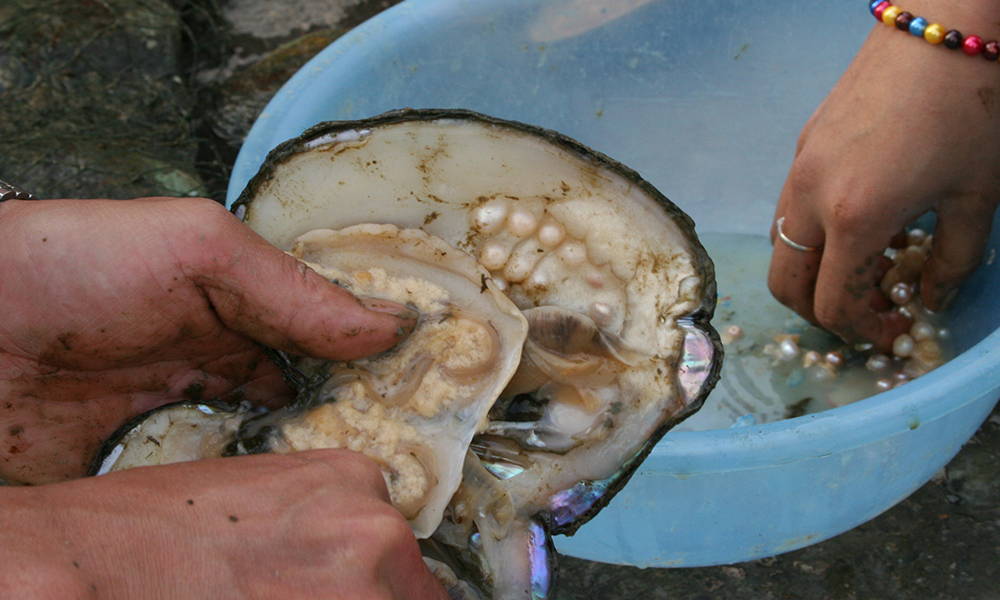
Natural freshwater pearls occur in mussels for the same reason that saltwater pearls occur in oysters. Foreign material, usually a sharp object or parasite, enters a mussel and cannot be expelled. To reduce irritation, the mollusk coats the intruder with the same secretion it uses for shell-building, nacre. To culture freshwater mussels, workers slightly open their shells, cut small slits into the mantle tissue inside both shells, and insert small pieces of live mantle tissue from another mussel into those slits.
In freshwater mussels that insertion alone is sufficient to start nacre production. Most cultured freshwater pearls are composed entirely of nacre, just like their natural freshwater and natural saltwater counterparts.
The tissue squares are seeded throughout the soft body of the mussel, up to 25 times on each side of the shell, creating a potential harvest of up to 50 pearls per mussel.
The sheer volume of cultured Freshwater pearls dwarfs that of any other cultured pearl type many times over each year, contributing to their lower price points.
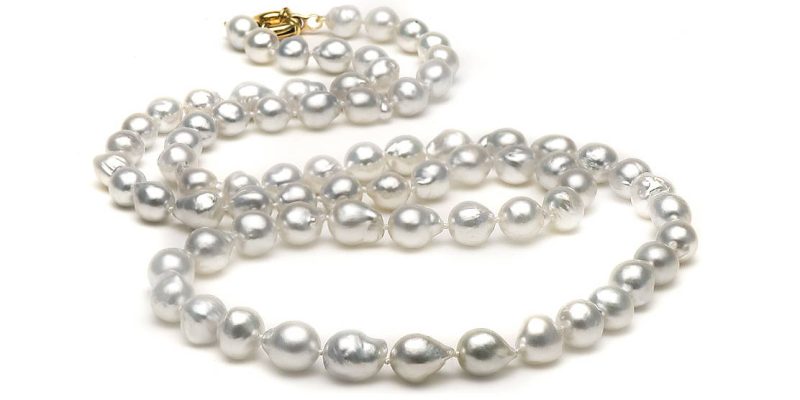
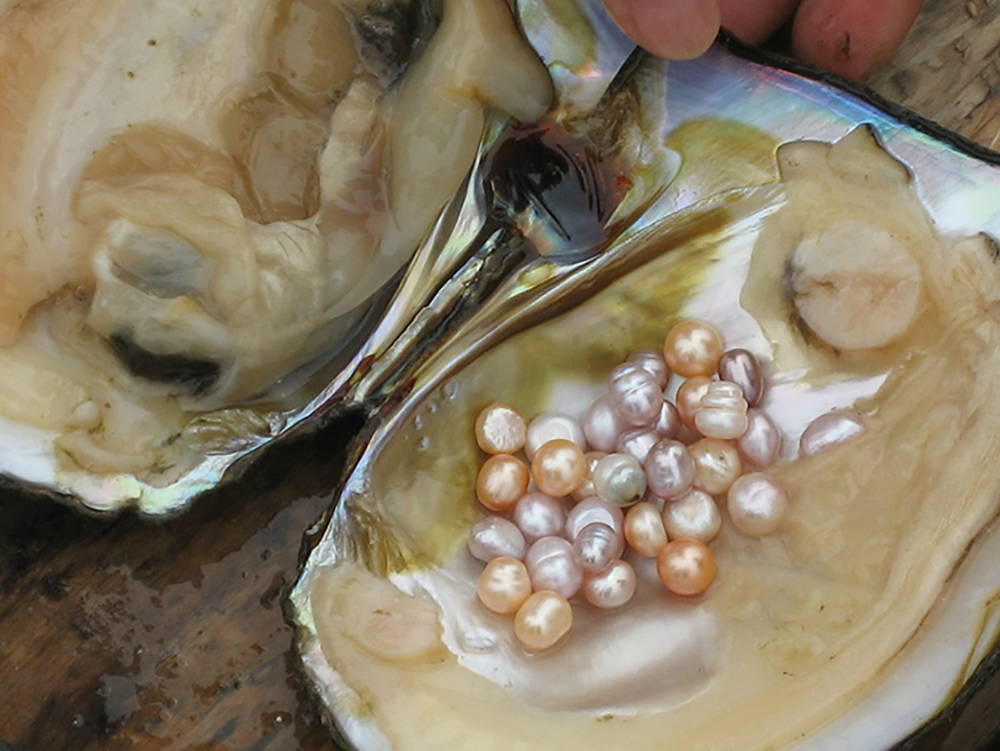
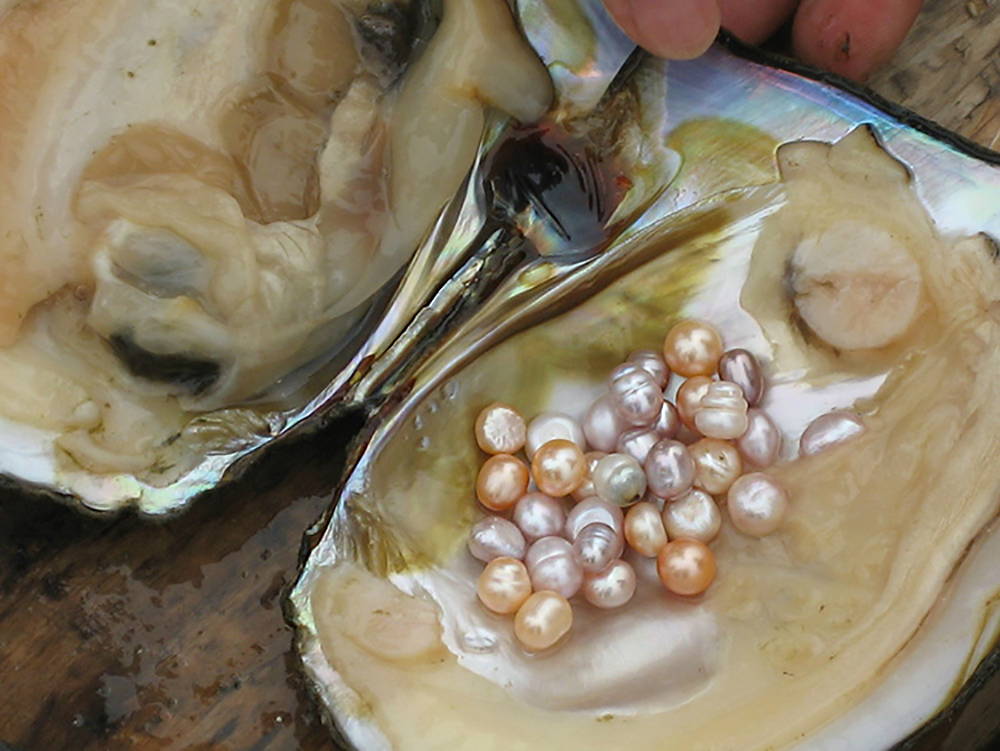
Solid-nacre pearls have no mother of pearl bead nucleus to give the mussel a perfectly round ‘template’ to form nacre over, so the majority of Freshwater pearl harvests contain semi-baroque and baroque pearls (see the image above for an example of the variety of shapes, sizes and colors a single mussel can produce!).
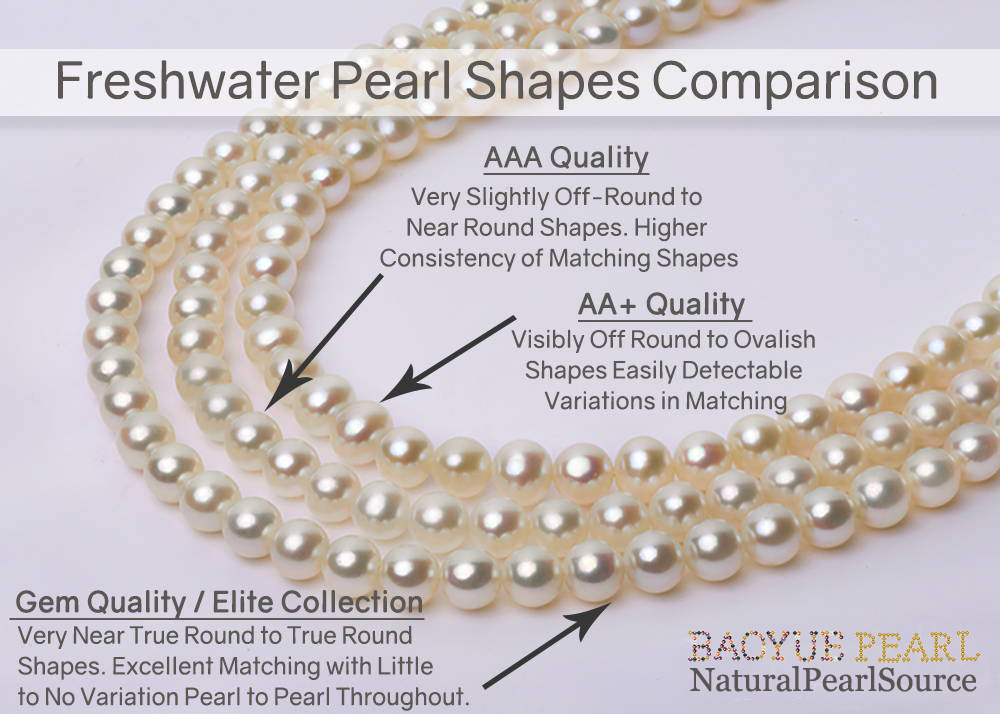
True round-shaped Freshwater pearls, while a major goal of pearl farmers everywhere, remain a tiny percentage of each yearly harvest – less than 3% - and are a MAJOR factor in determining a pearl’s overall quality grade.
A-AAAA Quality Freshwater Pearl Grading Breakdowns
♠ Represents the top .03% of yearly pearl harvests. ♠ Very near true round shape; Less than 5% deviance from spherical shape. ♠ Excellent luster; very sharp with high rate of reflection. ♠ Reflected light shows mostly crisp, distinctive edges. ♠ Excellent luster; very sharp with high rate of reflection. ♠ Blemish rate between 0-5% on each pearl surface. ♠ Earrings will set clean. ♠ Strands will be clean to the eye upon inspection. ♠ Near-perfect matching; little to no variation in color, tone, luster, shape or size.
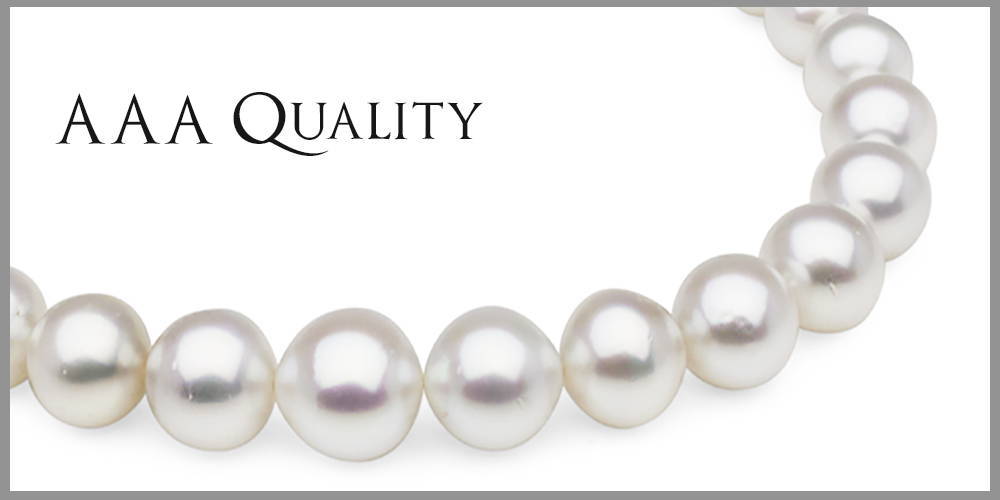
♠ Represents the top 1% of yearly pearl harvests. ♠ Mostly round to the eye upon close inspection. ♠ Excellent luster; sharp with high rate of reflection. ♠ Reflected light is fairly crisp, some satining near edges. ♠ Blemish rate less than 5% on each pearl surface. ♠ Earrings are round shape, and will set clean. ♠ Strands will be clean to the eye upon inspection. ♠ Near-perfect matching; little to no variation in color, tone, luster, shape or size.
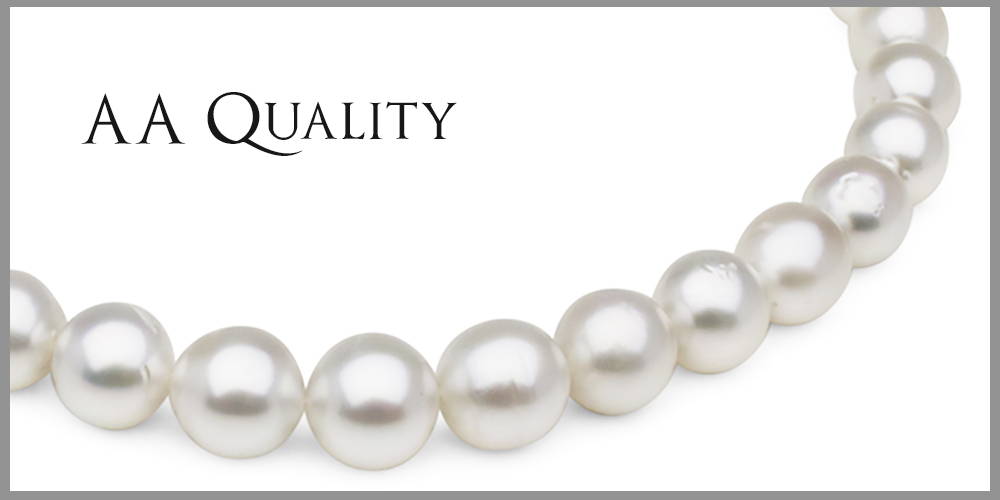
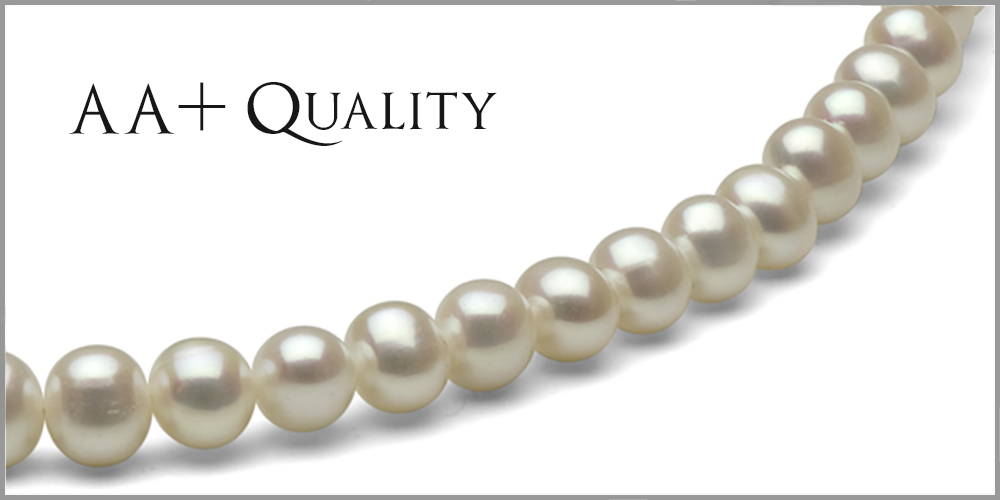
♠ Represents the top 5% of yearly pearl harvests. ♠ Off-round to ovalish in shape. ♠ Very high luster; fair rate of reflection. ♠ Reflected light is bright with some blurred edges. ♠ Blemish rate less than 5-10% on each pearl surface. ♠ Earrings are button-shape, and will face up clean. ♠ Strands will be mostly clean to the eye upon inspection. ♠ Very good matching; little to no variation in color, tone, luster, shape or size. ♠ Also Offered at BAOYUE PEARL .
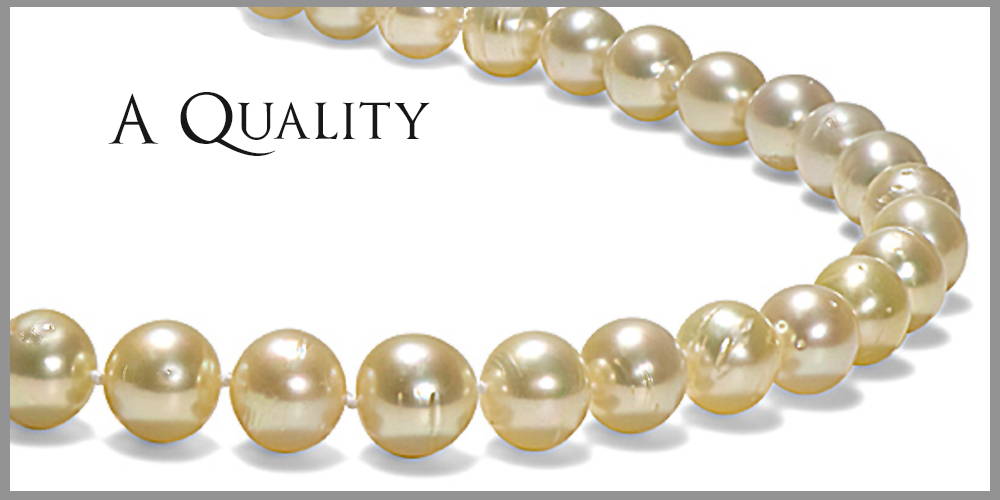
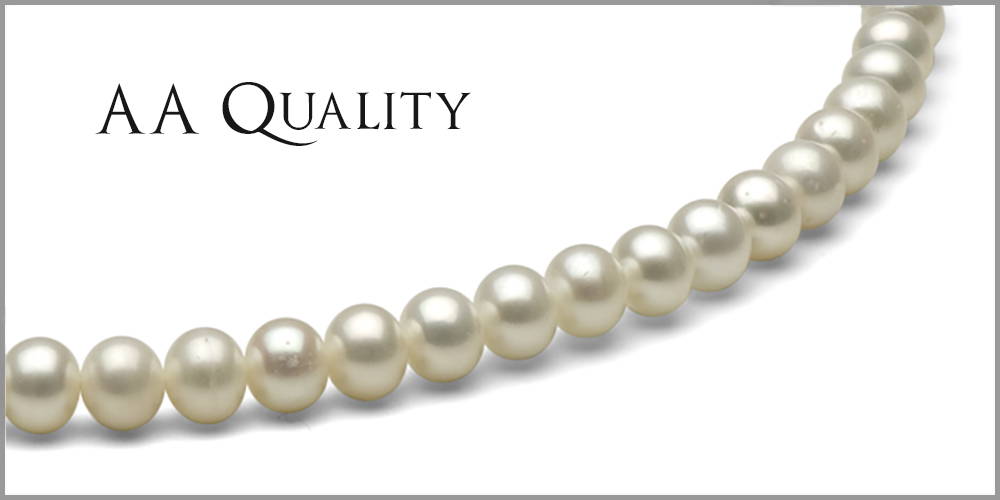
♠ Represents the top 10% of yearly pearl harvests. ♠ Visibly off-round. ♠ Good to fair luster, medium rate of reflection. ♠ Reflected light sources display blurred edges. ♠ Blemish rate less than 20% on each pearl surface. ♠ Earrings are button-shape, may feature an inclusion. ♠ Strands will display spotting and blemishing. ♠ Good to fair matching; may find variation in color, tone, luster, shape or size. ♠ Also Offered at BAOYUE PEARL.
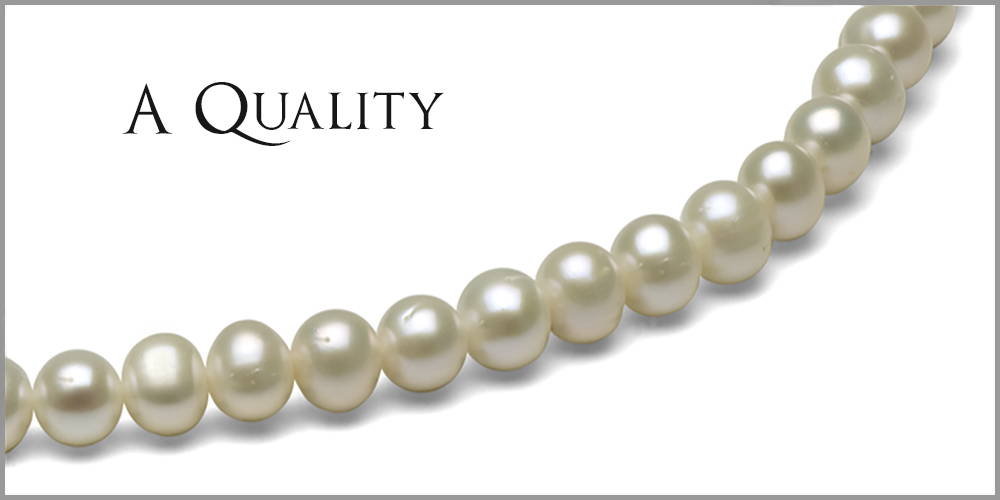
♠ Commercial grade pearls. ♠Visibly off-round. ♠Fair to poor luster; low rate of reflection. ♠Reflected light sources are blurry. ♠Blemish rate less than 50% on each pearl surface. ♠Strands will display spotting and blemishing. ♠Fair matching; will find variation in color, tone, luster, shape or size. ♠Also Offered at BAOYUE PEARL.
AAA vs AAAA Quality Pearls - Which Should You Choose?
The primary difference between the AAA Quality and AAAA Quality Freshwater pearl necklace is one of SHAPE. It’s the most visible and easily quantified value attribute between the two qualities; the next two differences will be that of Luster and Surface Quality. To learn more about all the pearl value factors, visit: The Ultimate Guide to Pearl Grading
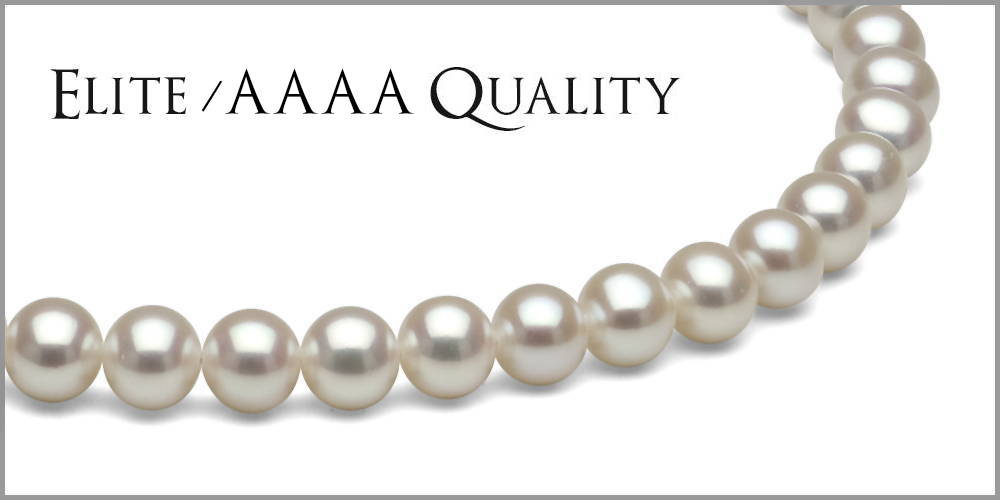
Our AAAA Quality Freshwater pearls are going to have sharper, brighter luster and less blemishing, between 1-5% of the pearls' surfaces on the strand overall will feature some type of inclusion (usually chalky spots or thin ridges where organic material has accumulated).
Most importantly, the shape will be round to the eye from a distance of 6-inches approximately, and up close inspection (less than 6-inches) will reveal nearly perfectly round pearl shapes.
Typically our AAAA / Elite Collection Freshwater pearls are used for earrings, rings and pendants because their quality is top-tier. We bid a little more to have them set aside, fully-drilled and matched into 18-inch hanks for us, so we can create Freshwater pearl jewelry that is above and beyond what you’ll normally see in brick and mortar jewelry stores.
Their blemish rate is less than 1-3% overall, luster will be very bright, with crisp, defined edges of reflected light in the pearls’ surfaces, and you should be able to make out some detailed facial features reflected in the surfaces as well. They are the best of the best that Freshwater pearls have to offer, at half the price of an equivalent Akoya pearl.
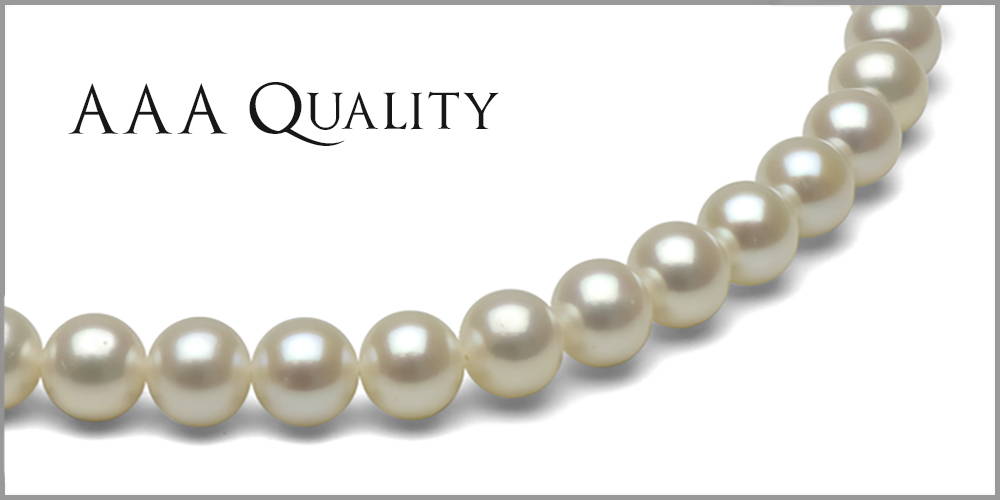
Our AAA Quality Freshwater pearls will have luster that is nearly comparable just not quite as crisp and the blemish rate will be between 5-10%; the shape will be mostly eye-round from a distance of 1-3 feet.
Upon close inspection (less than 6 inches), you’ll begin to notice a slight off-round shape to some of the pearls, however this is not the case for all the pearls in the strand.
Common Freshwater Pearl Blemishes
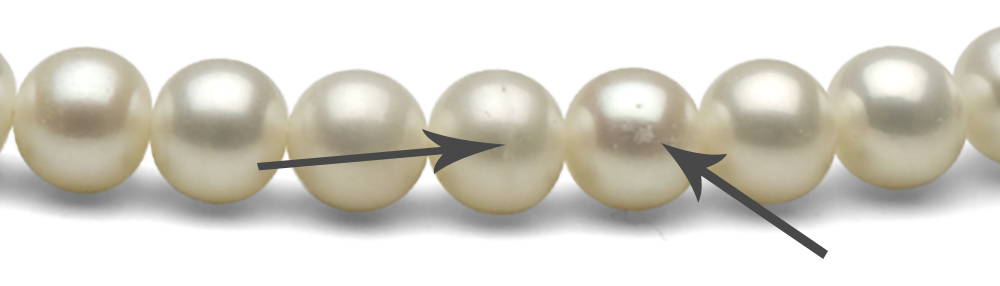
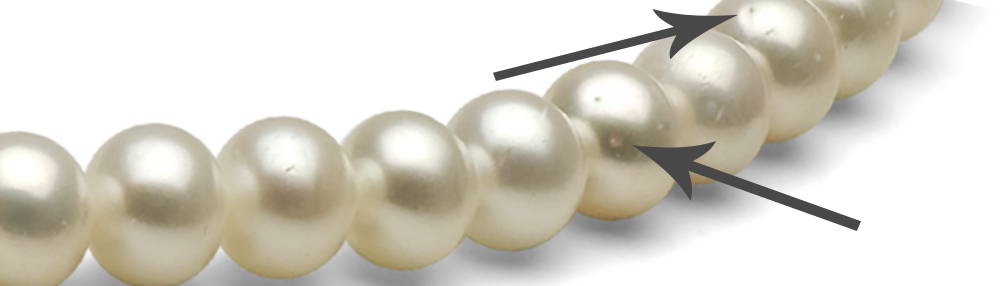
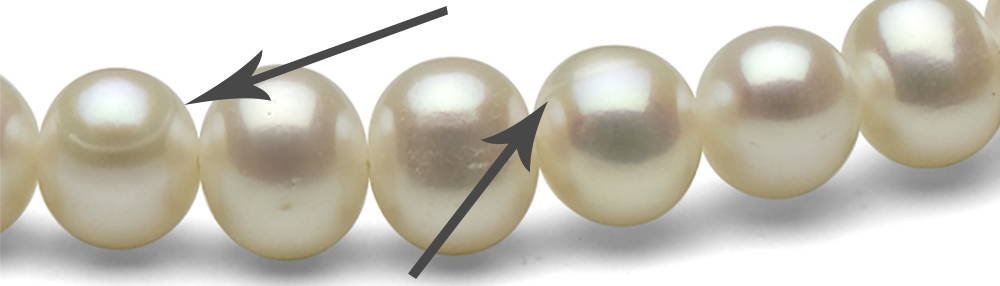
Chalky spots are easily the most common of Freshwater pearl inclusions. They’re exactly what they sound like: dull, chalky-looking areas on the pearl surface
Pits or pitting blemishes are similar to pin-prick inclusions found on saltwater cultured pearls. They are circular indentations on the pearl’s surface.
The majority of them are small-sized and won’t be too noticeable, but are generally larger than a single pin-prick. Thankfully, these inclusions are colorless and only noticeable upon up-close inspection of 6-inches or less..
Ridges are an inclusion that is unique to Freshwater pearls, quite likely due to their solid-nacre composition. Ridges are totally covered in nacre, so they’ll be whatever color the pearl is, i.e. white for white, pink for pink and so on.
Score marks or scoring begins with a small pin prick or pit, and then appears to be drawn off lightly over the surface of the pearl … they can look like small comets or shooting stars for those of us with a romantic viewpoint.
For dyed pearls such as our Black Freshwater pearls, up close inspection of the surfaces will often reveal a slight graininess or tiny dark speckles where the dye has concentrated. This is a natural part of the color-treatment process, and does not affect the durability or overall loveliness of the pearls.
BAOYUE Pearl Official Stance on Freshwater Pearl Blemishing
You can think of pearl inclusions as a built-in certificate of authenticity – they’re a natural left over of the creation process. You’ll never see inclusions like this, or the subtle variations that make a pearl a true one of a kind with man-made synthetic beads.
The majority of Freshwater pearls’ inclusions will match the pearl’s natural color and/or are colorless, blending with the pearl surface making them nearly invisible to the casual observer.
Keep in mind that A-AAAA Freshwater pearl grading benchmarks count for the individual pearl, as well as the entire strand overall, so the 10% allowable blemish rate on even our lowest quality Freshwater pearl strand will still keep you squarely in a nice, high quality strand of pearls.
When choosing fine Freshwater pearls, the biggest, most important considerations to keep in mind are consistency of shape, and a fine, bright luster.
Got a question about a product ? Need someone to help guide you through our website ?
Got feedback? Go to BAOYUE Pearl Education link: BAOYUE Pearl Education page to read some relevant articles about pearls. For Normal Questions, please check FAQ , and for other question, feel free to Contact Us , we make it easy for you to get in touch with us !
Ready to Learn More about Pearl Grading? View the rest of our Pearl Grading Guides:
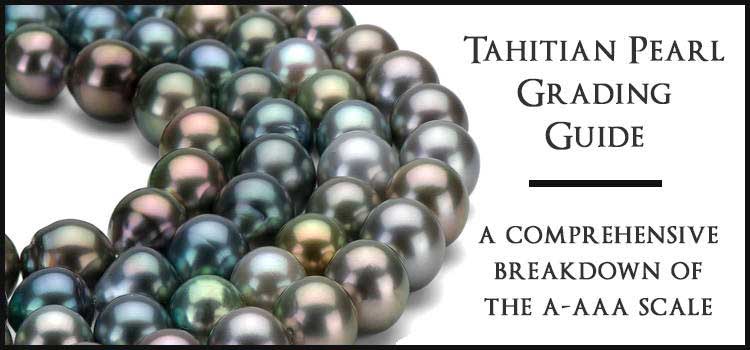
This detailed visual guide is a fantastic reference article for learning about Tahitian pearls and the A-AAA Grading Scale that Natrualpearlstrand.com uses. Featuring visual aids and a systematic breakdown of what exactly you should be looking for when shopping for a strand of Tahitians, or Tahitian pearl earrings.
BAOYUE PEARL wholesale natural freshwater pearls All sizes All grade with low prices. From this article to navigate what pearl size and shape you should buy .
What Makes Tahitian Pearls Beautiful? The answer to this question is different for everybody. Tahitian pearls are all about Pearl Color. Unique, distinctive and saturated colors are what I focus on when picking Tahitian pearl necklaces to feature on my site. Cherries, Aubergines, shimmering Silvers and Aquamarines, delectable natural Chocolates – the list goes on and on.
These colors are called “overtones” and are a secondary color that lies shimmering over the main, primary bodycolor of the pearl. In the case of Tahitians, these overtones lend a colorful brilliance to their dove grey to dark charcoal grey body colors, and make them a distinctive and highly coveted gem for pearl lovers around the world.
Second to great color is PEARL LUSTER. Cultured Tahitian pearls traditionally have slightly softer luster than that of say, the Japanese Akoya. The photo below of two pearl necklaces, is a fairly good visual example of the differences between a Tahitian’s “satin luster” vs the Akoya “ball-bearing luster”. That said, Tahitian pearls can and do display metallic-levels of luster with highly detailed reflections and very sharp, crisp squares of reflected light in their surfaces.
The Science behind Pearl Color and Luster
The visual phenomenon of Body Color, Overtone and Luster are due to the compaction and smoothness of their crystalline nacre layers. Tahitian pearls are bead-nucleated, meaning that a mother of pearl round bead nucleus is inserted into the gonad of the host oyster, which then begins covering the bead with concentric layers of nacre to eventually form a pearl. Seen below is Josh Humbert, owner of Kamoka Tahitian Pearl Farm is nucleating a batch of Tahitian pearl oysters on his pearl farm.
Photo courtesy of Kamoka Pearls
Key Definitions:
Nacre is made up of crystalline calcium (CaCo3) which the oyster secretes to smooth over the bead nuclei irritating the soft inner body of the mollusk, eventually creating a pearl.
CaCo3 is composed of transparent to semi-transparent aragonite platelets and conchiolin which is the organic glue interspersed between the layers to hold it all together. I think of conchiolin like the layers of concrete between bricks in a wall.
Tahitian pearl conchiolin takes on very dark pigments such as reddish-brown, brown, grey and black. This contributes to the pearl’s trademark dove grey to dark charcoal grey primary colors. With white pearls, conchiolin is usually colorless or beige in color.The oysters are left in the water to continue their work for between 2-3 years, resulting in very thick nacre layers that both reflect and refract light striking and penetrating the various layers.
The tighter and more compact these layers are, the more intense the luster and the deeper the color. Younger oysters have a faster metabolic rate, which contributes to an accelerated crystalline layering process and tighter nacre formation. Younger oysters are most often used to produce first-generation Tahitian pearls, ranging in size from 8.0-9.0mm up through 11.0-12.0mm.
Older oysters that survive their first (and second!) harvests are used to cultivate larger pearls because they’re large enough to handle the increased size of the bead nuclei. However as the older animals metabolism slows, so too does the rate of nacre layering, and the relative tightness of those crystalline platelets. This generally results in larger pearls of 12.0mm and up displaying more Steel and Silver overtones, and the trademark “satiny” luster that Tahitians are known for.
Thus finding Tahitian pearls in large sizes with intense body color and overtone saturations as well as amazingly reflective luster and clean surfaces are rare in each harvest, resulting in premium prices. These large rare specimens are often reserved for pearl earrings, pearl rings or pendants.
Good to Know: Tahitian pearl oysters that survive 3rd generation pearl harvests are usually released to the wild to live out the rest of their lives in the open ocean, contributing genetic information to other wild oysters to strengthen existing populations. Pretty cool, huh?
Now that we’ve talked about the background science behind why and how pearls are beautiful, let’s move on to exploring the Tahitian pearl A-AAAA grading scales, and the specific benchmarks that a pearl needs to meet in order to “make the grade”. The images depicted in these grading breakdowns include a mix of perfect round and off-round to baroque/drop-shaped Tahitian pearls. Keep in mind that baroque or drop-shaped pearls are graded using the same A-AAAA scale as perfectly round pearls. In addition to luster, color and surface quality, for baroque and semi-baroque pearls, the symmetry of pearl shapes and shape-matching play very important roles in determining the pearl's overall quality.
♠ Finest Tahitian pearl grade available. ♠ Luster is excellent, shiny metallic quality. ♠ Crisp, distinguished reflected light sources and detailed facial features may be observed in surface. ♠ No blemishing or inclusions may be seen by the naked eye. ♠ Perfectly spherical or symmetrical pearl shapes. ♠ Minimum nacre thickness 0.8mm and up. ♠ Earrings set perfectly clean. ♠ Necklace will be very clean upon close inspection.
♠ Minimum nacre thickness 0.8mm and up. ♠ Luster is very sharp and slightly metallic. ♠ Reflected light sources have crisp edges; some slight satining or blurring may be observed. ♠ Blemish rate less than 5% on each pearl surface, no deep blemishes permitted. ♠ Perfectly spherical or symmetrical pearl shapes. ♠ Earrings will set clean in front and sides. ♠ Strands will be mostly clean to the eye upon inspection. ♠ Near-perfect matching; little to no variation in color, tone, luster, shape or size.
♠ Minimum nacre thickness 0.8mm and up. ♠ Luster is mostly sharp with good rate of reflection. ♠ Detailed facial features are not always easily recognizable in pearl surfaces. ♠ Reflected light sources have some softly blurred edges. ♠ Blemish rate less than 15-20% on each pearl surface, and full strand overall. ♠ One heavy blemish allowable on an 18-inch strand. ♠ Very Slight deviation from “perfect” round or symmetrical shapes allowable up up-close, intense inspection. ♠ Earrings will set clean in front; one small to medium-size blemish allowable on sides or back. ♠ Very Good to Excellent matching; little variation in color, tone, luster, shape or size.
♠ Minimum nacre thickness 0.8mm and up. ♠ Luster is good to soft, with fair rate of reflection. ♠ Detailed facial features are typically not observed on pearl surfaces. ♠ Reflected light sources have blurred, diffused edges. ♠ Blemish rate less than 40% on each pearl surface. ♠ Earrings will feature blemishes on front, sides or back. ♠ Up to 10% heavy blemishing allowable on 18-inch strand. ♠ Good to Very Good matching; slight variation in color, tone, luster, shape or size.
♠ Minimum nacre thickness 0.8mm and up。 ♠ Luster is good to soft, with fair rate of reflection. ♠ Detailed facial features are typically not observed on pearl surfaces. ♠ Reflected light sources have blurred, satiny edges. ♠ Blemish rate less than 60% on each pearl surface. ♠ Earrings will feature blemishes on front, sides or back. ♠ 20% heavy/deep blemishes allowable per 18-inch strand. ♠ Good to Fair matching; some variation in color, tone, luster, shape or size noticeable.
♣♣♣ Keep in mind while shopping for Tahitian pearls, that they are “organic gemstones”, meaning that they are the end result of a biological process. As such, cultured pearls will never be as flawlessly perfect as a synthetic glass or plastic bead can be – Mother Nature always signs her creations!
Good to Know: By law, all Tahitian pearls must meet a minimum nacre depth requirement of 0.8mm in order to qualify for export. This means that on the average, Tahitian pearls have much thicker nacre depth than 0.8mm.
To enforce this quality standard, Tahitian pearls are randomly spot checked by x-ray at the Ministry of Tahitian Perliculture before export. If thin-nacre pearls are found, they are destroyed and the nuclei are recycled.
I do not stock any round loose or matched pearl pairs in A or AA Quality; all round pendants, rings and earrings listed on the BAOYUE PEARL site are AAA Quality minimum. I created this Quality Control policy to ensure that no pair of earrings, pendant or pearl ring will have visible blemishes on the front or side of the pearl where it will be noticed by the wearer or the admirer.
As with all other pearls, especially when it comes to online bargains: price isn’t everything!
While my policy of “AAA Quality Only” may make my prices appear to be a tiny bit less competitive at the outset, I believe that adhering to this high quality standard results in both more durable, prettier pearls and happier, more loyal customers in the long run.
AAA vs. AAAA Quality Tahitian Pearl Necklaces
Full 18-inch necklaces (or longer!) give us a bit more wiggle room to play with layouts and pearl mixes, so I do like to offer an array of necklace grades that allow customers to choose lower quality grades that suit a variety of budgets while still being able to own a beautiful strand of exotic pearls. If it were up to me, I’d probably select a smaller-sized, higher quality strand of super-colorful and intensely lustrous pearls than a larger, more satiny strand.
My personal aesthetic aside, there’s always something to be said for the WOW Factor that a large Tahitian necklace possesses!
Selecting a Tahitian pearl necklace on the A-AAA spectrum allows you to consider the Pearl Value Factors most important to you. Great color saturation, or incredibly high luster may trump eye-clean surfaces (and indeed may even “hide” surface characteristics) or perfectly smooth shapes.
AA/AAA Tahitian Pearl Grading
Often you’ll see Tahitian and South Sea necklaces that straddle the grading benchmarks, listed with AA/AAA Quality or AAA/AAAA Quality grades. These “intermediate” grades are assigned to pearl necklaces when the pearls almost-but-not-quite make it to a full grade, like AAAA Quality. Essentially what these intermediate grades mean is that the surface quality (i.e. amount of blemishing) is at a lower grade level, and the luster and color of the pearls pushes the pearls to almost a higher grade.
The reverse can also be true, but generally with very clean strands and softer luster, I’ll almost always assign it a lower grade anyways! Because what makes a pearl beautiful as a gemstone? That’s right: gorgeous LUSTER and COLOR . Let’s see how this plays out with real Tahitian necklaces …
Check out the photo above showing a section of this Multi-Colored Baroque Tahitian Pearl Necklace graded AA/AAA Quality. Upon carefully examining the pearls you’ll notice: ♠ Beautiful luster that brightens up all the pearls in the strand. It gives the gems a sense of depth and glow and is nicely crisp around the edges, with very little blurring. Could be a touch sharper (like that Silver pearl in the center!) but a huge majority of the pearls here all display AAA Quality Luster. ♠ Excellent and varied colors: Some classic, some more exotic, but it keeps the eye moving throughout the layout, hiding less than perfect pearls within their midst. They are a tad muted – the Silver, Steel and Black pearls here are pretty, but to truly rev up this strand into AAA territory, you’d want to see a higher concentration of saturated Blue-Greens and Peacocks. ♠ Well matched pearls: Despite being a Multi-Colored layout, the pearls are very well matched for shape, size, luster, surface quality and overall tone. AAA Quality level. ♠ Light surface inclusions. There are quite a few tiny pin-prick inclusions here, some shallow scoring and a few divots ... it drags the entire necklace’s overall grade down.
So based on our Value Factors, we have:
Luster: AAA Quality. We shan’t quibble. Surface Quality: AA – solid. Color: AAA Quality – pretty, but muted. Matching: AAA Quality easily – the pearls have been assembled with an eye towards an “Pastel Silver” palette and it nails it. The pearls are excellently matched for shape, smooth and subtle graduation of size, luster, surface quality and overall tone. Overall Grade: AA/AAA Quality Tahitian Pearl Necklace, leaning to AA Grade. Luster and Color saves this strand.
Common Tahitian Pearl Inclusions
Inclusions are our science-y sounding jewelry industry term for blemishes or other growth characteristics that mar the surface of the pearl. In this section, I’ll break down what is and is not an inclusion (it’s not always what you think): how these growth characteristics effect the pearl, and how they can affect value.
Growth characteristics and surface inclusions that are typical of the Tahitian pearl type are a practical and easy way to:
♠ Verify that the pearls are genuine cultured pearls and not man-made synthetics, which feature perfect, identical beads throughout an entire layout.
♠ Identify that particular set of cultured pearls as yours. As you become familiar with the character of your pearls, you’ll notice that each pearl’s inclusions act as a built-in identification system, marking that strand or pair of earrings as yours and yours alone.
The vast majority of Tahitian pearl inclusions are grey or colorless in appearance, meaning that they aren’t easily noticed by a casual observer unless they are very deep, or very numerous.
Mottling/Bulleting of the Surface – this texturing of the surface resembles the marks of a tiny hammer on the pearl’s surface, and is indicative of very thick nacre. Mottling is not technically considered an inclusion, and does not count against a pearl’s surface grade.
Pin Pricks – These are small to tiny indents on the pearl’s surface. It looks as though the pearl had been pricked with a needle point.
Pin prick inclusions can stand alone, by themselves (which is preferable), or be clustered together in groups which tends to give the pearl’s surface a “chewed” appearance. These are considered blemishes, and DO count against a pearl's overall grade.
Pits – These formations are pin pricks taken to extremes, and resemble large indentations, craters or even holes in the nacre.
Pits count as heavy or deep blemishes when grading a strand of pearls. Their best case scenario is that they are at least the color of the pearl, and totally covered by nacre. Worst case scenario is they are very deep and display the organic conchiolin layer; jagged, sharp edges may eventually lead to chipping.
Score Marks / Grooves - This inclusion is maybe the most common one I’ve noticed on Tahitian pearls. You’ll notice these little marks on baroque and round pearls alike.
Score marks look like someone has taken a pencil and drawn a shallow to deep channel through the nacre in a straight line. For the more shallow marks, the ends can appear to trail off lightly and disappear, giving the impression that the pearl has a small comet or shooting star on its surface.
Knobs – these form off the end of the main body of the pearl, and resemble bubbles that can be small or large, single or grouped together. Knobs are unique and interesting features that add personality to a baroque pearl, and these growth characteristics are also not counted as inclusions or blemishes. If they are chipped or cracked however, a knob may affect the pearls’ long-term durability.
Tips – Very similar to knobs, and also not considered an inclusion or blemish but are a growth characteristic. Tips are only seen on baroque pearl shapes, and can be rounded or elongated, pointy protrusions located at either end of a pearl. Tips do not affect the long-term durability of a pearl unless they are chipped or cracked.
Circles / Circling – Marketed as “Circles of Love” in the 1980’s, circles are a natural pearl formation. Easily recognized by concentric rings around the circumference of the pearl, these rings can be a singular or grouped heavily together, giving the pearls a very unique look.
Circles are NOT an inclusion, but inclusions can form inside them (usually pin pricks or scoring marks). On the bright side, as the picture shows above, circles can even result in higher, more concentrated rates of color.
Uneven Nacre Accumulation – When nacre building works perfectly inside the oyster, the crystal is laid down concentric layers over the mother of pearl bead nucleus creating a smooth surface. When nacre deposition is disturbed for some reason or other, a build-up of crystalline material can occur on the surface resulting in bumpy or uneven surfaces.
In Conclusion …
By far, the majority of Tahitian pearl blemishes will be small and match the pearl’s natural charcoal grey body color and/or are colorless, blending with the surface and making them fairly unnoticeable the casual observer.
This is especially true if the pearl’s overtones and luster are at high levels, masking marks and distracting the eye. Keep in mind that A-AAAA Tahitian pearl grading benchmarks count for the individual pearl, as well as the entire strand overall – so those 10% and 20% figures account for only a small amount of surface area blemishing, and leave room for pearls that are entirely eye-clean on even a lower quality layout.
Selecting the perfect strand of Tahitian pearls. Inclusions are generally considered to be “undesirable” by general consensus, but when looked at through the lens of a pearl lover, they become part of the unique character of your pearl.
Like a fingerprint, or a gorgeous “jardin” or “garden” which is what the French name for inclusions in an Emerald, a pearl’s inclusions mark your gem as an individual creation of Mother Nature herself. It's important to remember that minor imperfections are not likely to be visible while the pearls are worn.
Akoya Pearl Grading – Your Insider’s Guide to Grading Akoya Pearls
This short and sweet guide is a handy reference for learning about Akoya pearls and the A-AAA Grading Scale that Natrualpearlstrand.com uses Featuring visual aids and a systematic breakdown of what exactly you can expect to observe in each grade, this guide will be like having your very own jewelers’ grading hank!
Feel free to read the whole article, or use the links featured in the Table of Contents to skip ahead directly to parts that concern you.
What Makes Akoya Pearls Beautiful? A smooth, unblemished surface, shimmering iridescent flashes of pink, blue, green and (in the best cases) violet, shimmering over a white primary body color, and of course, their trademark “ball bearing” or mirror-like luster. These are all the hallmarks of beauty that we expect to see in a high grade Akoya pearl strand.
A cultured saltwater Akoya pearl is the product of a synthesis between humans and nature. A mother of pearl shell bead nucleus is inserted into the host oyster, along with a square of donor mantle tissue from another oyster who has previously borne pearls of high or exceptional value, and the oyster is left to begin secreting around the nucleus, eventually forming a pearl.
The crystalline nacre layers are made up of microscopic aragonite platelets composed of calcium carbonate, and bound together with an organic “glue” of sorts called conchiolin. The aragonite platelets are fairly transparent to slightly tinged in color, able to both reflect and refract light rays striking their surfaces, giving pearls their trademark pearl luster and subtle glow. The tighter and more compact this arrangement of crystal is, the brighter the luster the pearl displays and the greater the amount of orient or iridescence.
This internal structure is what gives pearls their beauty, and makes them worthy of their designation as a precious gemstone. However, because these gems are the result of a biological process, they will never be totally, completely, flawlessly perfect. Mother Nature always leaves her mark! It’s our job as dealers, farmers, designers and consumers to separate out the exceptional from the rest. If you’re intrigued, and want to know more, click here to read more about the 7 Pearl Value Factors.
Now that you know a little bit more about the science behind why and how a pearl is beautiful, we can move on to learning about each pearl grade, what it takes for pearls to qualify and how to buy great pearls.
Akoya A-AAA and Hanadama Pearl Grades
♠ Minimum nacre thickness 0.4mm each side of pearl (0.8mm cumulative depth) or more. ♠ Luster is very sharp with very high rate of reflection. ♠ Easily recognized facial features may be observed in pearl surfaces. ♠ Reflected light sources have very crisp, defined edges. ♠ Blemish rate between 0-5% on each pearl surface. ♠ Hanadama Earrings will set clean. ♠ Hanadama Pearl Strands will appear clean to the eye upon inspection. ♠ Near-perfect matching; little to no variation in color, tone, luster, shape or size. ♠ Read the Ultimate Guide to Hanadama Akoya Pearls for more information.
♠ Visibly thick nacre up to 0.4mm or more. ♠ Luster is very sharp with high rate of reflection. ♠ Easily recognized facial features may be observed in pearl surfaces. ♠ Reflected light sources have crisp, distinctive edges. ♠ Blemish rate is less than 5% on each pearl surface. ♠ AAA Akoya Earrings will set clean. ♠ AAA Akoya Strands will appear clean to the eye upon inspection. ♠ Near-perfect matching; little to no variation in color, tone, luster, shape or size..
♠ Visibly thick nacre up to 0.4mm or more. ♠ Luster is very sharp with high rate of reflection. ♠ Easily recognized facial features may be observed in pearl surfaces. ♠ Reflected light sources have crisp, distinctive edges. ♠ Blemish rate is less than 5% on each pearl surface. ♠ Earrings will set clean. ♠ Strands will appear clean to the eye upon inspection. ♠ Near-perfect matching; little to no variation in color, tone, luster, shape or size.
♠Thinner nacre; up close inspection may reveal bead nucleus. ♠ Luster is good; fair rate of reflection. ♠ Reflected light sources have blurred, satiny edges. ♠ Blemish rate is less than 15-20% on each pearl surface. ♠ Earrings will not set clean. ♠ Strands will appear slightly spotted to the eye upon inspection. ♠ Good to very good matching; very little variation in color, tone, luster, shape or size.
♠Thin nacre; up close inspection reveals bead nucleus. ♠ Luster is fair to poor; low rate of reflection. ♠ Pearl appearance may be somewhat chalky. ♠ Reflected light sources have blurry, satiny edges. ♠ Blemish rate is less than 30% on each pearl surface. ♠ Strands will appear spotted to the eye upon inspection. ♠ Good to very good matching; very little variation in color, tone, luster, shape or size.
Akoya Pearl Grade Comparisons
So how does the AA+ vs AAA Quality comparison play out in real life? Which pearl necklace grade should you choose? The answer is: that depends on what’s important to you in a pearl necklace.
Both the AA+ and AAA Quality Akoya pearl grades are pretty darn close in appearance to the casual observer i.e. someone who’s about a foot or more away from you looking at your pearl necklace shouldn’t be able to tell which is which (all bets are off though if they’ve been trained to look at pearls ! ) Both qualities are perfectly round in shape, with excellent matching from pearl to pearl throughout their layouts and their surface inclusions are largely white or colorless, making them not easily visible unless you’re conducting an up-close and personal inspection. The primary difference between the AA+ Quality and the AAA Quality Akoya pearl is one of luster (and this of course is the same issue when comparing the AAA versus our Hanadama Akoya as well!). The luster on AAA Quality Akoya pearls will be sharper, brighter and have a greater visual ‘depth’ than that of the AA+ grade pearls.
So which grade should you choose?
As a professional in the pearl industry for over a decade, I am a luster and iridescence junkie (full disclosure), and so for my own personal preference, I would choose a smaller-sized, high-quality, high luster pearl necklace over a larger, but less lustrous choice. That said, there are a ton of customers that go for size over luster (and for good reason!), especially since the two qualities are so close to each other in so many other respects. Ultimately the answer to this question lies within your budget and your own aesthetics. Each pear necklace, earring, bracelet and pendant listing on Pure features a drop-down menu on the right side of the page that allows you to customize your pearls to your pearl grade of choice, AA+ or AAA Quality.
Common Blemishes Found on Akoya Pearls
As mentioned earlier, Mother Nature always leaves a mark on her creations. There are a number of common growth characteristics and surface inclusions you can regularly spot on almost any necklace that are typical of the Akoya pearl type. These markings are a practical and easy way to:
A. Verify that the pearls are genuine cultured pearls and not man-made imitations, which feature perfect, identical beads throughout an entire layout. B. Identify that particular set of cultured pearls as yours. As you become familiar with the character of your pearls, you’ll notice that each pearl’s inclusions act as a built-in identification system, marking that strand or pair of earrings as yours and yours alone.
The vast majority of Akoya pearl inclusions are white or colorless in appearance, meaning that they aren’t easily noticed by a casual observer. Additionally, most Akoya pearl blemishes are fairly small and shallow, covering less than 10-15% of the total surface area of the pearl and so are very unlikely to affect the long-term durability of the gem.
The bracelet layout pictured above is composed of A/AA Quality Akoya pearls that were purchased especially for a custom-design project; these are not a pearl quality I regularly stock in the vaults. That said, the number and variety of blemishes featured in just this short 7-inch layout makes it an excellent example to work with in showcasing the most common Akoya pearl blemishes.
Keep in mind that this particular example is for illustrative purposes only – BAOYUE Pearls does not carry Akoya pearl necklaces or bracelets graded under AA+ Quality.
Akoya Blemishes Close Up:
A):Mottling/Bulleting: this is a faint plating pattern on the pearl’s surface, and considered to be the result of very thick nacre accumulation. As such, this is not considered an inclusion per se, however many do find that this feature can mar the smooth surface of the pearls if found in abundance. A colorless feature, this type of growth characteristic does not impact the beauty of the necklace if found upon up-close inspection occasionally, and does not affect the long-term durability of the pearl.
B):Uneven Accumulation of Nacre: in a perfect world, crystalline nacre is deposited in evenly concentric layers over the bead nucleus during pearl formation … in cases like this, the layering process has been interrupted/disturbed in some way, causing a build-up of nacre in a single area.
C): Clustered Pin Pricks: Tiny pin point indentations in the nacre, clustered together in small groups. If clusters are too numerous, the pearls can have a “chewed” appearance.
D):Blinking: This occurs when the nacre covering the shell bead nucleus is very thin. You can observe “blinking” when examining the pearls up close (at a distance of 6-inches or less) by slowly rotating sections of the strand in front of a strong light source. The internal bead will appear to “flash” a yellow-orange color at you.
E): Single Pin Pricks: Tiny pin point indentations in the nacre, isolated from any others. Tiny, and covered in the same color as the rest of the pearl’s nacre, pin pricks are often only distinguished upon up-close, careful inspection and do not impact the pearl’s durability or beauty. F): Scaly Spot: This is a clear, colorless inclusion called “uroko” in Japan; it usually indicates some kind of event or growth disturbance while the pearl was being formed inside the oyster.
G): Divot/Flat Spot: Exactly what they sound like: nacreous, flat, circular or oval areas on the pearl’s surface … like the pearl was flattened in one area by a tiny hammer! This is a very common pearl growth feature that, like bulleting, is considered indicative of very thick nacre, and as such also do not count towards a pearl’s grading benchmarks.
H): Blinking: See D.
I ):Uneven Nacre Accumulation: See B.
J):Diffused Luster: This will show up wherever you see light reflecting off the surface of the pearls … this is not a pearl blemish, but it is one of the 7 major value factors of pearl grading, and as such merits inclusion here while it’s an easily showcased feature. Notice how the edges of the reflected light sources begin to soften and break up, giving the pearl’s luster a softer, less defined look.
I know that the above image can be kind of terrifying, but again keep in mind that this is for illustrative purposes only; naturalpearlstrand.com does not stock Akoya pearls below the AA+ Quality grade (see AA+ Quality breakdown above).
BAOYUE PEARL wholesale natural freshwater pearls All sizes All grade with low prices.
From this article to navigate what pearl size you should buy .
Compare and Contrast with a Pearl Expert So you’re looking for “white pearls” that look nice and you found a great deal on a Japanese Akoya Pearl Necklace, BUT then you found a White Freshwater Pearl Necklace for a few hundred dollars less... But which set of pearls is better? Now what? I wrote this article to answer one of the Top 5 Frequently Asked Pearl Questions of All Time: Which white pearl type should I choose? Freshwater or Akoya? What is the minimum quantity to order with you? Do you have a catalog and Price list? What are the shipping charges?
BAOYUE PEARL wholesale natural freshwater pearls All sizes All grade with low prices. From this article to navigate what pearl size you should buy .
How to Choose Freshwater Pearls ? I’m going to let you cheat here, and answer your question RIGHT NOW, then break down the Why’s and How’s throughout the article in more detail. But for those of you that just want a short and sweet answer, here it is:
Choose Freshwater Pearls If ...
Akoya Pearl vs Freshwater AK Pearl vs Freshwater Pearl
♠ You’re worried the pearls will be handled roughly and/or lost. The lower price points will make them relatively easy to replace, and these are HIGHLY recommended as “first pearls” gifts for young girls and ladies. ♠ Your budget is under $300 but you still want a pretty white pearl necklace – the White Freshwater pearls will hit all the right notes for a good price. ♠ Slight to moderate variation in pearl shape and a softer pearl glow doesn’t matter that much as long as the pearls give off the overall impression you want. ♠ You’re looking for an “every day” strand of pearls that can stand up to hot days, children’s sticky fingers, perfume spritzing, an office meeting and more.
Most of freshwater pearls in the market are "non-nucleated" cultured pearls from China. By using the technology that implants stimulants in the freshwater mussels to stimulate pearl information, freshwater pearls now can be cultivated in the lakes, rivers, and ponds very well. And the quality of freshwater pearls is getting better and better, it depends on luster, shape, colors, etc. For the most popular freshwater pearls, you may always find high-quality Edison Pearls and Freshwater AK Pearls.
Unlike the normal freshwater cultured pearls, Freshwater AK pearls are bead-nucleated culture pearl, which is the same as Akoya pearl. And the big difference between freshwater pearl and Akoya pearl is that the former one is cultivated in freshwater mussels and the other one is cultivated in saltwater oysters.
Freshwater AK NecklaceChoose Akoya Pearls If ...Akoya Pearl Necklace
Akoya pearl is a bead-nucleated cultured pearl cultivated from Akoya oysters that growing in the saltwater. Most of Akoya pearls are from Japan. With typical Akoya oysters, it takes about 10-18 months for the cultured Akoya pearl size to be large enough for harvesting. During this time, living conditions are carefully monitored by pearl farmers, who adjust water, food, and nutrients accordingly.
♠ You’re worried the pearls will be handled roughly and/or lost. The lower price points will make them relatively easy to replace, and these are HIGHLY recommended as “first pearls” gifts for young girls and ladies. ♠ Your budget is under $300 but you still want a pretty white pearl necklace – the White Freshwater pearls will hit all the right notes for a good price. ♠ Slight to moderate variation in pearl shape and a softer pearl glow doesn’t matter that much as long as the pearls give off the overall impression you want. ♠ You’re looking for an “every day” strand of pearls that can stand up to hot days, children’s sticky fingers, perfume spritzing, an office meeting and more.
Freshwater AK Pearl Most of freshwater pearls in the market are "non-nucleated" cultured pearls from China. By using the technology that implants stimulants in the freshwater mussels to stimulate pearl information, freshwater pearls now can be cultivated in the lakes, rivers, and ponds very well. And the quality of freshwater pearls is getting better and better, it depends on luster, shape, colors, etc. For the most popular freshwater pearls, you may always find high-quality Edison Pearls and Freshwater AK Pearls.
Unlike the normal freshwater cultured pearls, Freshwater AK pearls are bead-nucleated culture pearl, which is the same as Akoya pearl. And the big difference between freshwater pearl and Akoya pearl is that the former one is cultivated in freshwater mussels and the other one is cultivated in saltwater oysters.
Freshwater AK Necklace
Choose Akoya Pearls If ...
Akoya pearl is a bead-nucleated cultured pearl cultivated from Akoya oysters that growing in the saltwater. Most of Akoya pearls are from Japan. With typical Akoya oysters, it takes about 10-18 months for the cultured Akoya pearl size to be large enough for harvesting. During this time, living conditions are carefully monitored by pearl farmers, who adjust water, food, and nutrients accordingly.
Akoya Pearl Necklace
♠♠ Only that high-end, classic “Mikimoto” style of pearl necklace will do. ♠ Perfectly round pearl shapes, and a Very High to Excellent pearl luster matter to you. ♠ Your budget is $350 and up to get the Classic White Pearl Necklace you really want. ♠ You’re looking for a very special keepsake strand of pearls that will be treasured and cared for well over the years, and possibly handed down to the next generation. ♠ The pearls are meant to be worn in “nicer” settings i.e., weddings, dinner parties, office meetings, church, holidays, family get-togethers, etc.
Akoya Pearl vs Freshwater AK Pearl vs Freshwater Pearl
Tip: Akoya Pearls are always considered gorgeous and high-quality cultured pearls. This bead-nucleated cultured pearl was first produced by the Japanese. To guarantee the high quality of Akoya Pearl, one Akoya oyster only cultivate 1-2 Akoya pearl, it grows in the ocean up to about 10-14 months to allow sufficient time for the pearl to form with wonderful luster.
The output and quality of Akoya pearls are strictly controlled by the Japanese every year, which is why the price has remained high for so long time.
That’s pretty much it for the short and sweet side of things. For the rest of us pearl nerds that want to know the reasons why that list is the way it is, keep reading !
Pearl Structure - Saltwater vs Freshwater Pearls Saltwater Akoya Pearl Structure Saltwater Akoya pearls are what we call “bead nucleated”. What this means is that a perfectly round nucleus composed of polished shell material is surgically inserted into the gonad of the host oyster in order to begin pearl formation. The spherical nucleus is also excellent for providing the oyster with a “template” of sorts that aids in the creation of perfectly Round pearls.
The Akoya pearl oyster is the smallest pearl-bearing saltwater oyster currently being used to create pearls today. It can only accommodate one or two bead nuclei at a time, and after the implantation surgery, the pearl is left to grow for a period of 18 months to two years ... the longer the better, as this allows the pearl to acquire thicker nacre layers.
This internal pearl structure translates into some (pretty cool) things you should know: ♦ Originating in Japan, these bead-nucleated cultured pearls are infamous for being perfectly round in shape. We call them “Eight Way Rollers” in the Pearl Industry as these pearls will roll evenly in every direction when placed on a flat surface. ♦ Fine Akoya pearls feature incredibly sharp, and highly reflective Luster. Very fine Akoya are like looking into a convex mirror and display extremely detailed reflections – often you can see your face smiling back at you, along with other surrounding objects (like my camera, haha!). ♦ Due to their perfectly round shapes, cultured Akoya pearls have a reputation for near-perfect matching. Akoya pearl strands will feature little to no variation from pearl to pearl throughout any given layout. ♦ Akoya pearls must be properly cared for to keep their crystal looking bright and shiny. These pearls are sensitive to oils, perfumes, smoke, chlorine and other chemicals found in our environment. Wipe them down with a damp, soft cloth every time after wearing to remove residues from the pearls' surfaces.
Freshwater Pearl Structure Freshwater pearls from China are traditionally “ tissue nucleated ”. This means that tiny, 1.0mm square pieces of mantle tissue are harvested from a donor mussel, and are then inserted into small incisions made throughout the soft body of the host mussel. These pieces of donor tissue serve as nuclei that stimulate pearl sac formation, and eventually, form our beloved, colorful cultured Freshwater pearls. Freshwater pearl mussels can be nucleated in this manner up to 25 times on each side of the shell, so a potential pearl harvest from even a single mussel absolutely dwarfs that of any other pearl type. This larger harvest volume accounts in part for their lower price points.
As the Freshwater mussel begins to create a pearl, it envelops the mantle tissue nucleus in a pearl sac and the donor tissue square slowly begins to degrade. This will continue throughout the 2-3 year formation period, until nothing remains in the core of the pearl …
Basically, it creates a pearl made up of 100% solid crystalline nacre (so they're very, very durable little gems).
This means a few (also cool) things you should know about: Freshwater pearls are the closest in pearl composition that you can get to a natural pearl formed on its own in the wild. ♦ Freshwater pearls are EXTREMELY durable, and if cared for properly, will retain the original color, luster and orient for decades to come. ♦ Freshwater pearl luster will feature a softer, more subtle glow than that of their saltwater cousins due to the way in which light reflects and refracts off the various layers of crystal. ♦ With no round inner “template” bead nucleus to work with, the Freshwater pearl mussel still does a pretty great job of producing smooth shapes that are often round to the eye. ♦ Evolution in Freshwater grafting technology is producing larger and more perfectly round pearl shapes every year … Perfectly round Freshwater pearls with bead nucleus are literally just over the horizon, and due to the larger sizes the Freshwater pearl mussel is capable of producing, they will soon be contenders in the South Sea pearl market. It’s perhaps a decade or so away, but affordable, perfectly round Freshwater pearls are on their way!! To see a great example of the evolving bead-nucleated Freshwater pearl, check out our totally smooth, 11.0-15.0mm Drop-Shaped Edison Pearls. In my opinion, cultured Freshwater pearls are the pearls to watch over the next few years in terms of innovation!
Pearl Shapes - Saltwater vs. Freshwater Pearls
The biggest MAJOR difference between the Freshwater and Akoya pearl type is … SHAPE.
◊ Cultured Akoya pearls are known for being perfectly round … baroque Akoya are of course available, but they’re rare, and more of a collector’s item at this point in time. The vast majority of Akoya pearls you’ll run into in stores and online today are perfect rounds.
◊ Freshwater pearls have a much, much larger variety of shapes, the most common and distinctive of them being either potato shapes, or off-round / oval shapes. The higher-up in quality these pearls get, the rounder the pearl shapes will be.
Akoya Pearl Shapes
Even very close-up inspection and comparison between the highest grades of Akoya pearls will reveal that both qualities offer perfectly round pearls, with near-perfect matching for shape, size, body color, overtone and luster.
♠→ AA+ Quality Akoya Pearl Shape: Perfect Round ♠→ AAA Quality Akoya Pearl Shape: Perfect Round.
Freshwater Pearl Shapes
♠→ AA+ Quality Freshwater Pearl Shape: Visibly Off-Round to Oval and Egg Shapes, Moderate Variation in Matching Pearl to Pearl Throughout a Necklace Layout. ♠→ AAA Quality Freshwater Pearl Shape: Slightly Off-Round to Near Round Shapes, Slight to Moderate Variation in Pearl Matching Throughout a Layout. ♠→ Gem Quality / Elite Collection Freshwater Pearl Shape: Round to the Eye, Less than 3% Variance from True Round. Very Slight to Almost No Variation in Pearl Matching Throughout a Necklace Layout.
Let’s break this down even further into a comparison between the two pearl types (Freshwater vs. the Akoya), and each Freshwater grade: AA+ Quality, AAA Quality and Gem/Elite Collection.
Click the arrows to scroll through each image to see how these pearls look in real life:
Pearl Luster - Saltwater Akoya vs Freshwater Pearls
This is another major area where the two pearl types differ … but that’s NOT a bad thing! I think there’s an idea that Freshwater pearls aren’t as “nice” as saltwater Akoya pearls. It can be kind of correct in that the Freshwater aren't as valued as the Akoya, and don't have the same attributes as what the Akoya are famous for, which is that “ball-bearing” shine and perfect roundness. That said, there is a lovely, subtle “glow” that many Freshwater pearls display … I think it’s particularly visible in the AA+ Qualities and the Metallic Freshwater pearls. If the attribute of Shape isn’t the biggest deal in the world to you, then you may just be a Freshwater pearl lover.
Let’s go over the characteristics of Luster as seen in each pearl type, and we’ll examine some real-life comparison pictures to really bring it all home.
What Does Akoya Pearl Luster Look Like?
Japanese Akoya pearls are gorgeous ... they're been popularized throughout the world as the classic white pearl, having been the first perfectly round cultured pearls introduced into the jewelry market in 1912 by Kokichi Mikimoto.
The ideal of that bright shine, and perfection of matching from pearl to pearl throughout their layouts has been enshrined in the modern public consciousness as what pearls "should" look like ... and that's very hard to shake, especially for someone who doesn't have a working familiarity with all the various pearl types.
Their trademark Luster is often described as "Ball-Bearing" or "Mirror-Like" ... it is very bright, with a very high rate of Light Return on the surface of the pearl, and objects reflected in their surfaces are anywhere from fairly to incredibly detailed depending on the quality of the pearls
Examining Freshwater Pearl Luster Characteristics
BAOYUE Pearl’s Elite Collection (and my Metallic pearls) have very fine Luster, but it's different than the bright, glossy shine of the Japanese Akoya (especially a Hanadama-level Akoya)... this pearl type’s luster is subtler, more of a glow that appears to emanate from within the pearls themselves.As discussed earlier, this softer, more satiny shine is due to the pearl's structural composition, which is 100% solid crystalline material. Light striking and penetrating the surface of the pearl has much farther to travel when returning to the viewer, breaking up and dispersing through millions of layers of crystalline platelets, and creating a visual phenomenon of depth and glow.Because pictures are worth a thousand words, let’s take a look at a series of Akoya vs Freshwater Pearl Luster comparison images, broken down by pearl grade.
A quick note about Metallic Freshwater pearls ... “Metallic” Freshwater pearls feature Luster that is VERY close to that of the Akoya pearl: Sharp, crisp, highly reflective and with a Very High rate of light return.. Metallic Freshwater pearls represent 1 in every 3,000 pearls harvested, and they’re chosen for their Luster, NOT their Shape. Consequently, many Metallic pearls feature AA+ Quality, Off-Round to Oval-ish pearl shape.
Blemishing - Freshwater vs. Akoya Pearls
Akoya and Freshwater pearls both have their own distinct blemishes (also known as inclusions). Below are some photos that illustrate the most common blemishes you’ll see on each pearl type.
Note that pearl inclusions are HARD to photograph, so some smaller marks have been enlarged and sharpened to make them more visible for this article.
Both pearl type’s inclusions are generally:
♠ Very Small to Tiny in Size ♠ Visible Only Upon Close Inspection (6-Inches or Less) ♠ White or Colorless ♠ Do Not Impact the Durability of the Pearl
For these reasons, selecting a pearl necklace based on inclusion types would not be recommended, and is the very last thing I would personally consider on the list of attributes when deciding the two pearl types. That said, it’s still instructive to view the images so you know what to expect !
For Akoya pearls, you’ll mainly notice pin prick blemishes, lighter or darker areas of organic conchiolin build up visible just under the surface crystal, and small, white wrinkles in the surface nacre.
Freshwater Pearl Inclusions are mostly dull white "chalky spots" and subtle ridges on the pearl surfaces. For a more detailed breakdown of each pearl type’s inclusions, I highly recommend reading these two articles:
The Ultimate Insider's Guide to Akoya Pearl Grading The Ultimate Insider's Guide to Freshwater Pearl Grading
Pricing Issues - Freshwater vs. Akoya Pearls A lot of us are stunned when you first encounter the rather large difference in pricing between Saltwater Akoya and Freshwater pearls. It can range from $150 to thousands of dollars depending on the pearls in question.
This AAA Quality, 32-Inch, 8.0-8.5 Akoya Pearl Necklace retails for over $5,000.00 and was recently completed for a Custom Design customer.
A comparable necklace created in our 8.5-9.0mm Gem Quality, Elite Collection Freshwater pearls would run around $1,800.00. There are a couple of reasons for the pricing disparity when it comes to Freshwater versus Akoya pearl types. These are: ♥ Rarity ♥ Valued Pearl Attributes ♥ Pearliculture Techniques and Difficulty
Let's briefly discuss these topics in more detail, so you can have an insider's understanding of what truly drives pricing differences between the two most popular white pearl types on the market today.
Pearl Rarity Freshwater pearl mussels are nucleated up to 25 times on EACH SIDE of the shell. This means that each mussel has the potential to produce 50 pearls each at harvest time. Their growth time in the water is about 2-3 years on average, however the Freshwater pearl mussel is a hardy little guy, and readily creates pearls.
The Akoya pearl saltwater oyster, pinctada fucata martensii, by contrast is the smallest of all pearl-bearing mollusks, and can only be seeded with up to 2 nuclei at a time and optimally, with only a single bead nucleus to produce finer pearls.
This simple biological difference between the two mollusks creates a HUGE difference in yearly pearl harvest volume, making saltwater Akoya pearls the rarer of the two, thus more expensive.
Recent production figures peg the Akoya pearl harvest from Japan at around 25 tons annually.
The Chinese Freshwater pearl figure is around 1,000 tons annually. This simple harvest estimate makes fine Akoya pearls thousands of times rarer than any Freshwater pearl on the market today.
Valuable Pearl Attributes The Japanese Akoya pearl is known the world-over to be The Classic White Pearl Necklace. These pearls will meet everyone’s expectations for fine Surface Quality, Pearl Shape, Luster and Pearl Matching.
I find the majority of my customers agree that the Akoya pearl just has that “certain something” … that the pearls have a more elegant presentation overall. Because Akoya pearls have become The Standard when it comes to the classic white pearl necklace, and meet the higher quality standards for pearls (particularly in the Luster and Shape category), they are more highly valued by consumers and the Professional Jewelry market. They are able to command a higher price over the softer luster, off-round and slightly off-round Freshwater pearls (in combination with the rarity factor!).
Pearliculture Techniques and Difficulty This ties into the Rarity factor as well. The difficulty involved in nucleating a batch of saltwater Akoya pearls is very high. The Akoya oysters are sensitive little guys, and must be treated oh-so gently to prevent them from either rejecting the bead nucleus or dying outright after the grafting procedure.
Basically, what I’m saying here is that there’s a LOT more blood, sweat and tears that go into the creation of even just a single Akoya pearl over their Freshwater cousins. The risk is high for everyone – oysters, farmers, processors and auctions. Higher risk = higher price.
With Freshwater pearls, the only nucleus needed is a 1.0mm square piece of donor mantle tissue, inserted into the soft body of the mussel, so it’s an easier process (again, with a LOT more insertions equaling a higher amount of pearls per harvest). The man-made lakes and ponds used to culture the pearls are less subject to Ph balance disruptions, temperature fluctuations, algae blooms and pollution run off from the coast.
Overall, it is a less risky proposition to produce Freshwater pearls (although please note that I’m NOT saying it’s NO risk – Nature is wild and unpredictable no matter how hard we try to control conditions anywhere). But again, less risk = lower pricing.
Which Pearl Type Should You Buy? Akoya vs Freshwater
Which pearl type you choose is a balancing act between Price, Luster and Shape among other factors like perceived value and personal aesthetics.
Saltwater Akoya pearls are the higher-end, more elegant choice for pearl lovers. If these pearls will be well-cared for, worn at special events and are going to be a keepsake that’s possibly handed down to the next generation, then I recommend the Akoya.
Additionally, the Akoya will have that “Mikimoto” pearl look and feel ... mirror-like luster and perfectly round pearls expertly matched throughout an entire layout or suite is definitely a special treasure that are worth the higher price points.
Freshwater pearls are - for the most part- the more “casual” pearl choice, with lower price points (often about ¼ to ½ the price of their saltwater counterpoints), higher durability and more variation in shape, and a softer, more satiny luster.
I usually recommend choosing a Freshwater pearl necklace for those of us on a lower budget but want that “classic” pearl necklace look without breaking the bank, OR who want to give a special “first pearls” gift to that special someone and not worry too much about the gems being mis-handled by younger wearers.
I hope this article has helped make your decision an easier one to make! Remember, you can ALWAYS email me directly with additional questions, concerns and design ideas at: info@natrualpearlstrand.com